
Can Inconel 713C Be 3D Printed Without Cracking?
Can Inconel 713C Be 3D Printed Without Cracking?
Inconel 713C can be evaluated for metal 3D printing, but it is not a low-risk printable superalloy. Compared with commonly printed nickel alloys such as Inconel 718 or Inconel 625, Inconel 713C-class alloys are more sensitive to cracking because of their high-temperature strengthening chemistry, rapid solidification behavior, and residual stress during laser powder bed fusion.
For this reason, successful Inconel 713C 3D printing depends on more than selecting the alloy. Crack risk must be reviewed through material condition, powder quality, part geometry, wall thickness, build orientation, support design, thermal stress control, heat treatment, HIP, machining allowance, and inspection requirements.
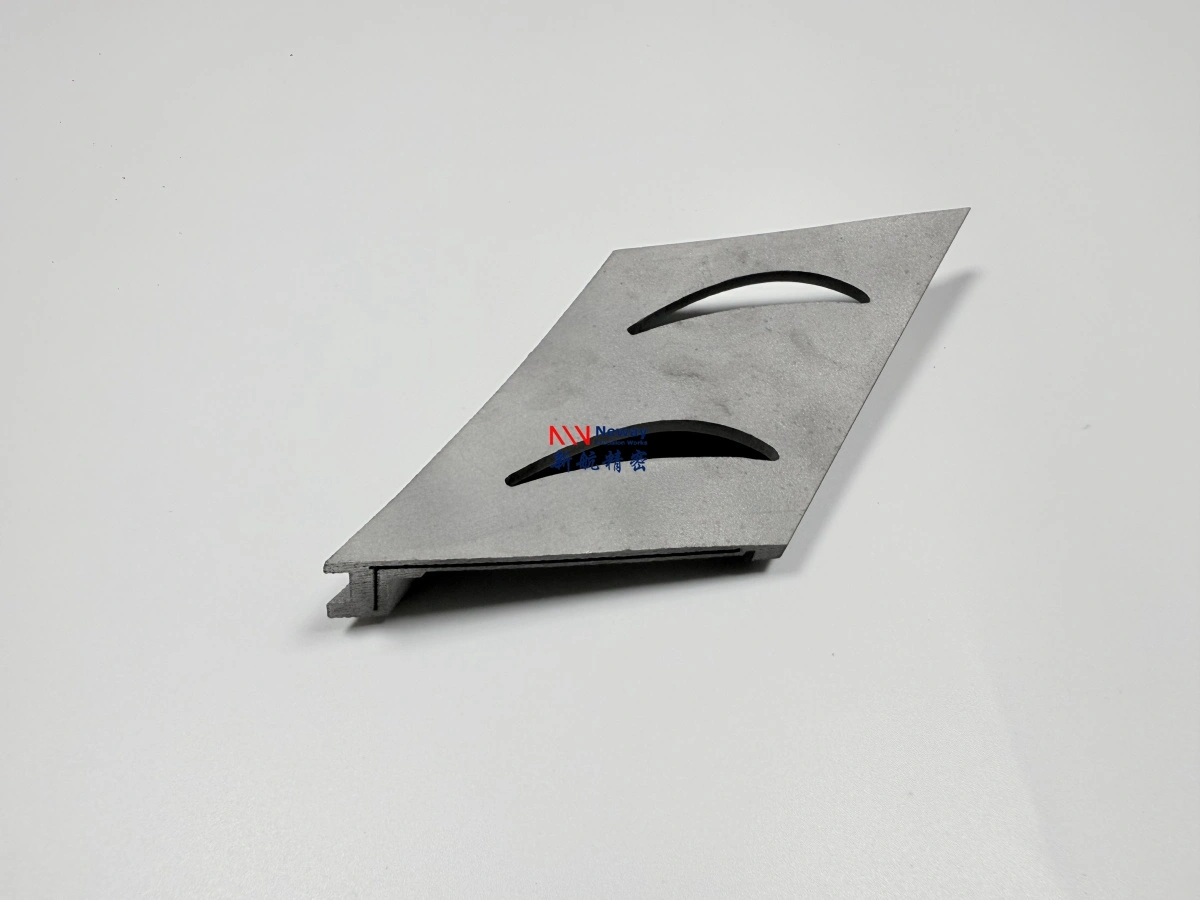
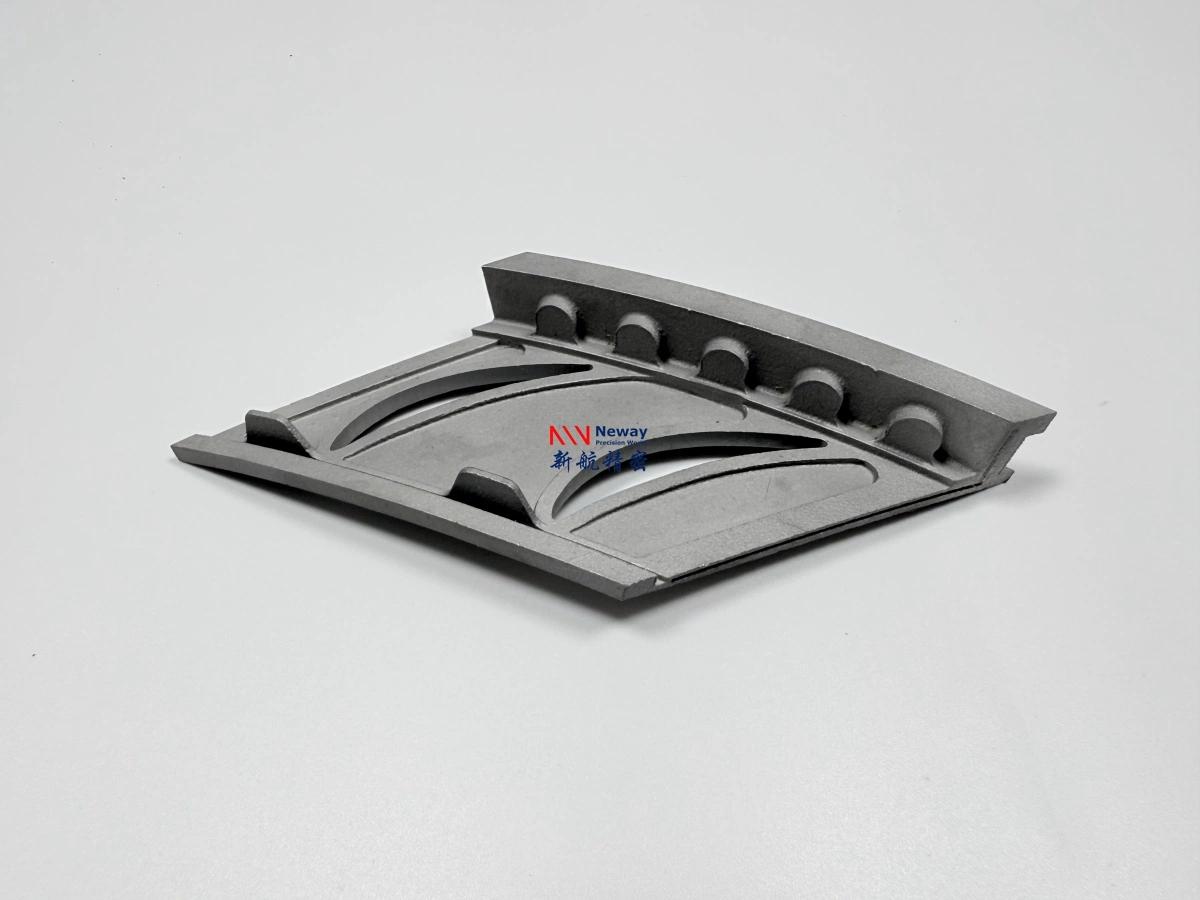
1. Direct Answer: Can Inconel 713C Be Printed Without Cracking?
Inconel 713C may be printable for selected geometries, but “without cracking” cannot be guaranteed before a feasibility review. The key question is not only whether the alloy can be melted by laser powder bed fusion, but whether the printed structure can survive rapid melting, solidification, residual stress, post-print heat treatment, and final machining without unacceptable cracks.
For engineering projects, Neway recommends a technical feasibility review before quoting Inconel 713C or GH4099-class printed parts. This review checks whether the part geometry, wall thickness, internal channels, support access, machining allowance, and inspection method are suitable for superalloy 3D printing.
Question | Practical Answer |
|---|---|
Can Inconel 713C be 3D printed? | It can be evaluated for selected geometries, but printability depends strongly on part design and crack-control strategy. |
Can cracking be fully eliminated? | It cannot be guaranteed before reviewing the CAD model, wall thickness, stress areas, and post-processing route. |
Is it easier to print than Inconel 718? | No. Inconel 713C is generally more crack-sensitive and needs stricter feasibility review. |
What is the first step? | Submit 3D files, 2D drawings, wall thickness, application temperature, and inspection requirements for review. |
2. Why Does Inconel 713C Crack During 3D Printing?
Cracking in Inconel 713C 3D printing is mainly related to the interaction between alloy chemistry, rapid solidification, thermal stress, and part geometry. During laser powder bed fusion, each layer is rapidly melted and solidified. This creates steep thermal gradients and residual stress. If the local stress exceeds the alloy’s tolerance during solidification or cooling, cracks may appear.
Inconel 713C is typically selected for high-temperature turbine, nozzle, combustion, and gas-path applications. These performance advantages also make the alloy more difficult to process by additive manufacturing compared with more mature printable nickel alloys.
Cracking Factor | Why It Matters |
|---|---|
High strengthening alloy chemistry | Improves high-temperature strength but can reduce printability and crack tolerance. |
Rapid heating and cooling | Creates strong thermal gradients and residual stress during layer-by-layer melting. |
Thin walls | Cool quickly and may deform or crack under thermal stress. |
Sharp corners | Concentrate stress during printing, stress relief, heat treatment, or service loading. |
Thick-to-thin transitions | Create uneven cooling and local stress accumulation. |
Unsupported overhangs | Increase deformation risk and may require aggressive support structures. |
Closed cavities | Make support removal, powder removal, and internal inspection more difficult. |
3. How Can Crack Risk Be Reduced?
Crack risk in Inconel 713C printed parts is usually controlled through a combined strategy rather than one single process adjustment. The design, build orientation, support layout, process parameters, post-processing, and inspection plan should be considered together before production.
Control Method | Purpose |
|---|---|
Build orientation optimization | Reduces thermal stress, improves support stability, and helps control deformation. |
Wall thickness review | Avoids excessively thin, unstable, or locally overheated sections. |
Larger fillets and smooth transitions | Reduces stress concentration around sharp internal or external corners. |
Support design | Controls distortion, improves heat dissipation, and stabilizes overhanging areas. |
Process parameter control | Balances density, heat input, melt pool stability, and cracking tendency. |
Stress relief | Reduces residual stress after printing and before high-precision machining. |
Helps adjust microstructure and mechanical properties after printing. | |
Helps reduce internal porosity and improve reliability for demanding applications. | |
CT, X-ray, or FPI inspection | Checks hidden cracks, porosity, surface defects, and internal quality risks. |
4. What Part Features Need Special Review?
Not every Inconel 713C component has the same cracking risk. Geometry often determines whether the project is suitable for 3D printing. For turbine and hot-section parts, the build direction must be reviewed together with support accessibility, post-machining datum strategy, powder removal, and inspection requirements.
Part Feature | Main Risk |
|---|---|
Thin turbine blades or vanes | High risk of distortion, thermal stress, and cracking. |
Sharp internal corners | Local stress concentration during printing and post-processing. |
Long cantilever structures | Warping, vibration, and support instability during printing. |
Closed internal cavities | Difficult powder removal, support removal, and internal inspection. |
Sudden wall thickness changes | Uneven cooling and residual stress accumulation. |
Fine cooling channels | Powder removal and CT inspection may be required. |
Large flat sections | Higher risk of warping and residual stress. |
Critical sealing or mounting surfaces | Usually require CNC machining after printing. |
5. Is Inconel 713C Better Than Inconel 718 for 3D Printing?
Inconel 713C may be selected for specific high-temperature hot-section requirements, but it is generally more difficult to print than Inconel 718. If the customer’s main requirement is fast manufacturability and process maturity, Inconel 718 or Inconel 625 may be easier to validate. If the requirement is high-temperature strength, turbine-related testing, or hot gas exposure, Inconel 713C may still be worth evaluating.
Material | Printability | Typical Application |
|---|---|---|
Inconel 718 | More mature and stable for 3D printing | Aerospace brackets, ducts, housings, structural parts, and moderate hot-section components |
Inconel 625 | Relatively stable printability with good corrosion resistance | Chemical, marine, exhaust, corrosion-resistant, and thermal parts |
Inconel 713C / GH4099-class alloy | Higher cracking risk and needs feasibility review | Turbine, nozzle, combustion, and high-temperature prototype parts |
6. What Information Is Needed for an Inconel 713C Feasibility Review?
Before quoting Inconel 713C printed parts, customers should provide complete technical information. This helps evaluate cracking risk, support removal, machining allowance, heat treatment route, inspection cost, and delivery feasibility.
Required Information | Why It Is Needed |
|---|---|
3D CAD file, preferably STEP or X_T | Used to review geometry, build orientation, support design, powder removal, and manufacturing feasibility. |
2D drawing | Defines tolerances, datums, critical surfaces, threads, inspection points, and machining requirements. |
Material requirement | Confirms whether Inconel 713C, GH4099, or an alternative superalloy is required. |
Quantity | Affects build layout, setup cost, process validation, inspection planning, and unit price. |
Minimum wall thickness | Important for cracking, deformation, powder removal, and machining allowance review. |
Working temperature | Helps determine whether the alloy and post-processing route are suitable for the application. |
Thermal cycling condition | Important for hot-section parts exposed to repeated heating and cooling. |
Post-processing requirements | Determines whether heat treatment, HIP, CNC machining, EDM, polishing, or coating is needed. |
Inspection requirements | Defines whether CT, X-ray, FPI, CMM, metallurgical testing, or FAI is required. |
7. Summary
Inconel 713C can be considered for 3D printing, but it is a crack-sensitive superalloy that requires careful feasibility review. The key to reducing cracking risk is not a single printing parameter, but a complete manufacturing strategy covering alloy selection, design optimization, build orientation, support planning, thermal stress control, heat treatment, HIP, machining, and inspection.
For turbine, nozzle, combustion, and other hot-section components, the most practical first step is to submit the 3D model, 2D drawing, operating temperature, wall thickness requirements, quantity, post-processing needs, and inspection standard for an Inconel 713C 3D printing feasibility review.