Stainless Steel
Stainless Steel 3D Printing Materials Introduction
Stainless steel is one of the most widely used metal material families in additive manufacturing due to its balanced combination of corrosion resistance, mechanical strength, toughness, and process stability. It is suitable for producing both functional prototypes and end-use components that require reliable performance in demanding environments.
Through advanced stainless steel 3D printing, a wide range of grades can be selected for different engineering priorities. Austenitic grades such as SUS304, SUS304L, SUS316, and SUS316L are preferred for corrosion resistance and general-purpose industrial use, while martensitic grades such as SUS410 and SUS420 offer higher hardness and wear resistance. Precipitation-hardening grades including SUS15-5 PH and SUS630 / 17-4 PH deliver high strength and dimensional stability for critical structural parts.
Stainless Steel Grades Table
Category | Grade | Key Characteristics |
|---|---|---|
Austenitic Stainless Steel | General-purpose stainless steel with good corrosion resistance and formability | |
Austenitic Stainless Steel | Low-carbon grade with improved weldability and reduced intergranular corrosion risk | |
Austenitic Stainless Steel | Enhanced corrosion resistance, especially in chloride and chemical environments | |
Austenitic Stainless Steel | Low-carbon corrosion-resistant grade widely used in medical and precision components | |
Martensitic Stainless Steel | Heat-treatable stainless steel with moderate corrosion resistance and good strength | |
Martensitic Stainless Steel | High-hardness stainless steel with good wear resistance for tooling and blades | |
Precipitation-Hardening Stainless Steel | High-strength stainless steel with good toughness and dimensional stability | |
Precipitation-Hardening Stainless Steel | Excellent strength, corrosion resistance, and heat treatment response for structural parts |
Stainless Steel Comprehensive Properties Table
Category | Property | Value Range |
|---|---|---|
Physical Properties | Density | 7.7–8.0 g/cm³ |
Melting Point | 1370–1450°C | |
Mechanical Properties | Tensile Strength | 500–1400 MPa (depending on grade and heat treatment) |
Yield Strength | 200–1200 MPa | |
Hardness | 150–45 HRC equivalent depending on grade | |
Corrosion Resistance | Good to Excellent | |
Heat Treatment | Process | Solution treatment, aging, quenching, tempering, stress relieving |
3D Printing Technology of Stainless Steel
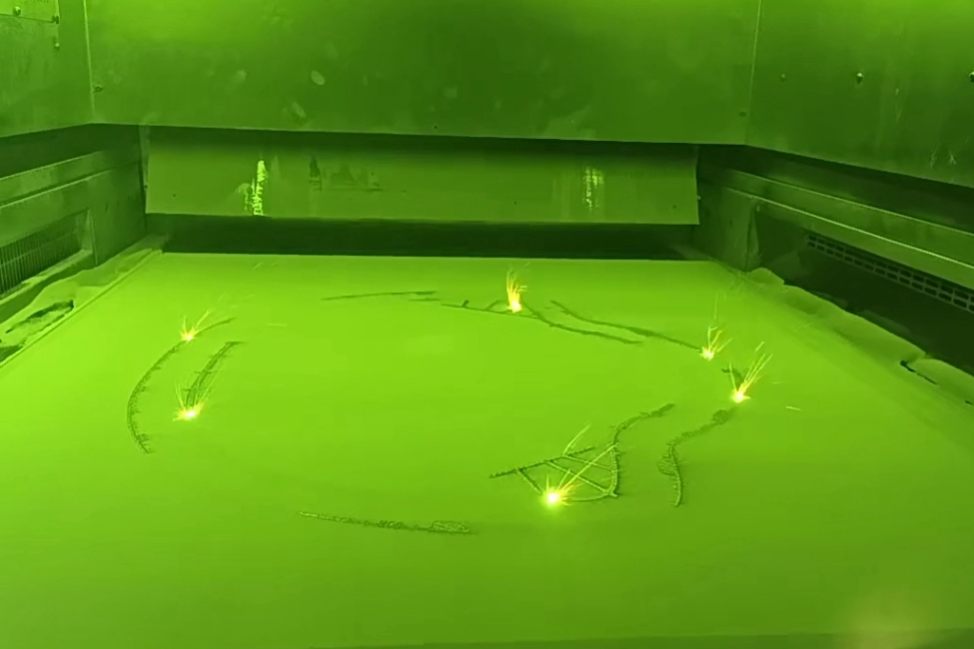
Stainless steels are primarily processed using powder-based metal additive manufacturing technologies such as Selective Laser Melting (SLM) and Direct Metal Laser Sintering (DMLS). These methods provide high density, good dimensional control, and strong mechanical performance, making them suitable for corrosion-resistant industrial parts and precision structural components.
Applicable Process Table
Technology | Precision | Surface Quality | Mechanical Properties | Application Suitability |
|---|---|---|---|---|
SLM | ±0.05–0.2 mm | Ra 3.2–6.4 | Excellent | Structural parts, aerospace, industrial components |
DMLS | ±0.05–0.2 mm | Ra 3.2 | Excellent | Precision parts, medical devices, tooling inserts |
Stainless Steel 3D Printing Process Selection Principles
For corrosion-resistant structural components and complex industrial geometries, Selective Laser Melting (SLM) is recommended. It provides high density, stable mechanical performance, and good dimensional accuracy for both general-purpose and high-performance stainless steel grades.
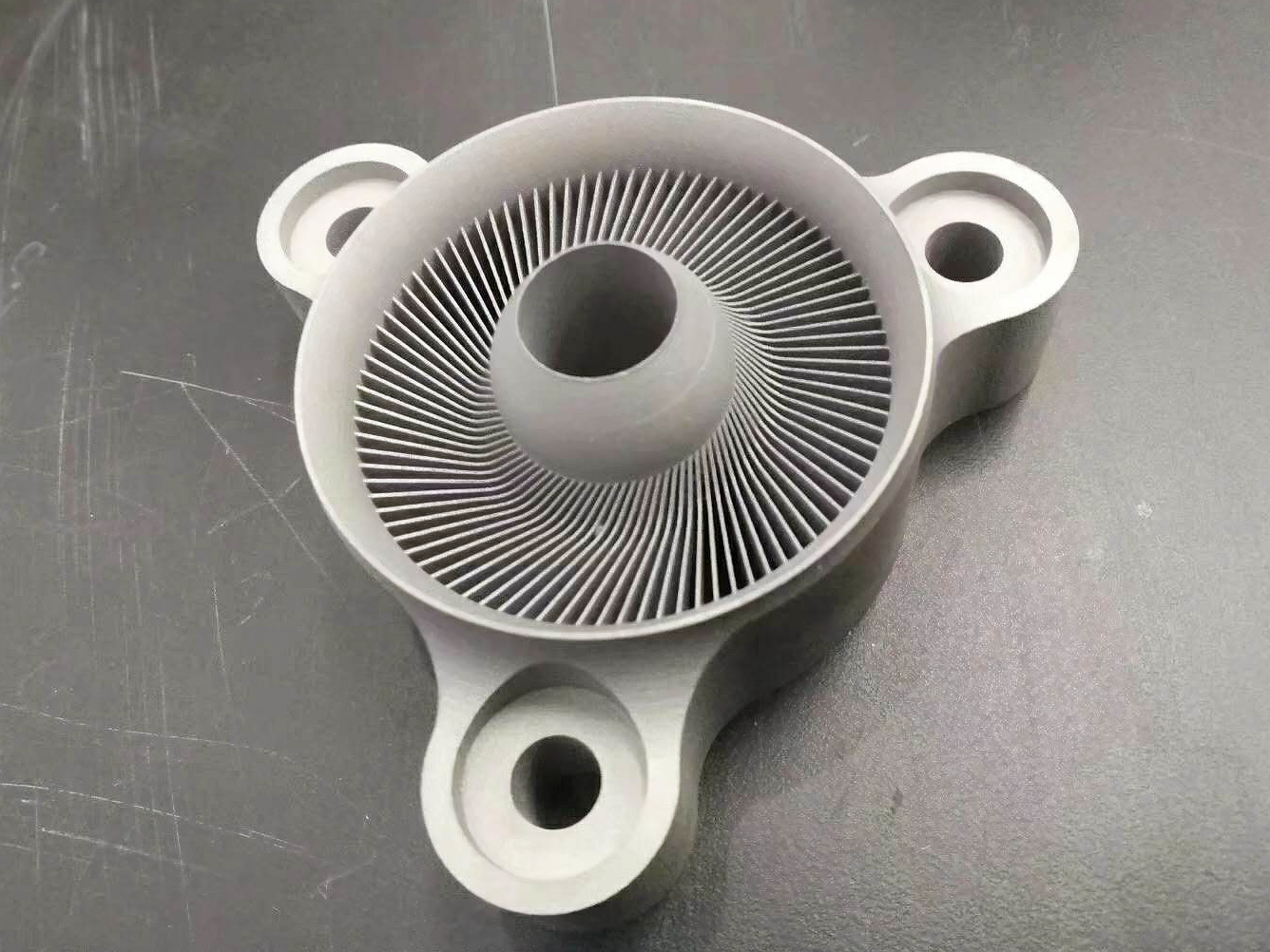
Direct Metal Laser Sintering (DMLS) is ideal for precision stainless steel components that require fine features, repeatable dimensional control, and strong mechanical properties, especially in medical, industrial, and tooling applications.
Stainless Steel 3D Printing Key Challenges and Solutions
Residual stress and distortion are common challenges during stainless steel additive manufacturing due to rapid thermal cycling. Optimized scan strategies, part orientation, and stress-relief processing can significantly reduce deformation and cracking risk.
Achieving target hardness and strength in martensitic and precipitation-hardening grades requires proper heat treatment. Processes such as solution treatment, aging, quenching, or tempering help develop the required microstructure and final mechanical performance.
Internal porosity may reduce fatigue resistance and structural reliability. Applying Hot Isostatic Pressing (HIP) can improve density up to 99.9% and enhance part integrity for demanding service conditions.
Surface quality often needs improvement for sealing surfaces, medical components, and high-precision assemblies. Precision CNC machining and suitable surface treatment processes are commonly used to achieve tighter tolerances and improved finish.
Industry Application Scenarios and Cases
Medical and Healthcare: Surgical tools, orthopedic aids, and corrosion-resistant precision parts.
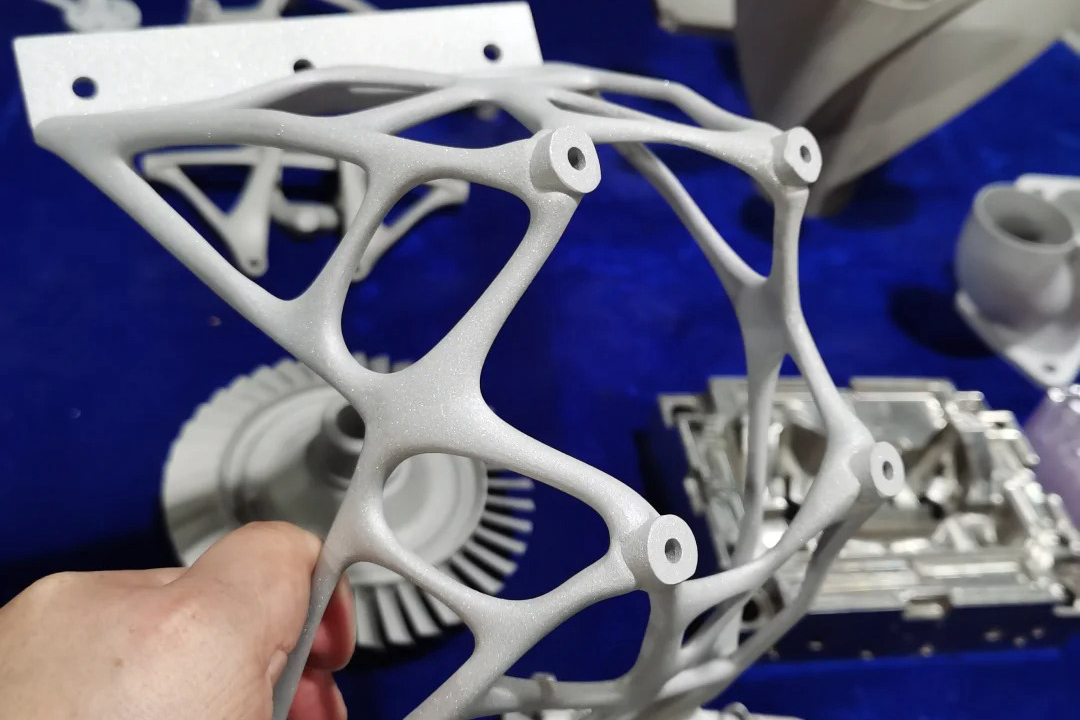
Aerospace and Aviation: High-strength brackets, housings, and functional structural components.
Robotics: Wear-resistant joints, structural frames, and precision mechanical assemblies.
In practical applications, stainless steel 3D printed components can reduce lead time by up to 40–60% compared with conventional machining of complex geometries, while still maintaining strong corrosion resistance and reliable service performance.
Explore Related Blogs