Titanium Alloy
Titanium Alloy 3D Printing Materials Introduction
Titanium alloy materials are among the most valuable metal systems in additive manufacturing because they combine low density, high specific strength, excellent corrosion resistance, and good biocompatibility. These properties make titanium alloys ideal for lightweight structural parts, high-performance aerospace hardware, medical implants, and advanced industrial components.
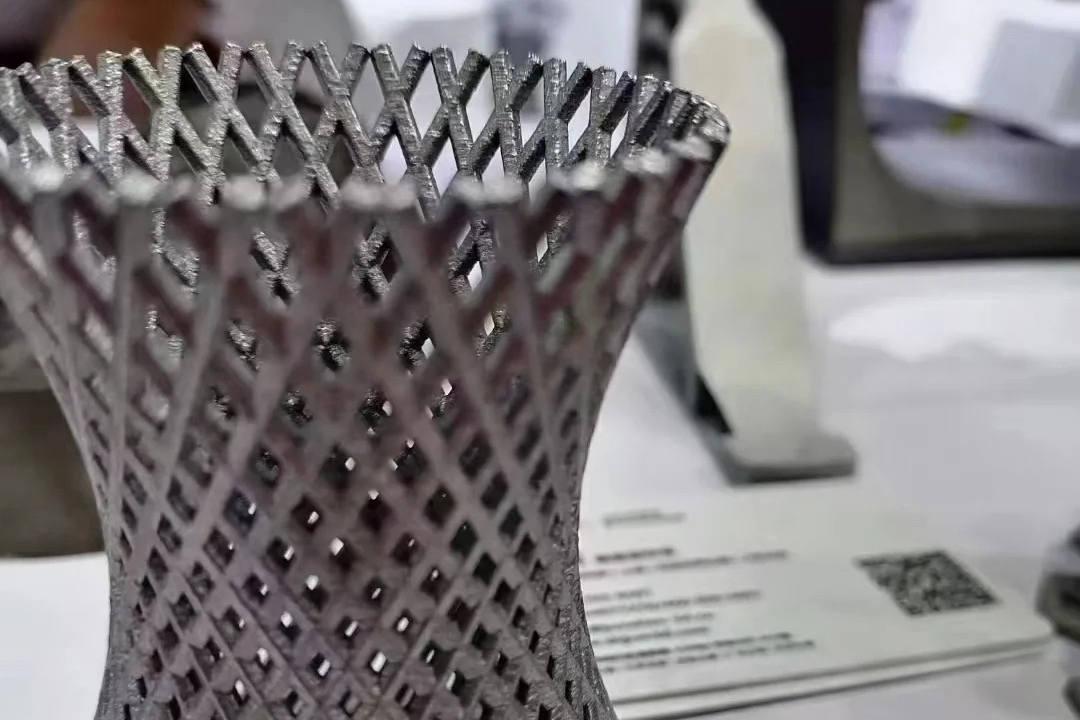
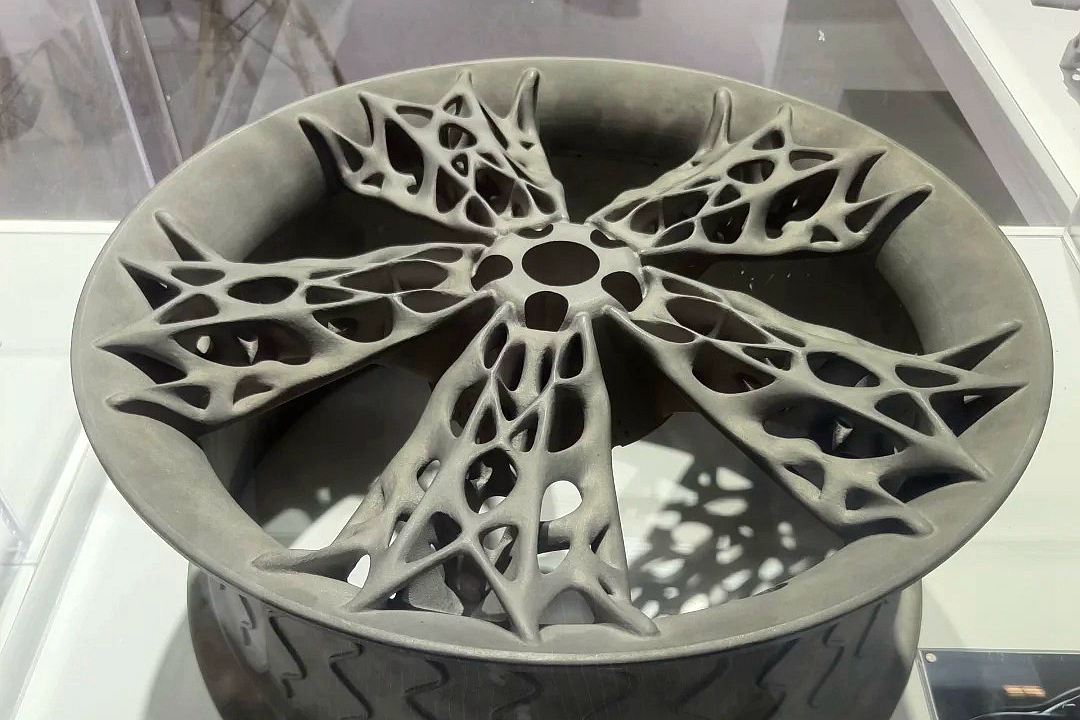
Through advanced titanium 3D printing, manufacturers can produce complex geometries, internal lattice structures, conformal channels, and near-net-shape parts that would be difficult or costly to machine conventionally. Titanium alloy additive manufacturing is especially suitable for applications requiring weight reduction, thermal stability, fatigue performance, and corrosion resistance in demanding service environments.
Titanium Alloy Grades Table
Category | Grade | Key Characteristics |
|---|---|---|
Commercially Pure Titanium | Excellent corrosion resistance, good ductility, and suitability for chemical and medical applications | |
Alpha-Beta Titanium Alloy | Most widely used titanium alloy with balanced strength, toughness, and processability | |
Alpha-Beta Titanium Alloy | High-strength structural alloy widely used in aerospace and industrial lightweight parts | |
Medical Titanium Alloy | Extra-low interstitial titanium alloy with improved ductility and biocompatibility for implants | |
Near-Alpha Titanium Alloy | Excellent elevated-temperature strength and oxidation resistance for aerospace hot structures | |
Near-Alpha Titanium Alloy | High-temperature titanium alloy with strong creep resistance and good structural stability | |
Metastable Beta Titanium Alloy | Good cold formability and heat-treat response with high strength after aging | |
Metastable Beta Titanium Alloy | High-strength beta alloy with excellent hardenability and deep-section performance | |
Near-Beta Titanium Alloy | Ultra-high-strength alloy suitable for heavily loaded aerospace components | |
Near-Alpha Titanium Alloy | Good weldability, low-temperature toughness, and moderate elevated-temperature performance | |
Near-Alpha Titanium Alloy | Good creep resistance and strength for elevated-temperature aerospace structures | |
Near-Alpha Titanium Alloy | High-strength titanium alloy for advanced aerospace structural applications | |
Alpha-Beta / Biomedical Titanium Alloy | Biocompatible alloy often selected for medical implants and corrosion-sensitive components | |
Near-Alpha Titanium Alloy | High-strength alloy with good creep resistance for aerospace and high-temperature service |
Titanium Alloy Comprehensive Properties Table
Category | Property | Value Range |
|---|---|---|
Physical Properties | Density | 4.43–4.85 g/cm³ |
Melting Point | 1600–1670°C | |
Thermal Conductivity | 6–18 W/(m·K) | |
Thermal Expansion | 8.0–10.5 µm/(m·K) | |
Mechanical Properties | Tensile Strength | 240–1400 MPa (depending on grade and heat treatment) |
Yield Strength | 170–1300 MPa | |
Elongation | 5–35% | |
Hardness | 120–420 HV | |
Corrosion Resistance | Excellent | |
Functional Characteristics | Biocompatibility | Excellent for selected grades such as CP-Ti, Grade 23, and Ti-6Al-7Nb |
Temperature Capability | Moderate to High depending on alloy type, especially near-alpha aerospace grades | |
Heat Treatment | Process | Stress relieving, annealing, solution treatment, aging, and hot isostatic pressing |
3D Printing Technology of Titanium Alloy
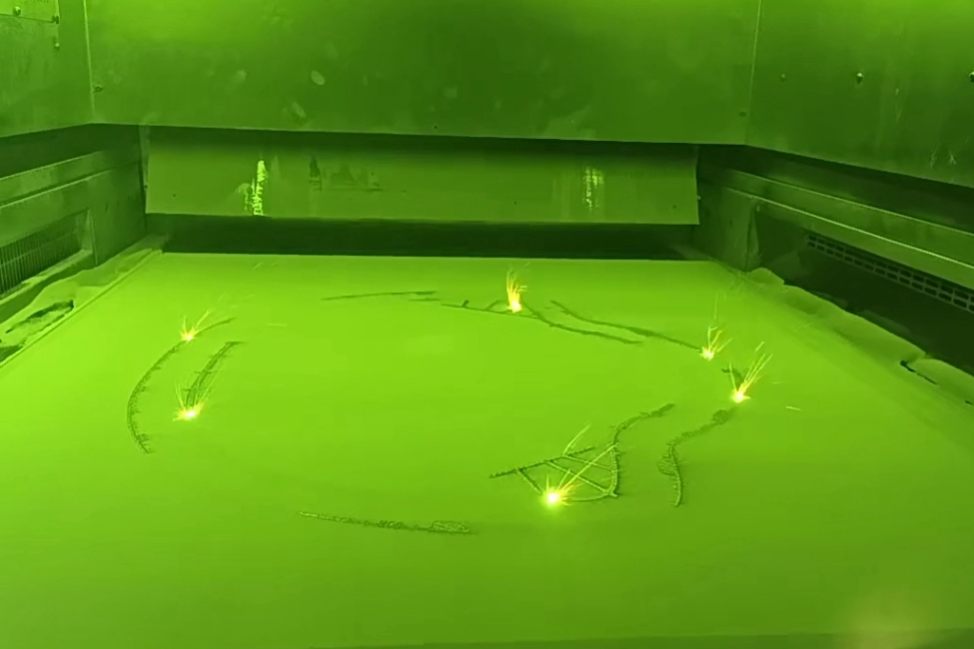
Titanium alloys are primarily processed using powder-based metal additive manufacturing technologies such as Selective Laser Melting (SLM), Direct Metal Laser Sintering (DMLS), and Electron Beam Melting (EBM). These methods provide high-density builds, strong mechanical performance, and the ability to produce lightweight complex parts with internal features, making titanium one of the most important material families in advanced metal 3D printing.
Applicable Process Table
Technology | Precision | Surface Quality | Mechanical Properties | Application Suitability |
|---|---|---|---|---|
SLM | ±0.05–0.2 mm | Ra 3.2–6.4 | Excellent | Aerospace structures, medical parts, precision lightweight components |
DMLS | ±0.05–0.2 mm | Ra 3.2 | Excellent | Complex titanium parts, implant components, industrial prototypes |
EBM | ±0.1–0.3 mm | Ra 6.4–12.5 | Very Good | Load-bearing aerospace parts, porous medical implants, thicker-section components |
Titanium Alloy 3D Printing Process Selection Principles
For thin-wall structures, lightweight lattices, and high-precision aerospace or medical components, Selective Laser Melting (SLM) is recommended. It provides excellent dimensional control, high density, and strong mechanical properties for demanding functional applications.
Direct Metal Laser Sintering (DMLS) is ideal for complex titanium parts that require consistent quality, good surface finish, and efficient low-volume production without traditional tooling investment.
For parts where residual stress reduction, good mechanical integrity, and porous or thicker-section structures are important, Electron Beam Melting (EBM) is a strong option, especially in aerospace and orthopedic implant manufacturing.
Titanium Alloy 3D Printing Key Challenges and Solutions
Residual stress and distortion are common challenges in titanium alloy printing due to high thermal gradients during layer-by-layer melting and solidification. Optimized scan strategies, platform preheating, and support design are essential to reduce deformation and cracking risk.
Fatigue performance and internal consistency depend strongly on density and defect control. Applying Hot Isostatic Pressing (HIP) can reduce porosity, improve density up to near-full levels, and enhance structural reliability for critical parts.
Mechanical performance and microstructure often require controlled post-processing. Proper heat treatment such as stress relieving, annealing, solution treatment, or aging helps optimize strength, ductility, and service stability for different titanium grades.
Surface roughness of as-built titanium parts may not satisfy final sealing, mating, or fatigue-critical requirements. Precision CNC machining and suitable surface treatment processes are commonly used to improve dimensional accuracy, surface integrity, and final appearance.
Industry Application Scenarios and Cases
Aerospace and Aviation: Lightweight brackets, structural fittings, compressor-related components, and hot-structure parts requiring high specific strength.
Medical and Healthcare: Orthopedic implants, surgical devices, dental structures, and patient-specific titanium components.
Automotive: Lightweight performance parts, motorsport components, and heat-resistant structural hardware.
Energy and Power: Corrosion-resistant and high-strength components for harsh and thermally demanding environments.
In practical applications, titanium alloy 3D printed parts have demonstrated substantial weight reduction, shorter development cycles, and lower assembly complexity compared with machined multi-part designs, especially in aerospace and medical programs where customization and performance are critical.
FAQs
Which titanium alloy grades are best suited for 3D printing applications?
How does Ti-6Al-4V compare with CP-Ti and Grade 23 in additive manufacturing?
What post-processing is required for titanium alloy 3D printed parts?
How does EBM compare with SLM and DMLS for titanium components?
What industries benefit most from titanium alloy 3D printing?
Explore Related Blogs