Which carbon steel grades are best suited for 3D printing applications?
Which carbon steel grades are best suited for 3D printing applications?
The best carbon steel grades for 3D printing depend on the required combination of hardness, toughness, wear resistance, thermal stability, and post-heat-treatment performance. In practice, tool steels are preferred for molds, dies, and wear parts, while alloy steels are more suitable for structural and transmission-related components.
1. Carbon Steel Grade Comparison for 3D Printing
Grade | Main Advantage | Typical Performance | Best-Fit Applications |
|---|---|---|---|
Hot-work stability | ~45–52 HRC after heat treatment | Die-casting inserts, hot-work molds, thermal cycling tools | |
Higher toughness | ~40–50 HRC | Forging dies, crack-resistant hot tooling, large mold inserts | |
Wear resistance | ~58–62 HRC | Punches, forming tools, wear plates, cold-work tooling | |
High red hardness | ~60–65 HRC | Cutting tools, inserts, high-speed wear components | |
Very high strength with low distortion | UTS ~1900–2000 MPa after aging | Precision tooling, conformal cooling inserts, jigs, fixtures | |
Maraging steel strength | UTS ~1900 MPa class | High-load molds, aerospace fixtures, structural tooling | |
Balanced strength and toughness | UTS ~560–900 MPa | Brackets, frames, lightweight structural parts | |
Higher hardenability | UTS ~655–1080 MPa | Shafts, gears, heavy-duty machine parts | |
Excellent carburizing response | Hard case with tough core | Transmission parts, gears, wear-loaded components |
2. Grade Selection by Engineering Priority
Priority | Recommended Grades | Reason |
|---|---|---|
Hot-work tooling | H13, H11 | Good resistance to thermal fatigue and cracking |
Maximum abrasive wear resistance | D2, M2 | Higher hardness and better edge retention |
High strength with dimensional stability | MS1, 1.2709 | Strong aging response and lower distortion risk |
General structural parts | 4130, 4140 | Good balance of machinability, strength, and toughness |
Case-hardened drivetrain parts | 20MnCr5 | Hard surface with durable load-bearing core |
3. Practical Selection Guidance
H13 and H11 are the best choices for hot-work tooling and mold inserts exposed to repeated heating and cooling. H13 provides stronger hot hardness, while H11 offers better fracture resistance in larger or more impact-loaded tools.
D2 and M2 are preferred for wear-dominant applications. D2 is more suitable for cold-work forming and abrasion-heavy service, while M2 performs better for cutting-related parts requiring high hardness retention.
MS1 and 1.2709 are among the most suitable steels for metal additive manufacturing when complex internal channels, high strength, and dimensional stability are required. They are widely used for conformal-cooled tooling and precision fixtures.
4130 and 4140 are better suited for engineering components rather than tooling. 4130 is preferred where toughness and lower weight matter, while 4140 is better for more heavily loaded shafts, supports, and wear-prone machine parts.
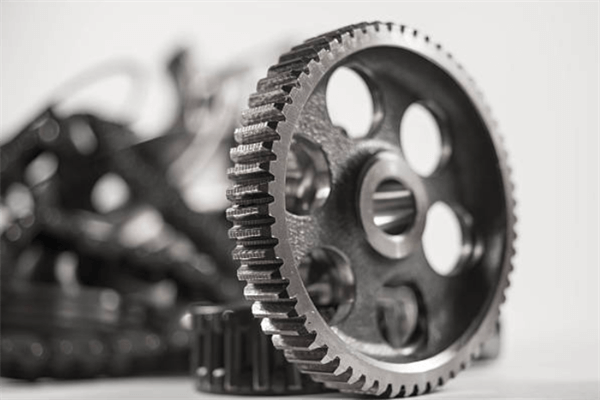
20MnCr5 is the preferred option for gears and components requiring carburizing, because it combines a hard surface layer with a tougher core after heat treatment.
4. Summary
If you need... | Most suitable grades |
|---|---|
Thermally loaded tooling | H13, H11 |
Severe wear resistance | D2, M2 |
High-strength precision tooling | MS1, 1.2709 |
Structural machine components | 4130, 4140 |
Case-hardened mechanical parts | 20MnCr5 |
In summary, there is no single best grade for every application. Tooling usually favors H13, H11, MS1, or 1.2709; high-wear parts favor D2 or M2; and structural or transmission parts are better matched with 4130, 4140, or 20MnCr5. For related material and process information, see carbon steel, 3D printing materials, and carbon steel additive manufacturing technologies.