Medical Titanium 3D Printed Parts: RFQ and Inspection Review
Medical titanium 3D printed parts need a different RFQ review from ordinary titanium prototypes because the buyer is usually asking for traceability, cleanable surfaces, stable dimensions, and documented inspection. The first decision is not whether titanium can be printed. It is whether the part is a prototype, surgical instrument component, test fixture, non-implant component, or implant-like geometry that requires customer-controlled validation.
Neway reviews this type of request by separating manufacturing support from regulatory responsibility. We can help review titanium additive manufacturing, Grade 23 material selection, CNC finishing, surface treatment, heat treatment, HIP, and inspection scope. We do not replace the buyer's medical, biological, regulatory, or clinical validation. Those requirements must come from the buyer's drawing, specification, and acceptance plan.
This article helps buyers prepare a quote-ready package for custom titanium 3D printed parts. The most useful RFQ defines the part function, material grade, critical surfaces, cleaning access, inspection records, and which zones must remain as-printed, machined, polished, or treated after printing.
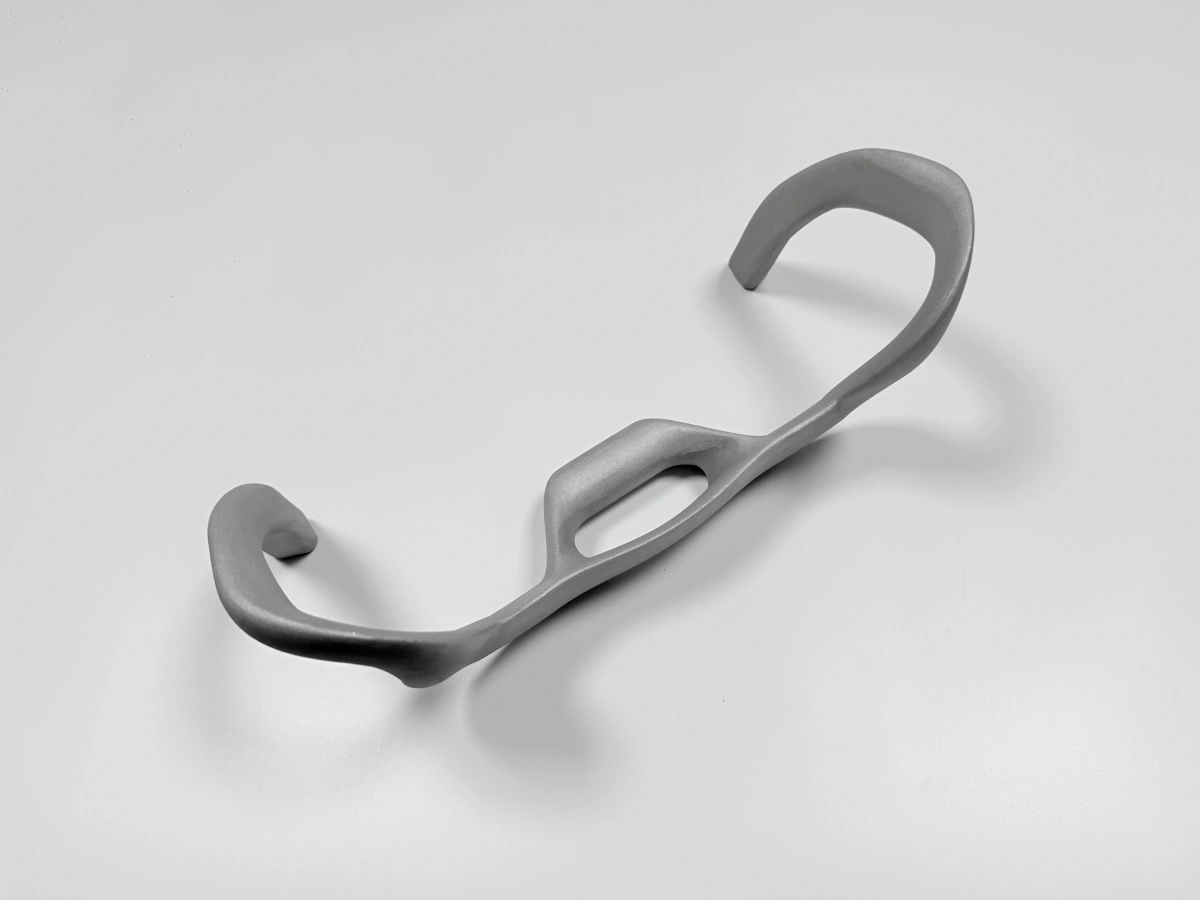
Which Medical Titanium Part Type Is Being Quoted
The same titanium geometry can represent very different buying decisions. A concept prototype may only need basic dimensional review and visible surface cleanup. A surgical instrument component may require polished grip or contact surfaces, thread quality, edge break control, and material documentation. A test fixture may require stable datums and repeated assembly accuracy, but not the same surface evidence as a patient-contact device.
Implant-like geometry should be handled with extra caution. Lattice, porous, or patient-specific shapes may be printable, but Neway should not treat them as validated implant products. The buyer must provide buyer-provided medical standards, validation boundary, cleaning requirement, and acceptance criteria. For sourcing, that distinction prevents a prototype quote from being misunderstood as a finished medical-device approval package.
Medical and healthcare buyers often start from the Medical and Healthcare solution page, but the manufacturing route usually connects to Titanium 3D Printing, Ti-6Al-4V ELI Grade 23, CNC finishing, heat treatment, and surface treatment.
Grade 23, Grade 5, and CP Titanium Are Not Interchangeable
Grade 23 titanium, also described as Ti-6Al-4V ELI, is commonly requested when buyers need an extra-low-interstitial titanium alloy route. Grade 5 Ti-6Al-4V may be practical for many functional titanium parts, fixtures, and non-implant components. CP titanium may be discussed where corrosion behavior or ductility matters more than high-strength alloy behavior. The RFQ should state the grade required by the drawing instead of asking only for titanium.
Material selection also affects powder availability, process route, heat treatment review, HIP discussion, and inspection records. If the drawing names Grade 23, the quote should not silently substitute Grade 5. If the buyer is still evaluating material, the quotation can separate Grade 23 and Grade 5 as alternate lines, subject to material availability and engineering review.
Buyer material question | Manufacturing implication | RFQ information to confirm |
|---|---|---|
Grade 23 / Ti-6Al-4V ELI requested | Material records, build route, heat treatment, and inspection scope should match the buyer specification. | Drawing grade, required certificate, revision level, and customer acceptance standard. |
Grade 5 Ti-6Al-4V acceptable | May be suitable for prototypes, fixtures, and non-implant functional titanium components. | Whether substitution is allowed and whether the part has medical-contact or validation requirements. |
CP titanium considered | Strength, finishing, and geometry limits should be reviewed separately from Ti-6Al-4V alloys. | Reason for CP titanium, corrosion environment, and mechanical requirement. |
Material still undecided | Quote can compare alternatives without promising equivalence. | Application environment, critical surfaces, expected records, and prototype or production stage. |
Surface Condition and Cleaning Access Control the Practical Route
Medical titanium 3D printed parts often have surfaces that cannot all be treated the same way. As-printed surfaces may be acceptable on non-contact regions of a prototype, while mating faces, handles, bores, threaded holes, sealing lands, and cleaned contact areas may require CNC machining, polishing, blasting, or other surface treatment. A porous or lattice surface may be intentional, but it also changes cleaning access and inspection expectations.
Closed cavities, blind powder traps, narrow internal channels, and rough recesses should be reviewed before quote release. If powder removal or cleaning verification is difficult, Neway may suggest design changes, access holes, feature simplification, or a different manufacturing route. For surgical instruments and fixtures, edges, burr-sensitive areas, and hand-contact surfaces should be marked separately from cosmetic zones.
Surface treatment is not a decoration note in this context. The buyer should identify which surfaces are functional, which are cosmetic, which are masked, and which require inspection after finishing. Related finishing work may involve Surface Treatment, CNC Machining, and inspection after final cleaning.
Post-Processing Sequence Before Final Medical Inspection
The order of operations should be decided before the purchase order. A titanium printed blank may require stress relief before aggressive support removal. HIP may be discussed when internal density, fatigue-sensitive use, pressure exposure, or the buyer specification makes it part of acceptance. CNC machining should usually finish datum surfaces, threads, bores, seats, and interfaces after thermal movement is considered.
If the part has thin walls, long arms, support-heavy regions, or asymmetric geometry, support removal can change dimensions before the first CMM check. Datum pads and machining tabs may be useful, but they must be placed where they do not damage functional surfaces or confuse inspection. The RFQ should state whether a simplified prototype route is acceptable or whether the buyer needs a production-intent sequence from the first lot.
Process step | Why it matters for medical titanium parts | Buyer decision before PO |
|---|---|---|
Build orientation and support planning | Controls support scars, powder removal access, and surface exposure. | Identify no-support surfaces, cleaning-sensitive areas, and protected interfaces. |
Stress relief or heat treatment | May reduce movement before support removal or machining. | State whether thermal records are required or optional. |
HIP review | Can be specified for density or fatigue-sensitive acceptance, but is not automatic. | Confirm whether HIP is mandatory from the buyer specification. |
CNC finishing | Controls threads, bores, datum faces, seats, and each machined interface used for assembly. | Mark machined surfaces and final tolerance requirements on the drawing. |
Surface finishing and inspection | Connects cleanability, touch surfaces, surface inspection, and final dimensional evidence. | Define finish zones, inspection records, and shipment documentation. |
Inspection Records Should Match the Acceptance Risk
Inspection for medical titanium 3D printed parts should be scoped by risk and buyer requirement. Material certificates, build records, heat-treatment records, HIP records, dimensional inspection, surface review, and cleaning-related evidence do not all belong on every quote. A test fixture may need CMM data for datums and bores, while a prototype may only need drawing-level dimensional checks. A component tied to a controlled medical project may require a more detailed documentation package supplied against the buyer's standard.
CT inspection may be discussed for internal geometry, powder removal concerns, lattice regions, or hidden passages, but it should be quoted only when the buyer needs that evidence. CMM is more useful for machined external datums, bores, position tolerances, and assembly interfaces. Visual inspection and surface notes should define burrs, support-removal marks, polishing limits, and protected surfaces.
Neway's role is to quote and manufacture against the supplied drawing and specification. The buyer remains responsible for deciding which records are required for medical, regulatory, or customer qualification. This boundary should be clear before the order is released.
Quote Inputs for Medical Titanium Prototype and Small Batch Work
For a reliable titanium 3D printing quote, send the STEP model, current 2D drawing, material grade, quantity, revision level, prototype or low-volume stage, and application description. Mark critical dimensions, datum references, machined faces, threads, bores, sealing surfaces, hand-contact areas, porous regions, lattice zones, and surfaces that must remain free from support marks.
Also state the required post-processing: stress relief, heat treatment, HIP, CNC machining, EDM, polishing, blasting, passivation-like surface treatment if specified by the buyer, CMM, CT, material record, dimensional report, or other documentation. If a requirement is only being evaluated, ask for it as an optional quote line. If it is mandatory for acceptance, place it on the drawing or purchase specification.
The most useful RFQ separates prototype learning from finished-part acceptance. That lets purchasing compare a printed titanium prototype, a machined functional sample, and a documented low-volume component without assuming that every medical titanium shape carries the same validation burden.
Related FAQs
How does electron beam melting EBM benefit titanium parts for medical implants?
How does Ti-6Al-4V compare with CP Ti and Grade 23 in additive manufacturing?
What post-processing is required for titanium alloy 3D printed parts?
Which titanium alloy grades are best suited for 3D printing applications?
What information is needed for a titanium 3D printing quote?
Does Ti-6Al-4V 3D printing require heat treatment, HIP, or CNC machining?