Titanium 3D Printing Cost: How to Quote Custom Titanium Alloy Parts
Titanium 3D Printing Cost: How to Quote Custom Titanium Alloy Parts
Titanium 3D printing cost is not determined by material weight alone. For custom titanium alloy parts, the final price depends on material selection, part volume, support structure, build orientation, printing time, post-processing, CNC machining, inspection requirements, and delivery schedule. A small part with difficult supports, tight tolerances, and multiple post-processes may cost more than a larger but simpler geometry.
At Neway3DP, our Titanium 3D Printing Service supports custom titanium parts from prototype validation to low-volume production. To provide an accurate titanium 3D printing quote, we evaluate the 3D model, 2D drawing, titanium alloy grade, quantity, post-processing route, inspection requirements, and final application environment.
For buyers comparing titanium 3D printing price, the most important question is not only “how much per gram.” A reliable quote should explain whether the part is printable, how much support is required, whether critical surfaces need machining, and whether heat treatment, HIP, surface treatment, or advanced inspection is needed for final use.
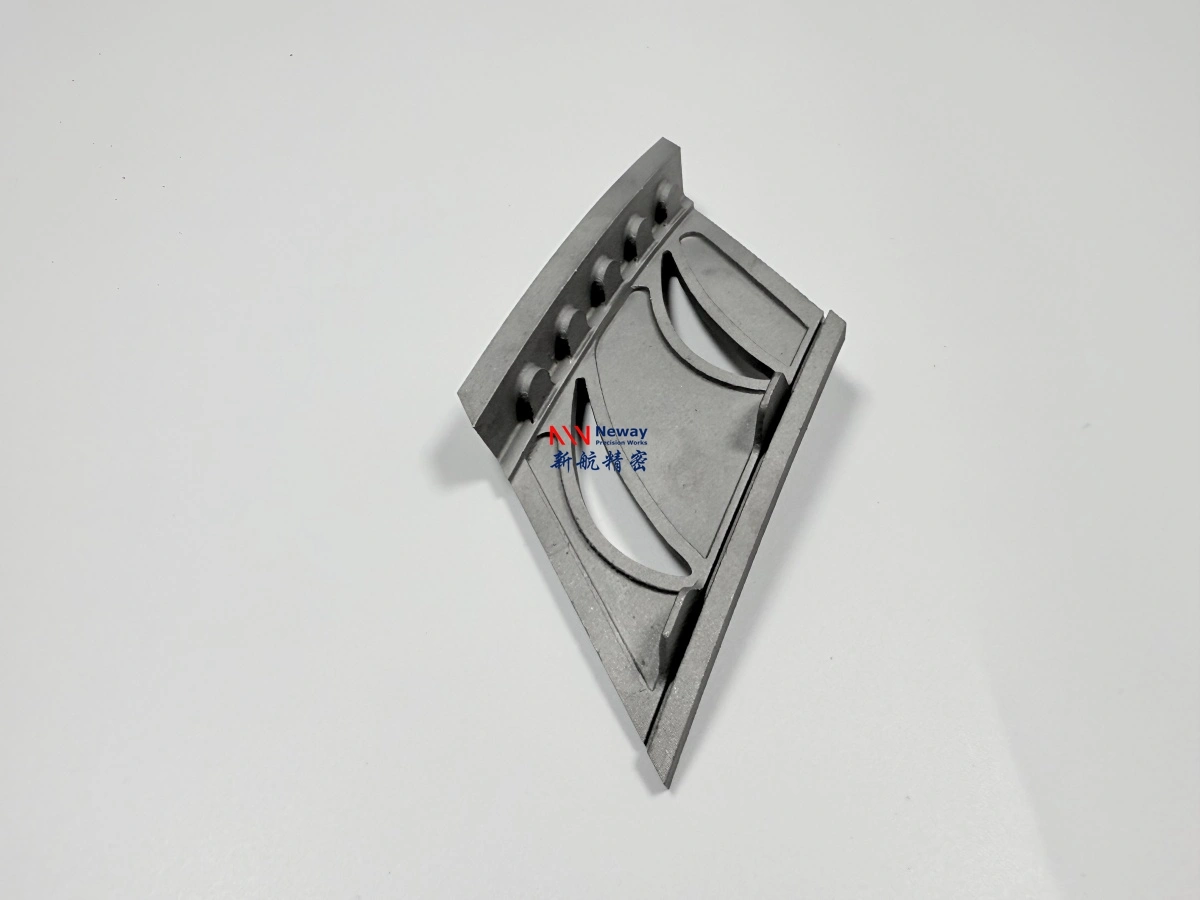
Why Titanium 3D Printing Cost Varies
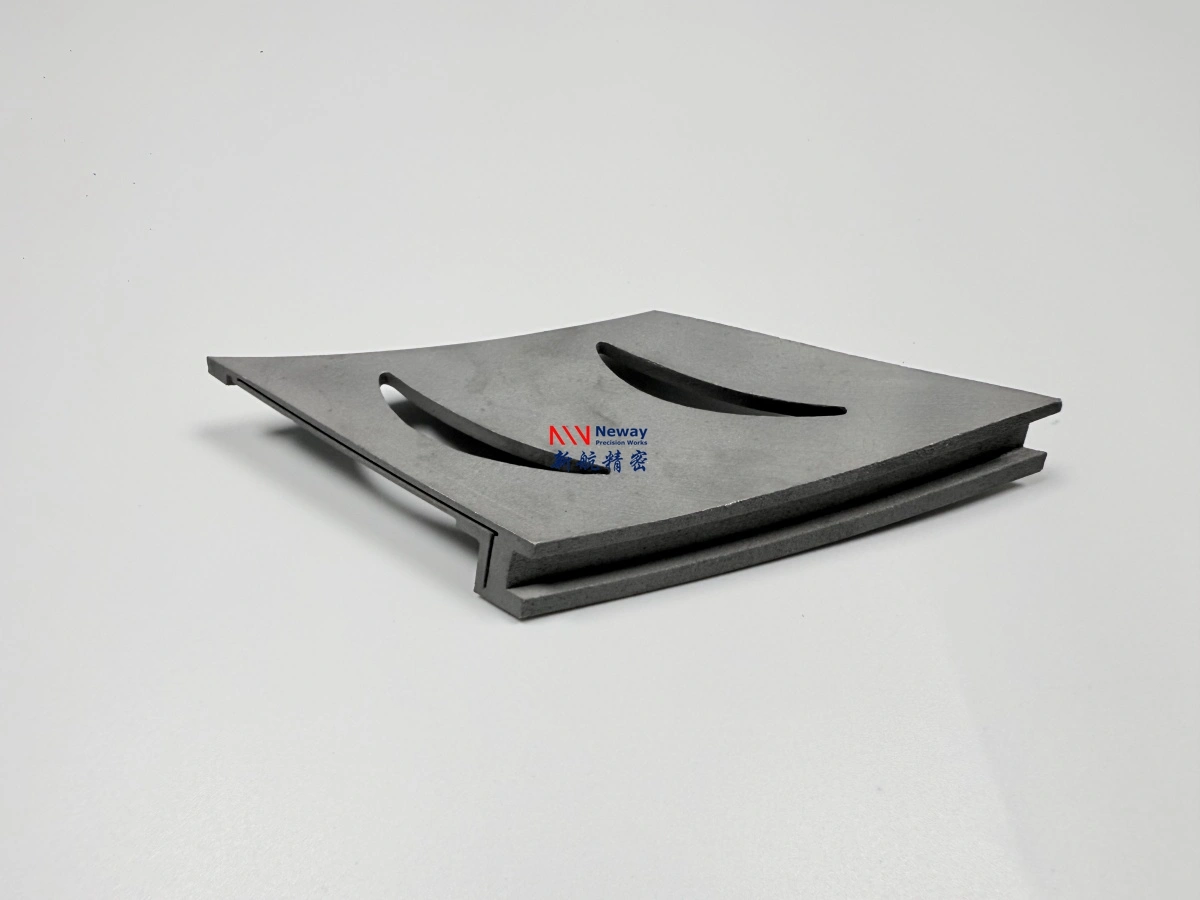
Titanium 3D printing cost varies because additive manufacturing is a process-driven quotation, not a simple raw material calculation. Titanium powder cost is only one part of the total price. The build layout, support volume, machine time, risk level, post-processing, and inspection plan can all change the final cost.
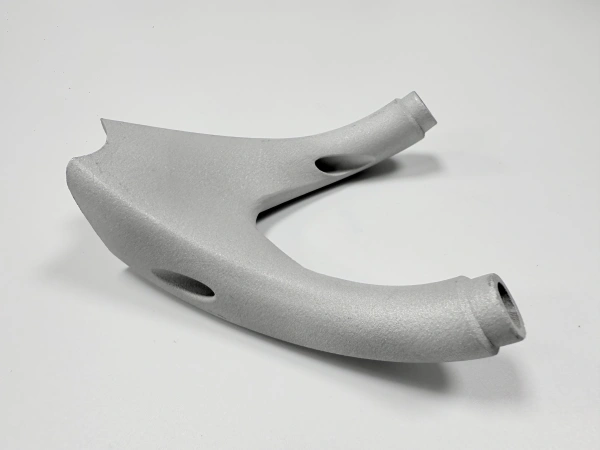
For example, a lightweight bracket with thin walls and angled features may require careful orientation, additional supports, stress relief, support removal, CNC finishing, and CMM inspection. A compact solid part may consume more material but may be easier to build and finish. This is why two titanium parts with similar weight can have very different prices.
Cost Factor | How It Affects Titanium 3D Printing Price |
|---|---|
Material grade | TC4, TA15, Grade 23, and CP-Ti have different powder costs, availability, and application requirements |
Part volume | Higher volume increases powder usage and may increase build time |
Support structure | More supports increase material use, printing time, removal labor, and surface finishing work |
Build orientation | Orientation affects support volume, deformation risk, surface quality, and machining allowance |
Post-processing | Heat treatment, HIP, CNC machining, EDM, polishing, and surface treatment add cost but improve functionality |
Inspection requirement | CMM, CT, X-ray, material certificates, and mechanical testing increase quality control cost |
Material Selection and Titanium 3D Printing Cost
Material selection has a direct impact on titanium 3D printing cost. Different titanium alloys have different powder prices, mechanical properties, printability, post-processing needs, and industry acceptance. Neway3DP supports Titanium Alloy 3D Printing for multiple titanium grades used in aerospace, medical, robotics, automotive, and industrial applications.
For most custom titanium parts, Ti-6Al-4V is the most common starting point because it offers a good balance of strength, weight reduction, corrosion resistance, and availability. However, TA15, Grade 23, and commercially pure titanium may be more suitable when the application requires higher thermal stability, better ductility, medical suitability, or stronger corrosion resistance.
Titanium Material | Typical Use | Cost Consideration |
|---|---|---|
Aerospace brackets, robotics parts, lightweight structural components, functional prototypes | Common titanium alloy with strong availability and broad application coverage | |
Aerospace load-bearing parts, high-strength components, elevated-temperature applications | May cost more depending on powder availability and performance requirements | |
Ti-6Al-4V ELI Grade 23 | Medical components, implants, surgical tools, biocompatible precision parts | Often requires stricter material control, documentation, and inspection |
CP-Ti Grade 1-4 | Corrosion-resistant parts, chemical equipment, medical components | Selection depends on strength requirement, corrosion environment, and material availability |
Part Volume and Support Structure
Part volume is one of the most visible cost factors, but it should not be confused with final part weight only. In titanium powder bed fusion, the quotation must consider the part itself, the support structure, the build layout, and the machine time required to complete the print. Support structures may be removed after printing, but they still consume powder, machine capacity, and labor.
Build orientation also affects cost. A different orientation may reduce support volume, improve surface quality, or lower distortion risk, but it may increase build height or machine time. For this reason, the same CAD model can produce different titanium 3D printing prices depending on how the part is oriented and supported.
Geometry Factor | Cost Impact | Engineering Focus |
|---|---|---|
Solid volume | Increases powder usage and printing time | Evaluate whether lightweighting, hollowing, or lattice structures are practical |
Support volume | Adds material, printing time, removal labor, and finishing cost | Optimize orientation to reduce unnecessary support structures |
Build height | Can increase machine time and cost | Balance build height against support reduction and surface quality |
Thin walls | May increase deformation risk and inspection difficulty | Review wall thickness, support access, and post-process stability |
Internal channels | May require powder removal planning and extra inspection | Confirm cleaning access, channel size, and CT inspection requirement |
Quantity and Titanium 3D Printed Parts Cost
Quantity changes the cost logic for titanium 3D printed parts. A single prototype usually carries higher unit cost because engineering review, build preparation, machine setup, support strategy, and inspection planning are distributed across only one or a few parts. For small batches, multiple parts can often share the same build, which may reduce the unit price.
For repeat or low-volume production, cost optimization becomes more practical. The supplier can improve build layout, support strategy, machining allowance, fixture design, and inspection workflow. However, production parts may also require more consistent quality documentation, batch control, and repeatable post-processing, which should be included in the quotation.
Quantity Type | Cost Logic | Best Use Case |
|---|---|---|
Single prototype | Higher unit cost because setup and engineering work are spread over one part | Design validation, fit check, proof-of-concept testing |
Small batch | Lower unit cost may be possible by sharing build space and post-processing setup | Functional testing, pilot runs, pre-production validation |
Low-volume production | Process optimization can reduce cost, but quality control and repeatability must be maintained | Regular supply of custom titanium parts without tooling investment |
Repeat orders | Stable process data can improve quoting accuracy and delivery planning | Validated titanium parts with recurring demand |
Post-Processing Cost for Titanium 3D Printed Parts
Post-processing is often a major part of titanium 3D printing cost. As-printed titanium parts may not be ready for final use, especially when they require tight tolerances, improved fatigue performance, smooth surfaces, threaded holes, or controlled mechanical properties. Post-processing increases cost, but it is often necessary for functional metal parts.
Neway3DP can combine titanium printing with Heat Treatment, CNC Machining, EDM, HIP, polishing, blasting, and Surface Treatment according to the drawing and application requirements.
Post Process | Why It Adds Cost | When It Is Needed |
|---|---|---|
Heat treatment | Adds furnace time, process control, and documentation | Stress relief, mechanical stabilization, functional titanium parts |
HIP | Adds specialized processing cost and batch scheduling | Aerospace, fatigue-loaded, or critical structural components |
CNC machining | Adds programming, fixtures, cutting time, tooling, and inspection | Precision holes, datum surfaces, threads, sealing faces, mating interfaces |
EDM | Adds additional setup and specialized machining time | Small slots, fine profiles, difficult internal features, hard-to-machine geometry |
Surface treatment | Adds finishing labor, process control, and possible masking requirements | Appearance, corrosion resistance, roughness control, functional surfaces |
Inspection Cost for Titanium 3D Printing Quotes
Inspection requirements can significantly affect a titanium 3D printing quote. A visual prototype may only need basic dimensional checks, while aerospace, medical, or load-bearing titanium parts may require more complete quality documentation. The more critical the application, the more important it becomes to define inspection requirements before quoting.
Common inspection items include material certificates, dimensional inspection reports, CMM reports, surface roughness checks, heat treatment records, density inspection, CT inspection, X-ray inspection, and tensile testing. These requirements add cost, but they also reduce risk when the part must meet functional, safety, or customer approval requirements.
Inspection Item | Purpose | Cost Impact |
|---|---|---|
Dimensional inspection | Confirms basic dimensions and drawing requirements | Usually required for functional parts |
CMM inspection | Checks precision surfaces, datum relationships, and critical features | Adds programming and inspection time |
CT or X-ray inspection | Checks internal defects, blocked channels, porosity, or hidden structures | Higher cost, usually used for critical or internal features |
Material certificate | Confirms material grade and powder batch information | Needed for traceability-sensitive projects |
Tensile testing | Verifies mechanical performance against project requirements | Adds sample preparation, testing, and reporting cost |
How to Get an Accurate Titanium 3D Printing Quote
To get an accurate custom titanium 3D printing quote, the supplier needs more than a rough part description. A 3D model helps evaluate geometry, part volume, support requirements, and build orientation. A 2D drawing confirms tolerances, threads, datum surfaces, surface finish, inspection notes, and post-processing requirements.
If the application environment is known, it should also be shared before quoting. Load, fatigue, temperature, corrosion exposure, medical use, aerospace use, or assembly requirements may change the recommended material, post-processing route, and inspection plan.
For faster quotation, please provide the following information:
3D CAD model, preferably STEP, X_T, IGS, or STL format
2D drawing with tolerances, datum requirements, threads, surface finish, and inspection notes
Required titanium material, such as TC4, TA15, Grade 23, or CP-Ti
Quantity for prototype, pilot batch, or low-volume production
Required post-processing, such as heat treatment, HIP, CNC machining, EDM, polishing, sandblasting, or passivation
Application environment, including load, temperature, corrosion exposure, fatigue requirement, or medical use
Special inspection requirements, such as CMM report, CT inspection, X-ray inspection, material certificate, tensile test, or surface roughness report
Target delivery schedule and shipping destination
Conclusion
Titanium 3D printing cost depends on much more than the weight of the final part. Material grade, part volume, support structure, build orientation, quantity, post-processing, CNC machining, inspection, and delivery schedule all affect the final price. For buyers preparing a titanium parts RFQ, the most reliable way to control cost is to provide complete technical information at the beginning of the quotation process.
Neway3DP supports custom titanium alloy parts from prototype to low-volume production with engineering review, titanium material selection, additive manufacturing, heat treatment, CNC machining, surface treatment, and inspection support. With complete 3D models, 2D drawings, quantity requirements, and application details, we can provide a more accurate titanium 3D printing quote for functional metal parts.