HIP for 3D Printed Metal Parts: Density and Fatigue Review
HIP for 3D printed metal parts should be treated as a risk-control decision, not a default line item. Hot isostatic pressing may be discussed when density, internal porosity, fatigue risk, high-temperature service, or structural acceptance matters. It may be unnecessary for a rough prototype that only checks fit or appearance.
The purchasing question is whether HIP is required for the part's function and acceptance requirement. If the RFQ only says "HIP if needed," suppliers may quote different scopes. One quote may include HIP, heat treatment, post-HIP machining, and records. Another may only include printing and basic cleanup. Those are not comparable finished-part prices.
Neway reviews hot isostatic pressing by looking at material, geometry, application risk, inspection requirement, and the sequence with heat treatment and CNC machining. The goal is to define when HIP supports acceptance and when it should remain an optional cost line.
Porosity Risk Should Be Tied to Part Function
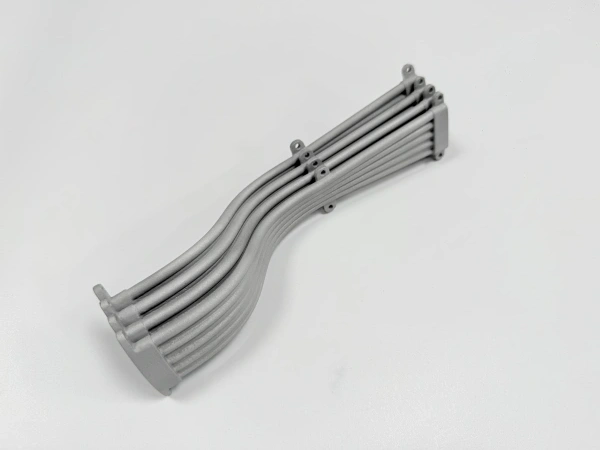
Metal additive manufacturing can produce dense near-net parts, but internal porosity, lack-of-fusion risk, and fatigue-sensitive locations may still need review. HIP is often discussed because pressure and temperature can help close certain internal defects in suitable materials. The buyer should not assume that every printed part needs HIP, or that HIP alone solves every acceptance issue.
The functional risk matters. A display prototype, fixture cover, or trial assembly bracket may not need HIP. A rotating component, pressure-boundary feature, load-bearing bracket, hot-section part, or fatigue-critical titanium structure may require a more serious HIP discussion. The drawing, application environment, and buyer specification should decide the scope.
HIP should also be considered together with surface condition. Internal density review does not remove support marks, improve all external surfaces, or machine critical interfaces. Sealing faces, bores, threads, and datums may still need CNC or EDM after thermal processing.
The RFQ should identify where porosity would matter. A cosmetic outer wall may have a different risk level than a bolt lug, fillet, thin web, rotating feature, or pressure contact surface. When the buyer marks the critical zones, Neway can review whether HIP, CT, machining, or a design change is the right way to control the risk.
When HIP Should Be Required Instead of Optional
Buyers should request HIP as a required operation when the acceptance requirement depends on internal integrity, fatigue performance, or high-risk service. It may be optional when the part is early-stage, non-load-bearing, or being used to validate shape before final material and test requirements are known.
The safest RFQ structure separates the base printed part from required HIP and optional HIP. That allows purchasing to see the cost and schedule effect without hiding the operation inside a general post-processing line. If HIP is mandatory because of a drawing note or customer specification, it should be stated clearly before quotation.
Prototype stage also matters. A first sample used to verify assembly may not justify the same HIP package as a production-intent sample used for fatigue testing. A pilot lot may need HIP records and stable post-HIP machining so the buyer can compare repeatability. The part stage should be stated in the RFQ so the supplier does not overprice a simple trial or under-scope a serious validation build.
Part condition | HIP decision | Why it affects the quote | Buyer evidence to define |
|---|---|---|---|
Fit-check prototype | Often optional unless material testing is planned. | Skipping HIP may reduce early prototype cost and schedule. | State that the build is for geometry or assembly review. |
Fatigue-sensitive bracket | Usually discussed as required or strongly recommended. | HIP records, thermal sequence, and inspection become part of acceptance. | Load path, critical surfaces, and fatigue-related requirement. |
Pressure or leak-related part | Should be reviewed with density and leak evidence. | HIP may be paired with machining and pressure-related checks. | Pressure medium, sealing faces, and leak test requirement if specified. |
Hot-section superalloy part | Often tied to material and high-temperature risk review. | Heat treatment, HIP, CNC, and surface condition may be linked. | Alloy, temperature exposure, drawing notes, and records required. |
Material Family Changes the HIP Discussion
Superalloy 3D printing often brings HIP into the RFQ when the part is exposed to heat, cyclic loading, or structural risk. Inconel 718, Hastelloy, and other nickel alloy routes may also require heat treatment steps that should not be merged casually with HIP.
Titanium 3D printing may require stress relief, heat treatment, HIP, and CNC finishing depending on grade, oxygen-sensitive handling considerations, fatigue risk, and buyer documentation. Aluminum, stainless steel, and copper alloy parts may have different reasons to include or exclude HIP. Material availability and the buyer's specification should control the decision.
HIP is not a substitute for choosing a suitable material or process. If a geometry is difficult to print without defects, the first review should still include orientation, support, powder removal, and design modification. HIP can support the route, but it should not be used to excuse a poor DFM decision.
Material group | HIP review focus | Sequence concern | Quote note buyers should add |
|---|---|---|---|
Nickel superalloys | Density, hot-section risk, fatigue, and high-temperature service. | Coordinate HIP, heat treatment, support removal, and CNC. | State alloy, application temperature, and required records. |
Titanium alloys | Fatigue risk, structural use, grade control, and final machining. | Thermal movement may affect final datums and interfaces. | Identify Grade 5, Grade 23, TA15, or required equivalent. |
Stainless steels | Internal integrity, corrosion-related surfaces, and machined interfaces. | Passivation or surface treatment may follow machining. | Mark sealing faces, fluid contact, and inspection scope. |
Aluminum and copper alloys | Material-specific review rather than automatic HIP inclusion. | Thermal processing and distortion risk need engineering review. | Ask for optional HIP only if function or specification needs it. |
HIP Can Move the Machining Boundary
HIP and heat treatment can affect the dimensional condition of a printed blank. For many finished parts, final CNC machining should be reviewed after thermal processing because datums, bores, sealing faces, and mounting pads need to match the final condition. If the part is fully machined before HIP, later movement may create inspection risk.
Some projects may need rough machining before HIP to create stock references or remove support-affected material, followed by final machining after HIP. Other parts may go directly from printing and support removal into HIP, then machining. The correct sequence depends on geometry, material, and acceptance requirements.
Buyers should state whether they are buying a HIP-treated printed blank or a HIP-treated finished component. A blank may only need envelope and stock confirmation. A finished component needs final machining and inspection after the thermal route is complete.
Machining allowance should be planned with HIP in mind. If a bore, thread, sealing face, or datum pad must be accepted after HIP, the printed blank needs enough material for final machining after the thermal cycle. If stock is removed too early, the finished part may not have enough material left to correct movement or surface condition.
Inspection After HIP Should Prove the Right Risk
Inspection after HIP should match the reason HIP was ordered. If HIP was requested for internal density, CT or other internal evidence may be discussed when specified by the buyer. If HIP was requested for fatigue-sensitive hardware, the buyer may require material records, heat-treatment records, HIP records, and dimensional inspection on critical surfaces. If HIP was only optional for a prototype, a simpler inspection package may be suitable.
Neway should not promise application approval from HIP alone. Aerospace, medical, and energy parts remain subject to buyer drawings, qualification plans, and acceptance standards. HIP can be one controlled manufacturing step inside that route, but it does not replace qualification or design validation.
Inspection sequence should also be clear. A pre-HIP dimensional check may confirm the blank is suitable to process, while the post-HIP CMM report confirms the finished machining route. If CT or internal review is required, the buyer should state whether it is needed before HIP, after HIP, or only on final parts. That decision changes cost and schedule.
Prepare a HIP Scope That Suppliers Can Quote
For a reliable HIP RFQ, send the STEP file, 2D drawing, material grade, quantity, printing process if known, application environment, load or fatigue concern, density or internal integrity requirement, HIP requirement status, heat treatment expectations, machined surfaces, surface finish, inspection records, and target delivery window. State whether HIP is mandatory, optional, or being evaluated as a separate quote line.
If the cost impact is unclear, ask Neway to separate printing, HIP, heat treatment, CNC post-machining, surface treatment, and inspection records. That lets the buyer decide whether HIP belongs in the first prototype, the production-intent build, or only the final qualified route.
Related FAQs