
AlSi10Mg vs Aluminum 6061 and 7075: Which Alloy Is Better for 3D Printed Parts?
AlSi10Mg vs Aluminum 6061 and 7075: Which Alloy Is Better for 3D Printed Parts?
AlSi10Mg vs 6061 and AlSi10Mg vs 7075 are common questions when engineers consider converting a traditional CNC aluminum part into a 3D printed aluminum component. Many buyers are familiar with 6061 and 7075 from machining, plates, bars, fixtures, and structural parts. However, aluminum alloy 3D printing has different material selection logic from conventional CNC machining.
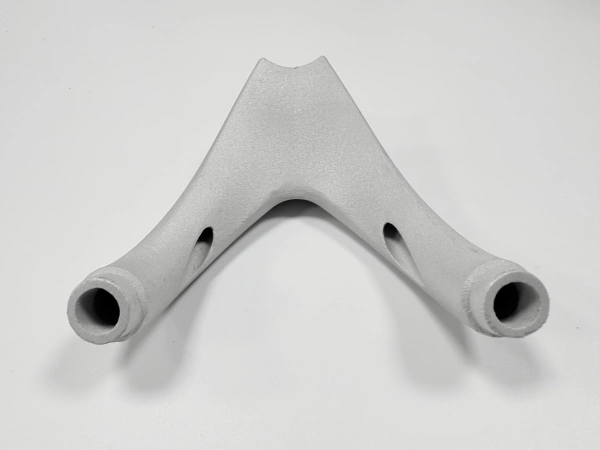
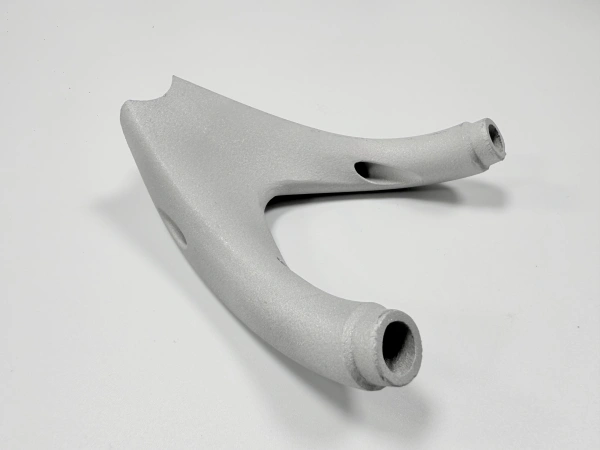
For powder bed fusion, AlSi10Mg aluminum 3D printing is often preferred because it offers good printability, lightweight performance, complex-geometry capability, and practical supply stability for custom printed aluminum parts. In contrast, 6061 and 7075 are widely used CNC materials, but they are not always the easiest or most stable choice for metal powder bed fusion.
This does not mean AlSi10Mg is automatically better than 6061 or 7075 in every application. The best aluminum alloy depends on part geometry, load condition, tolerance requirement, production quantity, post-processing route, lead time, and whether the part is intended for printing, CNC machining, or hybrid manufacturing.
Why Material Selection Matters for 3D Printed Aluminum Parts
Material selection affects strength, weight, manufacturability, cost, lead time, surface quality, post-processing, and inspection. For aluminum alloy 3D printing, the most familiar CNC alloy is not always the best printable alloy. A material that machines well from billet may not have the same stability, availability, or process maturity in powder bed fusion.
When customers ask whether AlSi10Mg can replace 6061 or 7075 for a 3D printed prototype or functional part, the answer depends on the application. If the main goal is complex geometry, lightweight structure, internal flow channels, rapid iteration, or low-volume production without tooling, AlSi10Mg is often a practical choice. If the part is a simple machined block, plate, shaft, or high-load component requiring a specific wrought aluminum grade, CNC machining from 6061 or 7075 may still be more suitable.
Decision Factor | Why It Matters | Material Selection Impact |
|---|---|---|
Part geometry | Complex internal features may be difficult to machine from billet | AlSi10Mg is often preferred for printable complex structures |
Strength requirement | High-load parts may require a specific aluminum grade or heat-treated condition | 6061 or 7075 may be better for certain CNC-machined structural parts |
Lead time | Material availability and process maturity affect quotation and delivery | AlSi10Mg usually offers more stable planning for aluminum powder bed fusion |
Post-processing | Machining, finishing, and heat treatment affect the final result | Hybrid printing plus CNC machining may be the best route |
Cost target | Cost depends on geometry, quantity, supports, machining, and inspection | Simple parts may be cheaper by CNC, while complex parts may favor printing |
AlSi10Mg Overview for Aluminum 3D Printing
AlSi10Mg is an aluminum-silicon-magnesium alloy commonly used for powder bed fusion and SLM-type aluminum 3D printing. It is selected because it offers good printability, low density, balanced mechanical properties, and manufacturing stability for complex lightweight aluminum parts.
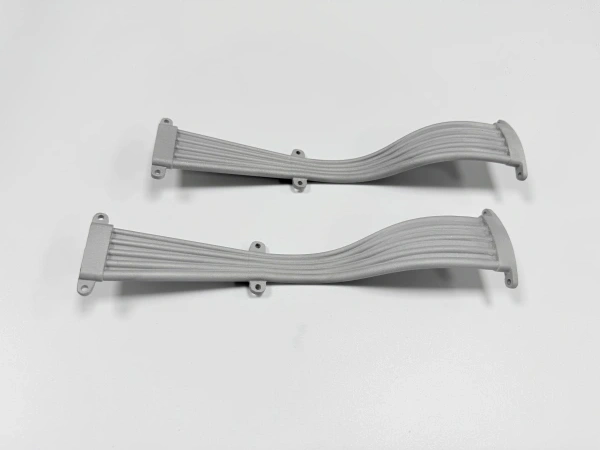
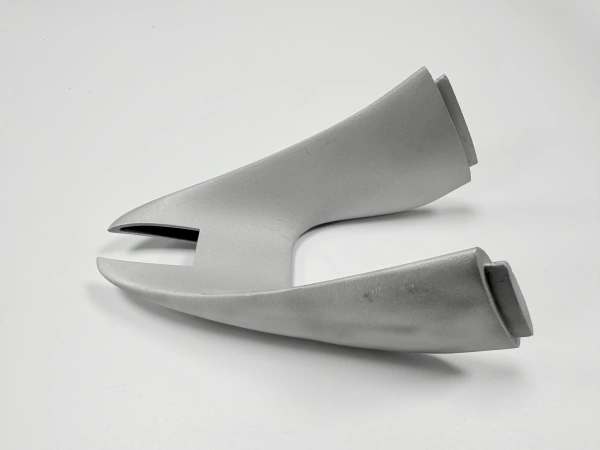
AlSi10Mg is especially suitable for functional prototypes, small-batch production, thin-wall housings, lightweight brackets, cooling structures, internal channels, robotics components, and automotive development parts. For engineers who need a printable aluminum alloy instead of a conventional billet material, AlSi10Mg is often the most practical starting point.
AlSi10Mg Advantage | Why It Helps in 3D Printing | Typical Application |
|---|---|---|
Good printability | Suitable for powder bed fusion and complex aluminum structures | Functional prototypes, lightweight housings, custom brackets |
Low density | Supports lightweight part design | Automotive, robotics, aerospace development parts |
Complex geometry capability | Enables internal channels, thin walls, and integrated features | Cooling structures, compact housings, optimized brackets |
Small-batch flexibility | Avoids tooling and supports fast design iteration | Prototype runs, validation parts, customized production batches |
Aluminum 6061 Overview for CNC and 3D Printing Decisions
Aluminum 6061 is one of the most familiar aluminum alloys for CNC machining, plates, extrusions, fixtures, housings, and general structural parts. It offers good machinability, corrosion resistance, availability, and broad engineering acceptance in traditional manufacturing.
However, the fact that 6061 is common for CNC machining does not automatically make it the best choice for powder bed fusion. For many 3D printed aluminum projects, engineers select AlSi10Mg because it is more established for metal additive manufacturing. If the part must specifically be 6061 due to drawing requirements, performance requirements, or customer qualification, printing feasibility and material availability should be evaluated separately.
6061 Strength | Why It Is Common in Traditional Manufacturing | 3D Printing Consideration |
|---|---|---|
Machinability | Works well for CNC machining, drilling, tapping, and milling | Still often preferred when the part is simple and fully machined |
Availability | Widely available as plate, bar, extrusion, and billet | Powder bed fusion availability may differ from billet supply |
General-purpose performance | Suitable for many brackets, housings, and fixtures | AlSi10Mg may be more practical when the part geometry requires printing |
Engineering familiarity | Commonly specified by engineers and buyers | Material substitution should be confirmed if switching to AlSi10Mg |
Aluminum 7075 Overview for High-Strength Aluminum Parts
Aluminum 7075 is a high-strength aluminum alloy commonly used for CNC-machined load-bearing parts, aerospace-related components, performance hardware, and structural applications where higher strength is required. It is often selected when 6061 is not strong enough for the required load condition.
For 3D printed aluminum material selection, 7075 needs separate feasibility review. High-strength wrought aluminum alloys are not always straightforward to print by powder bed fusion, and powder availability, process stability, cracking risk, heat treatment route, and final property requirements must be evaluated. If a part requires 7075 specifically and the geometry is simple, CNC machining may still be the more practical route.
7075 Strength | Why It Is Used | 3D Printing Consideration |
|---|---|---|
High mechanical strength | Selected for high-load aluminum components | Printing feasibility and final properties must be confirmed |
Aerospace and performance use | Common for structural applications where strength matters | May require strict material and process evaluation before printing |
CNC machining suitability | Often used as billet, plate, or bar stock for precision machining | CNC may be better for simple high-strength parts |
Material specification sensitivity | Often selected for defined strength and performance targets | Do not substitute with AlSi10Mg without engineering approval |
Comparison Table: AlSi10Mg vs 6061 vs 7075
The comparison between AlSi10Mg, 6061, and 7075 should focus on manufacturing route as much as material properties. AlSi10Mg is commonly selected for aluminum alloy 3D printing, while 6061 and 7075 are more familiar as conventional CNC materials. The correct choice depends on whether the part benefits more from printability or from wrought aluminum properties.
Comparison Item | AlSi10Mg | Aluminum 6061 | Aluminum 7075 |
|---|---|---|---|
Typical manufacturing route | Powder bed fusion / SLM aluminum 3D printing | CNC machining from billet, plate, bar, or extrusion | CNC machining from high-strength billet, plate, or bar |
Printability | Common choice for printable aluminum parts | Printing feasibility should be reviewed separately | Printing feasibility and supply stability require careful evaluation |
Strength focus | Balanced lightweight performance for printed structures | General-purpose strength for machined aluminum parts | High-strength aluminum for demanding CNC components |
Lead time | Good for complex prototypes and small batches without tooling | Good for simple machined parts when stock is available | Good for CNC if material stock and machining capacity are available |
Cost logic | Cost depends on print volume, supports, post-processing, and inspection | Cost depends on machining time, stock size, tolerance, and finishing | Cost depends on material cost, machining time, tool wear, and tolerance |
Best application | Complex lightweight printed parts, internal channels, prototypes, small batches | Standard brackets, fixtures, plates, housings, machined parts | High-load machined components and structural aluminum parts |
When to Choose AlSi10Mg
Choose AlSi10Mg when the project benefits from additive manufacturing rather than simple machining. It is often the better choice for complex geometry, lightweight structures, internal flow channels, topology-optimized parts, fast prototype validation, and small-batch aluminum production without tooling.
AlSi10Mg is also suitable when the design can accept printed aluminum material performance and when key surfaces can be finished after printing. If a customer wants a 3D printed aluminum prototype material for functional testing, AlSi10Mg is often more practical than trying to print a conventional CNC alloy that may not be as stable or available for powder bed fusion.
Choose AlSi10Mg When | Engineering Reason |
|---|---|
The part has complex geometry | Powder bed fusion can produce shapes that are difficult to machine directly |
The design includes internal channels | AlSi10Mg printing can create flow paths, cooling channels, and internal features |
The project needs lightweight optimization | Supports hollow structures, thin walls, lattice features, and topology-optimized geometry |
The order is prototype or small batch | Avoids tooling and supports fast design iteration |
The part needs hybrid finishing | Printed blanks can be CNC machined on critical surfaces after printing |
When to Choose 6061 or 7075
Choose 6061 or 7075 when the part is better suited to traditional machining from standard aluminum stock. If the component is a simple plate, block, bracket, shaft, fixture, or high-precision machined part without internal channels or complex additive geometry, CNC machining may be more economical and predictable.
6061 is often suitable for general-purpose machined aluminum components, while 7075 is selected for higher-strength machined parts. If the drawing requires 6061 or 7075 for qualification reasons, material substitution should not be made without engineering approval. In that case, the supplier should evaluate whether CNC machining, printing, or a hybrid route is best.
Choose 6061 or 7075 When | Recommended Route | Reason |
|---|---|---|
The part is simple and fully accessible | CNC machining | Machining may be faster, cheaper, and more accurate for simple geometry |
The drawing specifies 6061 | CNC machining or feasibility-reviewed printing | Material requirement should be followed unless substitution is approved |
The drawing specifies 7075 | CNC machining is often practical | 7075 is commonly selected for high-strength machined aluminum parts |
The part needs very tight tolerances throughout | CNC machining | Full machining may offer better dimensional control for simple parts |
The part uses standard plate, bar, or extrusion | CNC machining | Stock material is usually easier to source and process for traditional geometries |
Hybrid Manufacturing Strategy: AlSi10Mg Printing Plus CNC Machining
For many custom aluminum parts, the best solution is not purely 3D printing or purely CNC machining. A hybrid manufacturing strategy can print the complex AlSi10Mg near-net-shape blank first, then CNC machine key surfaces, holes, threads, datum faces, sealing surfaces, and assembly interfaces.
This approach is useful when the part benefits from additive geometry but still requires precision where it connects to other components. For functional parts, fixtures, lightweight brackets, and prototype assemblies used in manufacturing and tooling, hybrid manufacturing can reduce design limitations while preserving final assembly accuracy.
Hybrid Feature | Why Printing Helps | Why CNC Machining Helps |
|---|---|---|
Lightweight bracket | Creates topology-optimized or hollow geometry | Finishes mounting holes and datum surfaces |
Cooling structure | Builds internal channels and complex flow paths | Finishes sealing faces and threaded ports |
Functional housing | Integrates internal features and compact geometry | Machines bearing seats, covers, screw holes, and mating faces |
Automotive development part | Supports fast design iteration and lightweight features | Controls assembly interfaces and final tolerances |
Quote Decision Guide for Aluminum Material Selection
To choose the right aluminum alloy and manufacturing route, the supplier needs enough information to evaluate geometry, load, material requirement, tolerance, quantity, post-processing, and delivery needs. A 3D model helps determine whether the part benefits from printing, while a 2D drawing confirms material, tolerances, datum features, threads, surface finish, and inspection requirements.
For automotive 3D printing, robotics parts, development fixtures, and lightweight structures, AlSi10Mg can often provide fast and practical metal prototypes. For simple 6061 or 7075 machined parts, CNC may still be the better route. The final decision should be based on engineering value, not only material name familiarity.
For faster quotation, please provide the following information:
3D CAD model, preferably STEP, X_T, IGS, or STL format
2D drawing with material grade, tolerances, datum requirements, threads, surface finish, and inspection notes
Preferred material, such as AlSi10Mg, 6061, 7075, or an approved alternative
Application load, stiffness requirement, temperature, vibration, fatigue, or thermal performance needs
Quantity for prototype, functional validation, small-batch production, or repeat order
Required post-processing, such as CNC machining, heat treatment, blasting, polishing, anodizing, or surface treatment
Inspection requirements, such as dimensional report, CMM report, material certificate, surface roughness report, or CT inspection
Target delivery schedule and shipping destination
Why Work with Neway3DP for Aluminum Material Selection?
Neway3DP supports custom aluminum 3D printing material selection for prototypes, lightweight parts, small-batch production, fixtures, automotive components, robotics structures, and functional aluminum assemblies. We can help customers evaluate whether AlSi10Mg printing, 6061 machining, 7075 machining, or a hybrid route is more suitable for the project.
Our material support includes Aluminum alloys for powder bed fusion and broader 3D printing materials for custom manufacturing projects. With complete CAD files, drawings, quantity, load requirements, and post-processing notes, we can recommend a practical route for custom aluminum parts.
FAQ
Is AlSi10Mg a Good Material for Custom Aluminum 3D Printed Parts?
What Tolerances Can AlSi10Mg 3D Printed Parts Achieve After CNC Machining?
How Much Does AlSi10Mg 3D Printing Cost for Prototype and Small-Batch Parts?
Can AlSi10Mg 3D Printing Replace CNC Machined Aluminum Parts?
What Post-Processing Is Recommended for AlSi10Mg 3D Printed Parts
.webp)