AlMgScZr vs AlSi10Mg: Which Aluminum Alloy Is Better for 3D Printed Structural Parts?
AlMgScZr vs AlSi10Mg: Which Aluminum Alloy Is Better for 3D Printed Structural Parts?
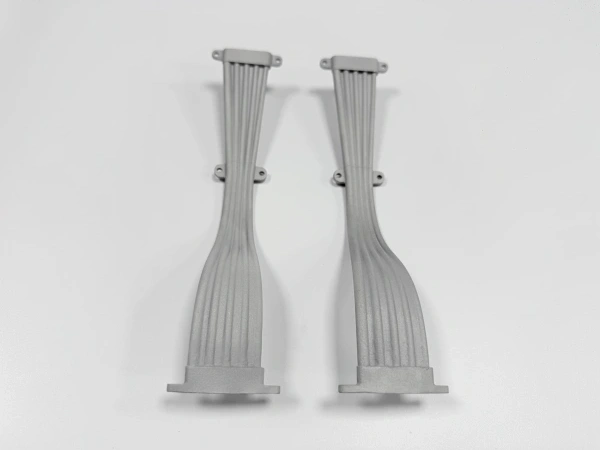
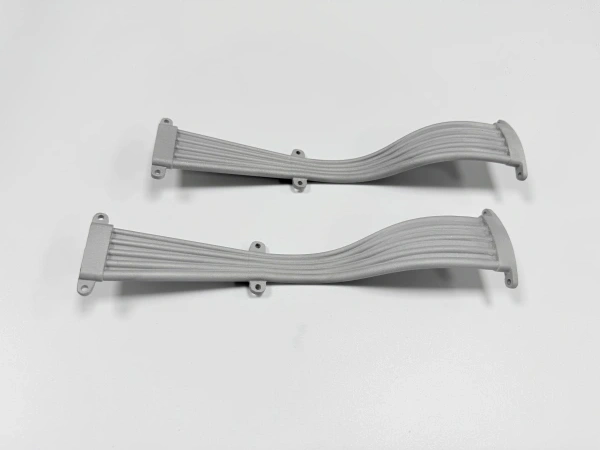
AlMgScZr vs AlSi10Mg is an important material selection question for engineers and buyers planning custom aluminum 3D printed parts. Both materials can be used in powder bed fusion, but they are not positioned for the same type of application. AlSi10Mg is commonly selected for lightweight prototypes, housings, thermal components, fixtures, and general functional aluminum parts. AlMgScZr, often compared with Scalmalloy-type aluminum alloys, is more focused on high-strength lightweight structural parts.
At Neway3DP, we support both Scalmalloy 3D printing and Aluminum AlSi10Mg printing for custom aluminum parts. The right material should be selected based on load, weight target, cost, lead time, geometry, post-processing route, inspection level, and final application environment.
For 3D printed structural parts, the best material is not always the strongest or the lowest-cost option. The best choice is the alloy that meets the required performance while keeping manufacturing risk, post-processing cost, and delivery schedule under control.
Why Compare AlMgScZr and AlSi10Mg?
AlMgScZr and AlSi10Mg are both important aluminum alloys for powder bed fusion, but they serve different engineering purposes. AlSi10Mg is usually chosen when the customer needs a practical and cost-friendly printed aluminum part with good manufacturability. AlMgScZr is selected when the part needs higher strength-to-weight performance, better structural capability, or stronger justification for a premium aluminum additive manufacturing material.
This comparison is especially useful when customers are designing lightweight brackets, drone structures, robotics arms, automotive development parts, sports equipment components, or functional structural prototypes. Choosing the wrong alloy may increase cost unnecessarily or fail to meet the real performance requirement.
Comparison Question | Why It Matters | Material Selection Impact |
|---|---|---|
Is the part mainly a prototype or a structural component? | Prototype and structural parts may have different strength, cost, and inspection needs | AlSi10Mg may fit prototypes, while AlMgScZr may fit higher-load structures |
Is weight reduction the main goal? | Both materials are lightweight, but structural efficiency may differ | AlMgScZr is often considered when higher specific strength is needed |
How critical is cost? | Material cost and post-processing can change the total part price | AlSi10Mg is usually more cost-friendly for general applications |
Is the application fatigue-sensitive? | Cyclic loading, vibration, and structural use require careful material selection | AlMgScZr may be evaluated for higher-performance structural applications |
What post-processing is required? | Heat treatment, CNC machining, surface finishing, and inspection affect final cost | The final route should be selected together with the material |
AlSi10Mg Overview for 3D Printed Aluminum Parts
AlSi10Mg is one of the most common aluminum alloys for powder bed fusion. It is selected because it offers good printability, low density, practical mechanical performance, and stable manufacturing behavior for many custom aluminum parts. For general lightweight aluminum 3D printing, AlSi10Mg is often the first material to evaluate.
AlSi10Mg is suitable for lightweight prototypes, thin-wall housings, thermal management parts, jigs, fixtures, validation components, and small-batch functional aluminum parts. It is also useful when the project needs internal channels, compact geometry, or fast delivery without tooling. For many rapid prototyping solutions, AlSi10Mg provides a practical balance between performance, cost, and lead time.
AlSi10Mg Advantage | Engineering Value | Typical Application |
|---|---|---|
Good printability | Supports stable powder bed fusion production for many aluminum part geometries | Functional prototypes, housings, brackets, small batches |
Cost-friendly material choice | Often more practical than premium high-strength aluminum alloys | Prototype and general-purpose printed aluminum parts |
Thermal and housing applications | Useful for heat-related parts and compact enclosures | Heat sinks, electronic housings, cooling structures |
Low-volume flexibility | Avoids tooling and supports quick design iteration | Development parts, test fixtures, validation hardware |
AlMgScZr Overview for High-Strength Aluminum 3D Printing
AlMgScZr is a scandium- and zirconium-modified aluminum-magnesium alloy family used for high-strength lightweight aluminum additive manufacturing. It is often selected when the project requires more structural performance than standard printed aluminum alloys can provide.
Compared with AlSi10Mg, AlMgScZr is usually positioned for more demanding structural applications. It is especially relevant for aerospace brackets, UAV components, motorsport parts, robotics arms, lightweight structural nodes, and high-end sports equipment where weight reduction and load-bearing capability both matter.
AlMgScZr Advantage | Engineering Value | Typical Application |
|---|---|---|
Higher strength-to-weight potential | Supports lightweight structural parts with stronger performance requirements | Aerospace brackets, UAV structures, racing components |
Structural positioning | Better suited for load-bearing parts than low-load appearance prototypes | Robotics arms, structural connectors, lightweight frames |
Fatigue-sensitive potential | Can be evaluated when vibration and cyclic loading are important | Motorsport, robotics, aerospace, and sports equipment components |
Premium material choice | Best used where performance value justifies higher material and process cost | High-value lightweight structural parts |
Comparison Table: AlMgScZr vs AlSi10Mg
The difference between AlMgScZr and AlSi10Mg should be evaluated from the full manufacturing route, not only material name. Strength, ductility, fatigue potential, cost, lead time, post-processing, inspection, and application risk all affect the final decision.
Comparison Item | AlSi10Mg | AlMgScZr / Scalmalloy-Type Alloy |
|---|---|---|
Material positioning | General printable aluminum alloy for prototypes and functional parts | High-strength lightweight aluminum alloy for structural applications |
Strength focus | Balanced performance for many printed aluminum applications | Higher specific strength potential for load-bearing lightweight structures |
Ductility and structural behavior | Suitable for many non-critical and moderate-load printed parts | More suitable when structural behavior and load response are critical |
Fatigue potential | Can be used for functional parts when properly designed and processed | Often considered when fatigue, vibration, or cyclic loading matters more |
Cost | Usually more cost-friendly for general aluminum printing | Higher material cost; best used when performance need is clear |
Lead time | Usually easier to plan for common aluminum printed parts | May require closer material availability and process confirmation |
Typical applications | Housings, heat-dissipation parts, prototypes, fixtures, validation parts | Aerospace brackets, UAV structures, robotics arms, racing parts, sports equipment structures |
Post-processing | Support removal, heat treatment if required, CNC machining, surface finishing | Heat treatment, CNC machining, surface finishing, possible enhanced inspection for structural parts |
When to Choose AlSi10Mg
Choose AlSi10Mg when the project needs a practical aluminum 3D printed part with good printability, reasonable cost, and fast manufacturing flexibility. It is suitable for general lightweight prototypes, housings, heat-dissipation structures, fixtures, validation parts, and small-batch aluminum components where the main goal is functional testing or design verification.
AlSi10Mg is also a strong choice when the part includes complex geometry but does not require premium high-strength aluminum performance. For many automotive, industrial, and product development projects, it can provide a good balance between cost, lead time, and functionality.
Choose AlSi10Mg When | Engineering Reason |
|---|---|
The part is a functional prototype | AlSi10Mg supports fast metal validation without tooling |
The application is moderate-load | Provides practical performance for many printed aluminum parts |
The part is a housing or thermal component | Suitable for enclosures, cooling structures, and heat-related aluminum parts |
Cost and lead time are important | Usually easier to quote and manufacture than premium aluminum printing alloys |
The project is early-stage development | Good choice for testing geometry, assembly, and basic functional performance |
When to Choose AlMgScZr
Choose AlMgScZr when the project requires a high-strength lightweight aluminum part rather than a standard printed prototype. This material is better suited for load-bearing structures, fatigue-sensitive parts, aerospace brackets, UAV components, motorsport hardware, robotics arms, and high-performance sports equipment structures.
For automotive 3D printing and motorsport parts, AlMgScZr may be selected when weight reduction and structural performance are both important. For sports and recreation applications, it can support high-end lightweight components where performance justifies a premium material route.
Choose AlMgScZr When | Engineering Reason |
|---|---|
The part is load-bearing | AlMgScZr is more suitable for high-strength lightweight structural parts |
The application is aerospace, UAV, racing, or robotics | These applications often require higher strength-to-weight performance |
The design is topology optimized | Material performance can be used together with lightweight structural optimization |
The part is fatigue or vibration sensitive | Higher-performance material selection may help reduce structural risk |
The performance value justifies higher cost | Best used where strength, weight, and reliability are more important than minimum price |
Cost and Manufacturing Considerations
Cost is one of the most important differences between AlMgScZr and AlSi10Mg. AlSi10Mg is usually more cost-friendly for general aluminum 3D printed parts. AlMgScZr is a premium material choice, so it should be used when the project has a clear need for higher structural performance, weight reduction, fatigue potential, or advanced engineering value.
Manufacturing cost also depends on support structure, build orientation, heat treatment, CNC machining, surface finishing, and inspection requirements. AlMgScZr parts often require more careful engineering review because they are typically used in higher-value structural applications. AlSi10Mg parts may have simpler quotation logic when the application is a general prototype or functional aluminum component.
Cost Factor | AlSi10Mg | AlMgScZr |
|---|---|---|
Material cost | Usually more economical for common aluminum printed parts | Higher material cost; better for performance-driven parts |
Engineering review | Standard DFM review for geometry, supports, and post-processing | More detailed review for load path, fatigue risk, and structural function |
Post-processing | Often support removal, heat treatment if needed, CNC machining, surface finishing | Often heat treatment, CNC machining, surface finishing, and more detailed inspection |
Inspection | Dimensional report, CMM, material certificate, or surface check as required | May require CMM, CT, mechanical testing, or additional structural verification |
Best cost strategy | Use for general prototypes, housings, fixtures, and low-to-moderate load parts | Use only where high-strength lightweight performance creates clear value |
Final Selection Guide for Aluminum 3D Printing Materials
The final choice between AlMgScZr and AlSi10Mg should start from the application. If the part is a prototype, housing, heat-dissipation component, fixture, or general small-batch aluminum part, AlSi10Mg is often the practical choice. If the part is structural, load-bearing, fatigue-sensitive, or weight-critical, AlMgScZr should be evaluated.
Neway3DP supports custom aluminum 3D printed parts across multiple aluminum alloys and broader 3D printing materials. With the right information, we can help customers evaluate whether AlSi10Mg or AlMgScZr is more suitable for the design, application, and budget.
Selection Question | Recommended Direction |
|---|---|
Is the part mainly for prototype validation? | Choose AlSi10Mg unless higher structural performance is required |
Is the part load-bearing or fatigue-sensitive? | Evaluate AlMgScZr for higher strength-to-weight performance |
Is cost the main priority? | AlSi10Mg is usually the more practical starting point |
Is weight reduction critical to product performance? | AlMgScZr may justify the higher material cost |
Are inspection requirements strict? | Confirm CMM, CT, material certificate, mechanical testing, and post-processing records before quotation |
RFQ Information for AlMgScZr or AlSi10Mg 3D Printing
To quote AlMgScZr or AlSi10Mg accurately, the supplier needs enough information to evaluate geometry, material suitability, strength requirement, cost target, post-processing, inspection, and delivery schedule. A 3D model helps review part volume and printability, while a 2D drawing confirms tolerances, datums, surface finish, and critical features.
For faster quotation, please provide the following information:
3D CAD model, preferably STEP, X_T, IGS, or STL format
2D drawing with material grade, tolerances, datum requirements, threads, surface finish, and inspection notes
Preferred material, such as AlMgScZr, Scalmalloy-type alloy, AlSi10Mg, or an approved alternative
Application load, load direction, vibration, fatigue, temperature, and structural function
Quantity for prototype, functional validation, small-batch production, or repeat order
Required post-processing, such as heat treatment, CNC machining, HIP if required, blasting, polishing, anodizing feasibility review, or surface treatment
Inspection requirements, such as dimensional report, CMM report, material certificate, CT inspection, surface roughness report, or mechanical testing
Target delivery schedule and shipping destination
Why Work with Neway3DP for Aluminum Material Selection?
Neway3DP supports aluminum 3D printing material selection for prototypes, functional parts, lightweight structures, small-batch production, automotive components, robotics structures, aerospace brackets, and high-performance sports equipment. We can help evaluate whether AlSi10Mg, AlMgScZr, or another aluminum alloy is more suitable for the customer’s design.
Our service includes material review, powder bed fusion printing, heat treatment, CNC machining, surface finishing, and inspection support. For custom aluminum 3D printed parts supplier projects, this helps customers move from CAD design to functional metal components with a more practical material and manufacturing route.
FAQ