AlMgScZr 3D Printing Service for High-Strength Lightweight Aluminum Parts
AlMgScZr 3D Printing Service for High-Strength Lightweight Aluminum Parts
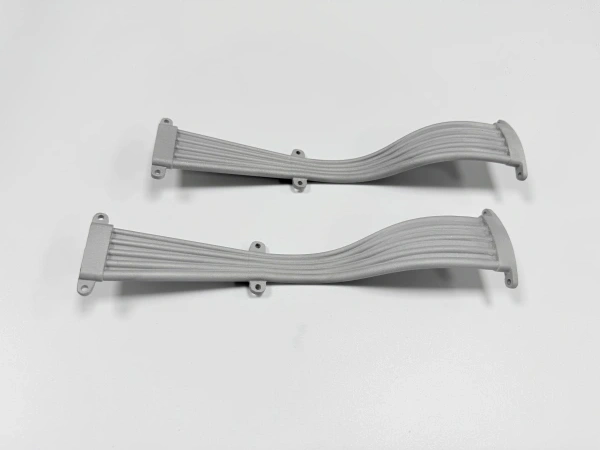
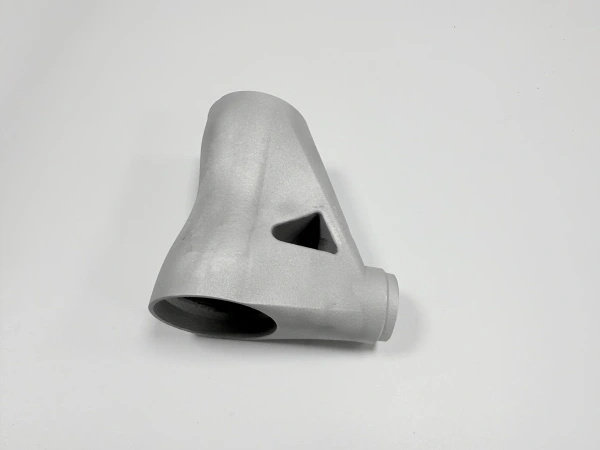
AlMgScZr 3D printing service is used for high-strength lightweight aluminum parts that need more structural performance than standard printed aluminum alloys. This scandium- and zirconium-modified aluminum-magnesium alloy is suitable for load-bearing structures, lightweight aerospace components, UAV parts, robotics arms, racing hardware, and performance sports equipment where weight reduction and mechanical strength are both critical.
At Neway3DP, our Scalmalloy 3D printing service supports custom AlMgScZr-type aluminum parts based on customer CAD files and engineering drawings. We provide powder bed fusion printing, build orientation review, support strategy, heat treatment, CNC machining, surface treatment, inspection, and low-volume production support for functional lightweight aluminum components.
For buyers looking for a custom AlMgScZr 3D printed parts manufacturer, the key is to evaluate the project as a structural aluminum application, not only a visual prototype. The supplier should understand load direction, fatigue risk, wall thickness, topology optimization, deformation control, heat treatment, post-machining allowance, and inspection requirements before confirming the manufacturing route.
What Is AlMgScZr 3D Printing?
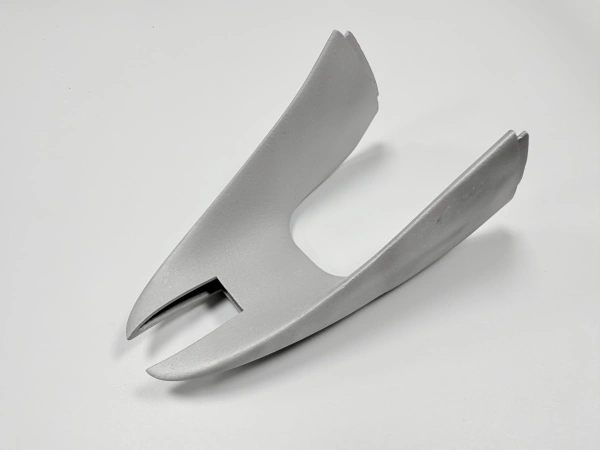
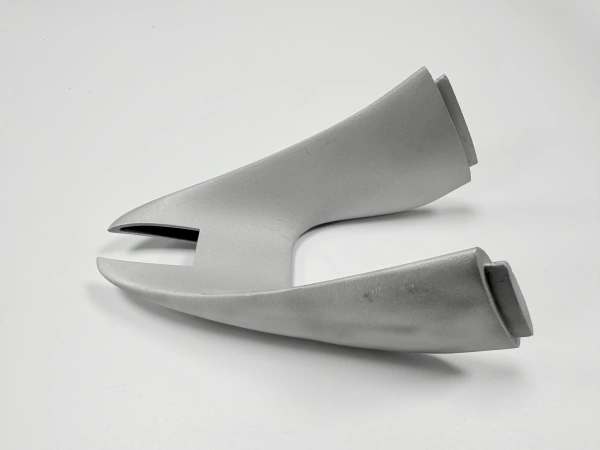
AlMgScZr is a scandium- and zirconium-modified aluminum-magnesium alloy system developed for high-strength lightweight applications. In additive manufacturing, this material family is often compared with Scalmalloy-type aluminum alloys because it can provide higher strength potential than many standard aluminum printing alloys while maintaining low density.
AlMgScZr 3D printing is commonly produced by powder bed fusion 3D printing. A laser selectively melts thin layers of aluminum alloy powder according to the sliced CAD model, allowing complex structures, lightweight lattices, organic brackets, thin-wall housings, and integrated mounting features to be built directly from digital design data.
Material Feature | Why It Matters | Typical Engineering Value |
|---|---|---|
Al-Mg base alloy system | Provides lightweight aluminum performance with structural potential | Load-bearing aluminum parts and optimized structures |
Sc/Zr modification | Supports high-strength aluminum additive manufacturing applications | Aerospace, UAV, robotics, and racing components |
Powder bed fusion compatibility | Enables complex shapes and lightweight structures by metal 3D printing | Topology-optimized brackets, arms, nodes, and housings |
Post-processing potential | Heat treatment and machining can improve final functional performance | Finished structural components ready for assembly |
Why Choose AlMgScZr Instead of Standard Aluminum Alloys?
AlMgScZr is selected when a project needs more than ordinary lightweight aluminum performance. Standard aluminum printing alloys may be suitable for housings, prototypes, low-load brackets, and general lightweight parts. AlMgScZr is more relevant when the component must carry load, reduce weight, resist fatigue risk, or perform as a structural part.
For high strength aluminum 3D printing, the main value is the combination of low density, high specific strength, design freedom, and post-processing flexibility. This makes AlMgScZr especially useful for structural aluminum parts where conventional machining from billet would create high material waste or limit optimized geometry.
Project Requirement | Why AlMgScZr Helps |
|---|---|
High strength-to-weight ratio | Supports lightweight parts that still need structural performance |
Load-bearing aluminum structures | Better suited to functional brackets, arms, connectors, and structural nodes than low-load prototype alloys |
Fatigue-sensitive applications | Can be considered where cyclic loading and lightweight performance are both important |
Complex optimized geometry | Enables topology-optimized structures, hollow sections, and integrated features |
Prototype to low-volume production | Avoids tooling while supporting real functional metal validation |
Typical Applications of AlMgScZr 3D Printed Structural Parts
AlMgScZr 3D printed structural parts are commonly used where customers need lightweight aluminum components with higher mechanical performance, integrated geometry, and functional load-bearing capability. It is not usually selected for simple cosmetic covers or low-load display prototypes. It is better suited to engineering parts where weight reduction and strength both matter.
For aerospace and aviation 3D printing, AlMgScZr can support lightweight brackets, UAV structures, support nodes, housings, and structural validation parts. For robotics components, it can help reduce moving mass in arms, end-effectors, links, and structural frames.
Application Area | Typical AlMgScZr Parts | Why This Material Is Suitable |
|---|---|---|
Aerospace and UAV structures | Lightweight brackets, support nodes, mounts, frames, housings | Combines weight reduction, strength, and complex structural geometry |
Motorsport and racing parts | Custom brackets, performance hardware, lightweight structural connectors | Supports high-performance designs where weight reduction is valuable |
Robotics structures | Arms, end-effectors, links, frames, compact support parts | Reduces moving mass while maintaining structural capability |
Sports equipment | Structural nodes, lightweight connectors, custom performance components | Allows optimized geometry for high strength-to-weight requirements |
Engineering validation parts | Functional prototypes, test structures, small-batch load-bearing parts | Enables real metal testing without tooling investment |
Design Considerations for AlMgScZr Additive Manufacturing
AlMgScZr additive manufacturing should start with design-for-additive-manufacturing review. Because the material is often used for structural lightweight parts, the design must consider wall thickness, support strategy, deformation control, load paths, powder removal, topology optimization, and post-machining allowance before production.
For thin-wall structures and optimized load-bearing parts, the design should avoid unnecessary support-heavy regions, sharp stress concentrators, inaccessible powder traps, and unsupported long spans. Critical holes, threads, datum surfaces, and mating interfaces should be planned for CNC machining after printing.
Design Area | Recommendation | Reason |
|---|---|---|
Wall thickness | Avoid overly thin unsupported walls unless reviewed by engineering | Thin features may deform during printing, heat treatment, support removal, or service |
Support strategy | Review overhangs, load paths, and support contact zones early | Supports affect cost, removal labor, surface quality, and structural surfaces |
Deformation control | Use suitable orientation, support layout, and heat treatment planning | Structural aluminum parts may be sensitive to residual stress and geometry movement |
Powder removal | Provide access for internal cavities, channels, and hollow structures | Prevents trapped powder and cleaning difficulty |
Topology optimization | Optimize load paths while maintaining manufacturability | Improves lightweight performance without creating unnecessary printing risk |
Mechanical Performance Focus for AlMgScZr Printed Parts
AlMgScZr is selected for applications where mechanical performance matters more than simple appearance. Customers usually choose this material because they need high specific strength, lightweight performance, and reliable behavior in load-bearing structures. Mechanical performance should be considered together with build orientation, heat treatment, surface condition, and inspection.
For high strength aluminum additive manufacturing, performance is not only a material property listed on a datasheet. The final part behavior depends on powder quality, printing parameters, heat treatment route, wall thickness, surface finish, internal defects, machining operations, and the actual load environment.
Performance Factor | Why It Matters | Engineering Control Method |
|---|---|---|
Strength | Supports load-bearing lightweight aluminum structures | Material selection, print process control, heat treatment, inspection |
Ductility | Important for structural safety and deformation behavior | Heat treatment planning and mechanical testing if required |
Fatigue performance | Important for cycling, vibration, aerospace, robotics, and racing parts | Surface finishing, HIP if required, CT inspection, design stress reduction |
Thermal stability | Helps maintain performance after processing or service exposure | Heat treatment and application-specific review |
Dimensional stability | Important for machined interfaces and final assembly | Stress relief, CNC machining allowance, CMM inspection |
Post-Processing Options for AlMgScZr 3D Printed Parts
Post-processing is often required for AlMgScZr 3D printed structural parts. As-printed parts may have support marks, residual stress, rough surfaces, and unfinished precision features. Depending on the application, post-processing may include support removal, heat treatment, CNC machining, HIP, blasting, anodizing feasibility review, or other surface treatment.
Neway3DP can support AlMgScZr printed parts with heat treatment, CNC machining for 3D printed parts, surface finishing, and inspection. Heat treatment helps stabilize mechanical performance and dimensional behavior, while CNC machining is used for holes, threads, datums, bearing seats, and mating surfaces.
Post-Processing Step | Why It Is Used | Typical AlMgScZr Part Features |
|---|---|---|
Support removal | Removes printed supports and build plate connection areas | Overhangs, optimized structures, brackets, frames |
Heat treatment | Improves stability and supports final mechanical performance | Load-bearing parts, thin-wall structures, structural nodes |
CNC machining | Finishes precise holes, threads, datum surfaces, and mating interfaces | Mounting faces, bores, bearing seats, threaded holes |
HIP if required | May be considered for fatigue-sensitive or critical structural parts | Aerospace, racing, robotics, and load-cycling applications |
Surface treatment | Improves appearance, corrosion resistance, roughness, or functional surface quality | Visible structures, contact surfaces, aerospace and sports components |
RFQ Requirements for AlMgScZr 3D Printing
To provide an accurate AlMgScZr 3D printing quote, the supplier needs enough information to evaluate geometry, material requirements, load condition, support strategy, post-processing, inspection, and delivery risk. A 3D model is needed for volume and printability review, while a 2D drawing confirms critical dimensions and final assembly requirements.
Because AlMgScZr is usually selected for high-strength lightweight aluminum structures, it is important to share the application environment before quotation. Load direction, vibration, fatigue, temperature, assembly method, and inspection requirements can affect material confirmation, print orientation, heat treatment, CNC machining, and final quality control.
For faster quotation, please provide the following information:
3D CAD model, preferably STEP, X_T, IGS, or STL format
2D drawing with material grade, tolerances, datum requirements, threads, surface finish, and inspection notes
Required material, such as AlMgScZr, Scalmalloy-type aluminum alloy, or approved equivalent
Quantity for prototype, functional validation, small-batch production, or repeat order
Application load, load direction, fatigue requirement, vibration, temperature, and structural function
Required post-processing, such as heat treatment, CNC machining, HIP if required, blasting, polishing, anodizing feasibility review, or surface treatment
Inspection requirements, such as dimensional report, CMM report, material certificate, CT inspection, surface roughness report, or mechanical testing
Target delivery schedule and shipping destination
Why Work with Neway3DP for AlMgScZr 3D Printing?
Neway3DP supports custom AlMgScZr 3D printed parts from early design review to final delivery. Our service is suitable for customers who need lightweight structural aluminum parts, high-strength functional prototypes, UAV components, robotics parts, racing hardware, sports equipment structures, and low-volume aluminum additive manufacturing.
In addition to AlMgScZr-type aluminum printing, Neway3DP supports aluminum alloys for powder bed fusion, post-machining, heat treatment, surface finishing, inspection, and application-focused manufacturing support. This allows customers to receive functional parts rather than only printed blanks.
Neway3DP Support | Customer Benefit |
|---|---|
Material and DFM review | Helps confirm whether AlMgScZr is suitable for the application and geometry |
Powder bed fusion printing | Supports complex lightweight aluminum structures without tooling |
Heat treatment support | Improves stability and supports final mechanical performance |
CNC post-machining | Finishes holes, threads, datums, bearing seats, and assembly interfaces |
Surface finishing | Improves appearance, roughness, corrosion resistance, and functional surfaces |
Inspection support | Provides dimensional verification and documentation according to project needs |
FAQ
.webp)