Scalmalloy 3D Printing for Lightweight Aerospace Brackets
Scalmalloy 3D printing becomes a serious RFQ topic when a buyer needs a lightweight structural aluminum route rather than a general aluminum prototype. It is usually reviewed for aerospace brackets, robotic frames, stiffness-driven mounts, and low-volume structures where weight, geometry, and load path matter together.
The sourcing question is not whether the part can be printed in aluminum. The useful question is whether Scalmalloy, AlSi10Mg, titanium, or a machined wrought aluminum route matches the part function, acceptance requirement, and production stage. For aerospace-related parts, Neway treats the drawing, customer specification, and qualification boundary as controlling documents; additive manufacturing does not automatically make a component flight-approved or safety-qualified.
This article helps buyers prepare a Scalmalloy 3D printing service RFQ for lightweight brackets and frames. The key is to define the load path, critical interfaces, post-processing sequence, inspection evidence, and whether the part is a prototype, test article, pilot lot, or low-volume production component.
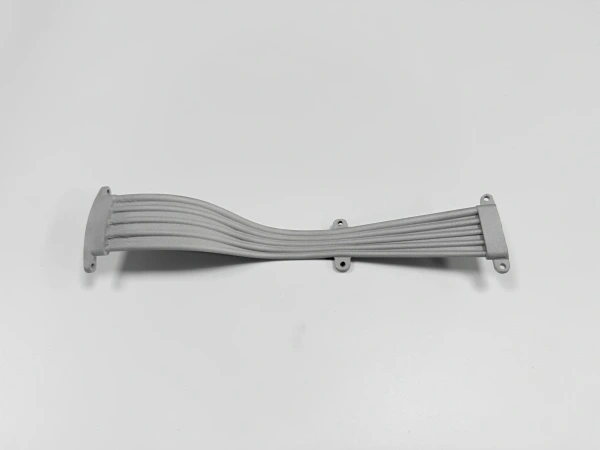
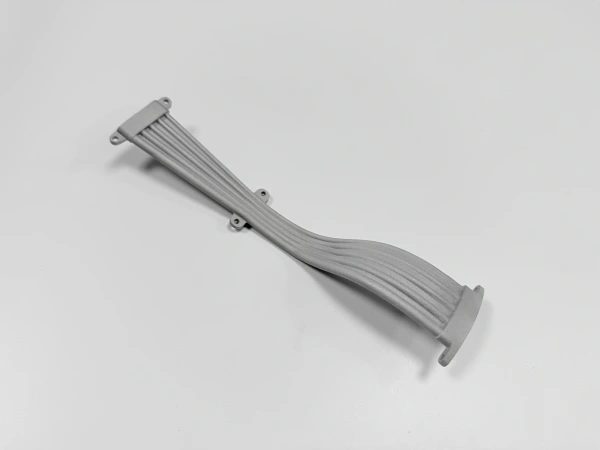
Why Scalmalloy Appears in Lightweight Structural RFQs
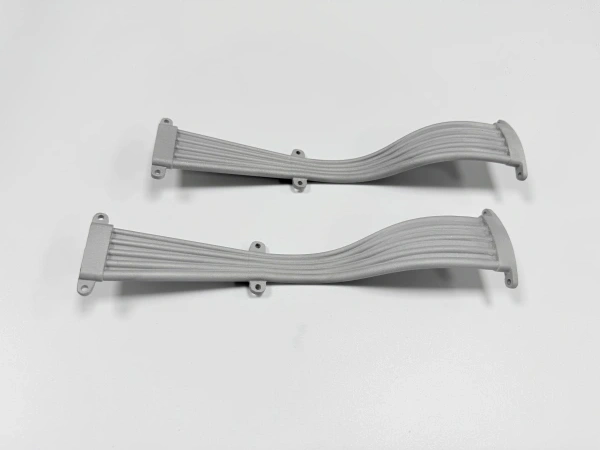
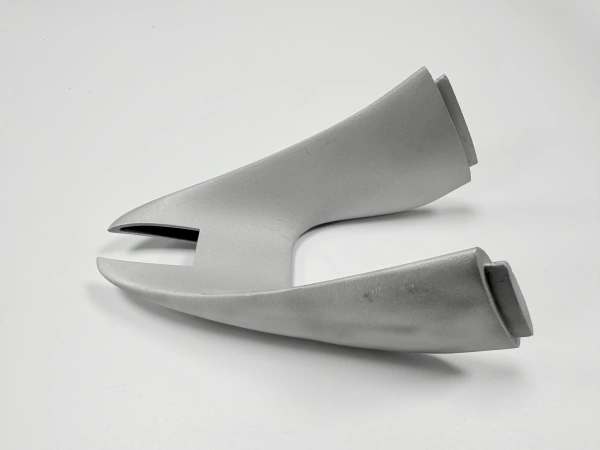
Scalmalloy is usually discussed when the buyer wants an aluminum additive route with higher structural ambition than a basic prototype. Typical RFQs include aircraft interior brackets, UAV mounts, satellite test hardware, robotic arm frames, lightweight fixtures, and compact structures that combine ribs, bosses, cable clearance, and mounting interfaces.
The material choice should follow the part job. A bracket that only checks package space may be suitable in AlSi10Mg. A bracket that must demonstrate stiffness, weight reduction, and repeatable mounting may justify Scalmalloy review. A fatigue-sensitive or temperature-exposed part may need titanium or another route. A simple machined clevis or plate may not need AM at all.
Scalmalloy also changes the commercial discussion. Powder availability, build strategy, post-processing, CNC finishing, and inspection records should be confirmed before quoting. If the buyer has not approved Scalmalloy on the drawing, it should be offered as a reviewed material option, not as an unmarked substitute for another aluminum alloy.
Scalmalloy, AlSi10Mg, and Titanium Do Different Jobs
Buyers often compare Scalmalloy with aluminum alloy powder bed fusion, AlSi10Mg, and Ti-6Al-4V because all can support lightweight AM designs. The comparison should not be reduced to density or alloy name. The final route depends on strength target, stiffness, thermal exposure, corrosion environment, available powder, surface condition, CNC finishing, and required documentation.
Candidate route | Best-fit bracket condition | Procurement risk to confirm |
|---|---|---|
Scalmalloy PBF | Lightweight structural aluminum bracket or robotic frame where geometry and strength target both matter. | Material availability, customer acceptance, heat treatment route, and inspection records. |
AlSi10Mg PBF | Prototype, duct, housing, or lower-risk lightweight aluminum part with mature printable route. | Whether it meets the structural intent or is only a prototype material. |
Titanium PBF | Compact high-load bracket, temperature-sensitive hardware, or part where aluminum stiffness is not enough. | Higher finished-part cost, machining behavior, and material acceptance requirement. |
CNC aluminum | Simple plate, clevis, rail, or open frame with direct tool access. | Whether weight reduction or part consolidation justifies additive manufacturing. |
The Neway comparison page on Ti-6Al-4V and Scalmalloy printed parts can support this material discussion, but the RFQ still needs the buyer's drawing and acceptance criteria.
Bracket Geometry Should Protect the Load Path and Interfaces
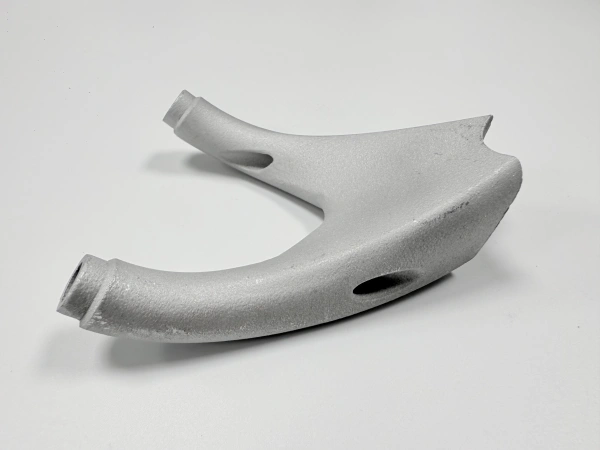
A Scalmalloy bracket is usually valuable because it can place material where load travels and remove material where it does not. That does not mean every wall should become thin or every corner should become organic. Thin ribs, sharp transitions, unsupported overhangs, large flat pads, and closed pockets can increase support volume, local distortion risk, and finishing effort.
The bracket should identify load-bearing arms, mounting bosses, datum pads, cable or tube clearance, and non-contact lightweight regions. Holes used for bolts, dowels, pins, bearings, or alignment should be planned for machining. Sealing surfaces, flat mounting faces, and precision slots should have stock for CNC finishing. If a bracket needs inspection on internal lattice or hidden pocket geometry, that evidence should be requested before quoting.
Robotic frames and aerospace brackets often have different priorities. A robotic frame may focus on stiffness, repeated assembly, and cable routing. An aerospace bracket may focus on mass reduction, controlled interfaces, documentation, and qualification boundaries. The same printed shape can require a different quote if the project context changes.
Load-path review should happen before decorative lightweighting. Removing material from a low-stress pocket may help, but thinning the area around a bolt boss, hinge lug, or hard stop can create a part that is light but difficult to approve. Neway would normally ask which holes define the assembly, which faces carry clamp load, and which ribs can be adjusted for support access. Those answers control build orientation more than the visual style of the bracket.
Heat Treatment and Finishing Should Follow the Bracket Function
Scalmalloy RFQs should state whether stress relief, heat treatment, or other thermal processing is required by the drawing or customer specification. These steps can affect machining sequence and dimensional checks, so they should be reviewed before final CNC. HIP should not be added as a default line unless the buyer's acceptance requirement or engineering review supports it.
Surface finishing should also be functional. Support marks on non-contact lightweight regions may be acceptable after cleanup. Mounting faces, bearing locations, and datum pads usually need CNC. Visible faces may need blasting or polishing. Coating or surface treatment should be tied to corrosion, handling, or customer specification rather than added as a generic note.
The CNC plan should be visible in the CAD model or drawing. If a flat pad needs final machining, the printed model should leave stock. If a bracket needs a reamed hole, the printed hole may be used as a pilot or may be printed undersized, depending on access and fixturing. If a rib blocks the tool path to a boss, the design may need a local clearance change before printing. These decisions are cheaper to make during RFQ review than after the first build is complete.
Bracket feature | Likely finishing route | Decision needed before release |
|---|---|---|
Bolt holes and dowel locations | CNC drilling, reaming, or thread machining after thermal steps. | Final hole size, position tolerance, and datum scheme. |
Flat mounting pads | Machined stock with controlled flatness where required. | Which faces are functional and which can remain printed. |
Lightweight ribs and pockets | Support removal plus local cleanup or blasting. | Whether support marks are acceptable on non-contact zones. |
Visible aircraft or robotic surfaces | Blasting, polishing, or coating if specified. | Cosmetic expectation and protected surfaces. |
Aerospace Inspection Scope Must Be Buyer-Defined
For aerospace and aviation work, Neway should manufacture and inspect against the supplied drawing, but the buyer remains responsible for qualification, regulatory approval, and use-case validation. A Scalmalloy bracket should not be treated as automatically aerospace-qualified because it is lightweight or additively manufactured.
Inspection can include dimensional checks on machined datums, CMM reports for critical interfaces, material records, heat-treatment records if required, surface review, and visual inspection after support removal. CT may be discussed for hidden lattice or internal pocket features, but it should be quoted only when the buyer needs that evidence. For robotics, assembly fit and repeated mounting accuracy may matter more than aerospace documentation, so the inspection package can be different.
The drawing should identify critical-to-function dimensions instead of applying tight tolerances everywhere. Position tolerance on mounting holes, flatness on a pad, and profile control on a printed rib require different verification methods. A CMM report may be suitable for machined interfaces, while visual review or profile inspection may be more practical for non-contact printed geometry. When the buyer needs traceability, the required material and process records should be named before the order is released.
Quote Data for Scalmalloy Brackets and Frames
For a reliable Scalmalloy 3D printing service quote, send the STEP model, 2D drawing, material route, quantity, project stage, application environment, load direction, critical dimensions, datum scheme, machined surfaces, thread and bore requirements, surface finish, heat treatment expectations, inspection records, and target delivery window. Identify whether Scalmalloy is mandatory, preferred, or being compared with AlSi10Mg, titanium, or CNC aluminum.
If the design is still moving, ask for a prototype line and a production-intent line. The prototype can focus on geometry, fit, and weight. The production-intent line can include build orientation control, CNC interfaces, finishing, inspection, and repeat-lot requirements. That separation gives purchasing a clearer comparison than asking for one price for an undefined lightweight bracket.
Related FAQs
Can heat treatment improve the fatigue resistance of 3D printed parts?
What heat treatment processes are best for enhancing fatigue resistance?
Which surface finishing method provides the best surface roughness?
How does heat treatment affect the surface quality of 3D printed parts?