AlSi10Mg 3D Printing Service for Lightweight Custom Aluminum Parts
AlSi10Mg 3D Printing Service for Lightweight Custom Aluminum Parts
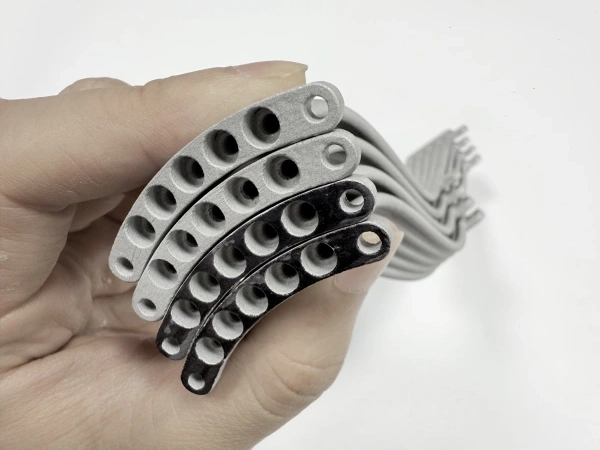
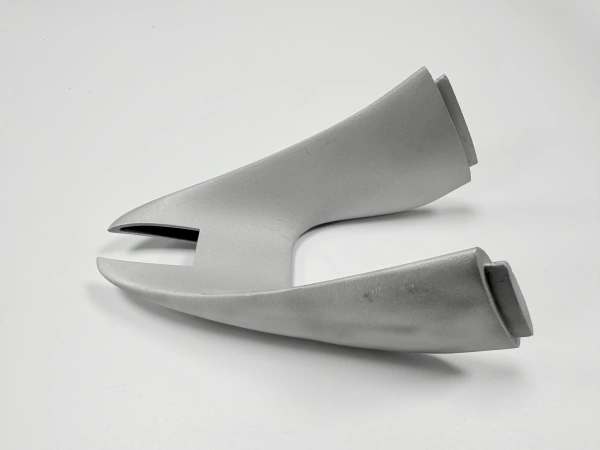
AlSi10Mg 3D printing service is widely used for lightweight custom aluminum parts that require complex geometry, good strength-to-weight ratio, thermal performance, and fast design iteration. Compared with CNC machining from aluminum billet or tooling-based casting, AlSi10Mg additive manufacturing can produce thin-wall structures, internal channels, lattice features, lightweight brackets, functional prototypes, and small-batch aluminum components with fewer geometry restrictions.
At Neway3DP, our AlSi10Mg 3D printing service supports custom aluminum parts based on customer CAD files and engineering drawings. We provide powder bed fusion printing, build orientation review, support strategy, post-processing, CNC machining, surface finishing, and inspection support for prototype validation and low-volume production.
For buyers looking for a custom AlSi10Mg 3D printed parts manufacturer, the key question is not only whether the supplier can print aluminum. The supplier should also understand part geometry, wall thickness, support removal, machining allowance, surface quality, tolerance control, and final application requirements before confirming the process route.
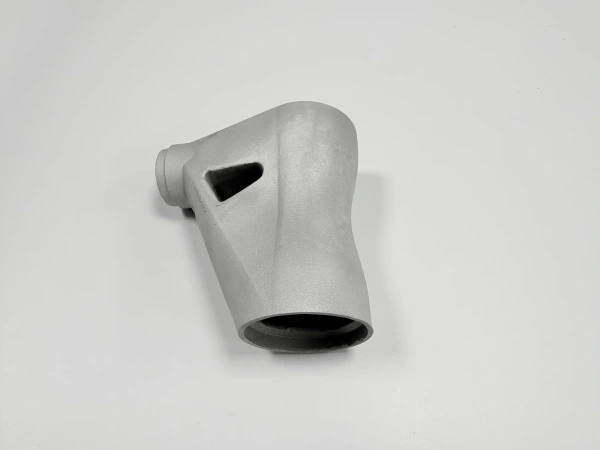
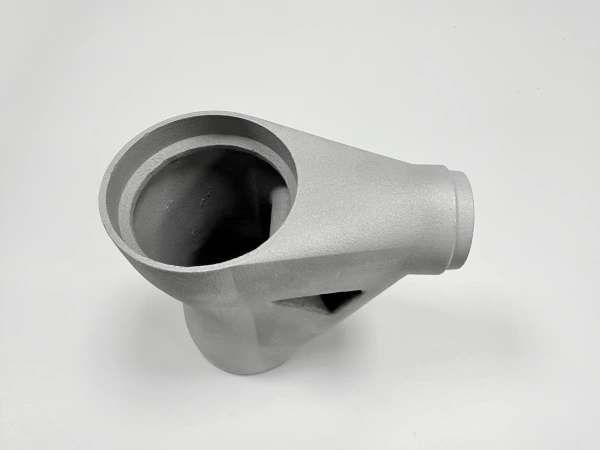
What Is AlSi10Mg 3D Printing?
AlSi10Mg is an aluminum-silicon-magnesium alloy commonly used in metal additive manufacturing. It is especially suitable for powder bed fusion and SLM-type processes because it offers good printability, low density, balanced mechanical performance, and practical manufacturing stability for lightweight aluminum components.
In powder bed fusion 3D printing, a laser selectively melts thin layers of AlSi10Mg powder according to the sliced CAD model. This allows complex aluminum parts to be built layer by layer, including internal channels, thin walls, topology-optimized structures, and integrated features that may be difficult to machine or cast directly.
Material Feature | Why It Matters for 3D Printing | Typical Custom Part Value |
|---|---|---|
Low density | Helps reduce part weight compared with steel and many other metals | Lightweight brackets, housings, robotics structures |
Good printability | Suitable for powder bed fusion and complex aluminum geometries | Functional prototypes and small-batch parts |
Aluminum-silicon base | Supports stable manufacturing for many thin-wall and lightweight designs | Complex shells, covers, brackets, and fixtures |
Thermal performance | Useful for heat transfer and thermal management applications | Electronic housings, cooling structures, heat-related prototypes |
Why Choose AlSi10Mg for Custom Aluminum Parts?
AlSi10Mg is often selected for custom aluminum parts because it provides a practical combination of lightweight performance, good strength, design freedom, and manufacturing efficiency. It is especially useful when the part must be lighter than steel, more complex than standard CNC machining allows, and faster to validate than casting or tooling-based production.
For custom AlSi10Mg parts, additive manufacturing is valuable when the design includes thin walls, internal flow paths, cooling structures, complex housings, organic shapes, or integrated mounting features. It also supports prototype and small-batch production when the project does not justify mold or casting tooling.
Project Requirement | Why AlSi10Mg 3D Printing Helps |
|---|---|
Lightweight structure | Supports reduced weight for brackets, housings, and structural aluminum parts |
Functional prototype | Allows fast testing of metal parts before tooling or full production |
Thin-wall geometry | Enables compact aluminum shells and lightweight structures when properly designed |
Complex channels | Supports cooling channels, flow passages, and internal features that are difficult to machine |
Small-batch production | Avoids tooling and supports customized aluminum parts in low-volume orders |
Typical Applications of AlSi10Mg 3D Printed Parts
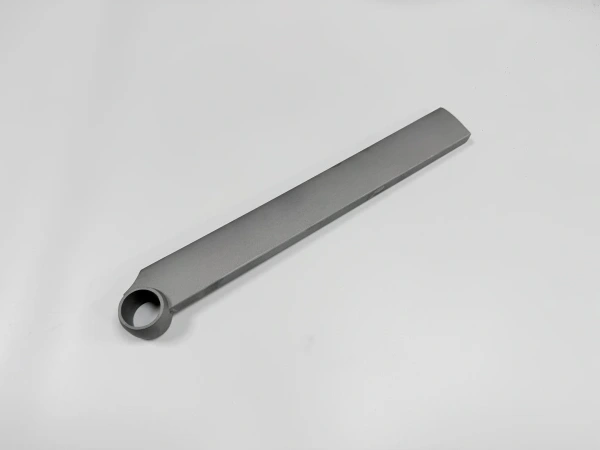
AlSi10Mg 3D printed parts are commonly used when customers need lightweight aluminum components with complex shapes, functional performance, and shorter development cycles. Typical applications include aerospace brackets, automotive lightweight parts, robotic structures, electronic heat-dissipation housings, fixtures, jigs, and functional validation parts.
For aerospace and aviation 3D printing, AlSi10Mg can be used for lightweight brackets, housings, ducting prototypes, and non-critical development hardware where aluminum weight reduction and design freedom are important. For robotics components, AlSi10Mg helps reduce moving mass while supporting integrated mounting and compact structural design.
Application Area | Typical AlSi10Mg Parts | Why 3D Printing Is Useful |
|---|---|---|
Aerospace and aviation | Lightweight brackets, housings, ducting prototypes, test hardware | Reduces weight and supports complex development geometry |
Automotive | Lightweight parts, fixtures, performance prototypes, custom housings | Supports fast iteration and low-volume metal part testing |
Robotics | End-effector parts, structural arms, sensor brackets, compact fixtures | Reduces moving weight while allowing integrated mounting features |
Electronics and thermal management | Heat-dissipation housings, cooling structures, compact enclosures | Supports internal channels, fins, and thermal design features |
Functional validation | Prototype aluminum parts, jigs, fixtures, assembly test parts | Allows real metal testing before tooling or mass production |
Design Considerations for AlSi10Mg 3D Printing
A successful AlSi10Mg additive manufacturing project should start with design-for-additive-manufacturing review. Features such as thin walls, overhangs, holes, internal channels, threads, assembly faces, and support-heavy regions should be checked before quotation and production.
AlSi10Mg can support complex lightweight structures, but the design still needs enough wall thickness, proper powder removal access, support planning, and machining allowance where final precision is required. For complex prototypes and production-intent parts, early DFM review helps reduce printing risk and post-processing cost.
Design Area | Recommendation | Reason |
|---|---|---|
Wall thickness | Avoid overly thin unsupported walls unless reviewed by engineering | Thin aluminum features may deform during printing, heat treatment, or support removal |
Support structure | Review overhangs, down-facing areas, and support contact zones | Supports affect surface quality, cost, removal labor, and finishing needs |
Internal channels | Confirm channel size, cleaning access, and powder removal path | Prevents trapped powder, blocked channels, and inspection difficulty |
Threads | Use post-machined or tapped threads for functional assembly | Improves thread quality, strength, and repeatable assembly |
Assembly faces | Add CNC machining allowance on datum and mating surfaces | Improves flatness, tolerance control, and assembly reliability |
Accuracy and Surface Quality of AlSi10Mg Printed Parts
AlSi10Mg 3D printing can produce complex aluminum parts, but the as-printed condition is different from CNC-machined precision surfaces. Printed parts may show layer texture, support contact marks, roughness variation, and dimensional deviation in critical areas. For this reason, tolerance planning is important before production.
General external surfaces, internal lightweight structures, and non-critical features may remain as-printed or receive blasting. However, precision holes, threaded holes, sealing faces, datum surfaces, and assembly interfaces usually require CNC machining for 3D printed parts after printing.
Feature Type | As-Printed Suitability | Recommended Finishing Route |
|---|---|---|
Non-critical external surfaces | Often acceptable for prototypes and hidden areas | As-printed, blasting, or light surface finishing |
Datum surfaces | Usually not recommended as final as-printed surfaces | CNC machining with defined allowance |
Precision holes | May need post-machining for accurate diameter and roundness | Drilling, reaming, boring, or CNC machining |
Threads | As-printed threads are not ideal for most functional assemblies | Tapping, thread milling, or threaded inserts |
Sealing or mating faces | Usually require controlled flatness and roughness | CNC finishing or other precision surface finishing |
Post-Processing Options for AlSi10Mg 3D Printed Parts
Post-processing helps turn AlSi10Mg printed blanks into functional aluminum components. Depending on the project, post-processing may include support removal, heat treatment, CNC machining, blasting, polishing, surface treatment, and inspection. These steps should be selected based on the drawing, application, and final assembly requirements.
For production-intent prototypes or small-batch aluminum parts, post-processing is often essential. Printed parts may need machined mounting surfaces, tapped holes, dimensional reports, surface finishing, or heat treatment to meet final use conditions.
Post-Processing Step | Why It Is Used | Typical AlSi10Mg Part Features |
|---|---|---|
Support removal | Removes printed supports and build plate connection areas | Overhangs, thin walls, mounting areas, complex structures |
Heat treatment | Improves stability and supports application-specific mechanical performance | Functional brackets, housings, structural aluminum parts |
CNC machining | Achieves tighter tolerances on holes, threads, datums, and mating faces | Precision bores, threaded holes, sealing faces, assembly surfaces |
Blasting | Improves surface uniformity and reduces visible layer texture | Visible housings, brackets, prototypes, covers |
Surface treatment | Improves appearance, corrosion resistance, or functional surface quality | Industrial, aerospace, robotics, and consumer-facing components |
What Information Is Needed for an AlSi10Mg 3D Printing Quote?
To provide an accurate AlSi10Mg 3D printing quote, the supplier needs enough information to evaluate part geometry, printability, support structure, material volume, tolerance requirements, post-processing, inspection, and delivery risk. A 3D model helps review build orientation and support strategy, while a 2D drawing confirms functional requirements.
For faster quotation, please provide the following information:
3D CAD model, preferably STEP, X_T, IGS, or STL format
2D drawing with tolerances, datum requirements, threads, surface finish, and inspection notes
Required material, such as AlSi10Mg or other aluminum alloy for powder bed fusion
Quantity for prototype, functional validation, small-batch production, or repeat order
Required post-processing, such as support removal, heat treatment, CNC machining, blasting, polishing, or surface treatment
Application environment, including load, temperature, vibration, fatigue, thermal performance, or assembly use
Inspection requirements, such as dimensional report, CMM report, material certificate, surface roughness report, or CT inspection
Target delivery schedule and shipping destination
Why Work with Neway3DP for AlSi10Mg 3D Printing?
Neway3DP supports custom AlSi10Mg parts from early design review to final post-processing. Our service is suitable for customers who need lightweight aluminum prototypes, small-batch metal parts, complex cooling structures, thin-wall housings, robotics components, automotive fixtures, and aerospace aluminum development parts.
In addition to AlSi10Mg printing, Neway3DP supports aluminum alloys for powder bed fusion, post-machining, surface finishing, inspection, and application-focused manufacturing support. For customers in product development, our rapid prototyping solutions can help move from CAD design to functional metal validation parts faster.
Neway3DP Support | Customer Benefit |
|---|---|
Engineering review | Helps identify printability risks, support-heavy geometry, and post-processing needs early |
Metal 3D printing | Supports lightweight aluminum parts with complex geometry and low-volume flexibility |
CNC post-machining | Improves precision holes, threads, datum surfaces, and assembly interfaces |
Surface finishing | Improves appearance, roughness, corrosion resistance, and functional surfaces |
Inspection support | Provides dimensional verification and documentation according to project requirements |
FAQ
Is AlSi10Mg a Good Material for Custom Aluminum 3D Printed Parts?
What Tolerances Can AlSi10Mg 3D Printed Parts Achieve After CNC Machining?
How Much Does AlSi10Mg 3D Printing Cost for Prototype and Small-Batch Parts?
Can AlSi10Mg 3D Printing Replace CNC Machined Aluminum Parts?
What Post-Processing Is Recommended for AlSi10Mg 3D Printed Parts