Metal 3D Printing Quote Checklist for Prototype to Low Volume
A metal 3D printing quote becomes reliable when the buyer defines the finished part, not only the printed shape. The same CAD model can be quoted as a rough prototype, a CNC-finished sample, or a documented low-volume production part. Those are different scopes with different cost, schedule, and inspection requirements.
Neway reviews custom metal 3D printed parts by looking for the information that changes manufacturing decisions: material, process, quantity, orientation risk, support removal, CNC stock, heat treatment, HIP, surface treatment, and inspection records. If those items are missing, the quote may need assumptions that later create price changes or delivery risk.
This guide is for buyers preparing a metal 3D printing quote for prototypes, pilot lots, or low-volume metal 3D printing service. It explains which RFQ details control the quote and which requirements should be marked as optional until the design is stable.
Incomplete Files Create Quote Assumptions
A STEP file shows the shape, but it does not always show the finished requirement. A 2D drawing usually carries the information that controls acceptance: material grade, tolerances, datums, threads, surface finish, heat treatment, inspection notes, and drawing revision. If only the STEP model is provided, Neway can review printability, but the finished-part quote will still depend on assumptions.
The most useful RFQ includes a STEP model, current 2D drawing, quantity, material, process preference if known, application environment, and target stage. For repeat work, include the drawing revision and previous change notes. For replacement parts, include the original function and which dimensions are critical to assembly. For development parts, state which features can change for manufacturing review.
Buyers should mark whether the request is a concept prototype, a functional sample, a pilot lot, or a low-volume production order. That stage controls how much documentation belongs in the first quote.
Material and Process Choices Should Be Stated Separately
A material name and a process name are not the same decision. Titanium, Inconel, stainless steel, aluminum, copper, and cobalt alloys each bring different powder availability, build behavior, heat treatment, machining, and inspection questions. The buyer may know the material but not the process, or may know the process but still be comparing materials.
Powder bed fusion is often used for detailed metal parts, internal channels, lightweight geometry, and prototype-to-low-volume work. Superalloy 3D printing may require heat treatment, HIP, and high-temperature application review. Titanium 3D printing may require stress relief, oxygen-sensitive handling considerations, CNC finishing, and material documentation.
If material alternatives are acceptable, say so. A supplier cannot responsibly substitute Grade 5 for Grade 23, 316L for 17-4PH, or AlSi10Mg for Scalmalloy without buyer approval. Alternate material lines can be quoted, but they should be separate.
The RFQ should also separate process preference from functional need. A buyer may request powder bed fusion because the part has fine channels or compact geometry, while another part may only need a near-net metal blank that will be machined afterward. If the finished part is mostly simple, CNC from billet or a fabricated route may deserve comparison before a metal additive quote is treated as the default.
RFQ information | Why it changes the quote | What to send |
|---|---|---|
STEP model and 2D drawing | Separates printable shape from finished tolerances and notes. | Native CAD or STEP plus released or current drawing revision. |
Material grade | Controls powder route, heat treatment, machining, and records. | Required grade and allowed alternatives. |
Quantity and stage | Changes nesting, fixture planning, inspection level, and repeatability needs. | Prototype, pilot lot, or low-volume production quantity. |
Critical features | Identifies surfaces that cannot remain as printed. | Datums, threads, bores, sealing faces, and load-bearing interfaces. |
Post-processing | Adds cost and sequence risk after printing. | Heat treatment, HIP, CNC, EDM, blasting, polishing, coating, or passivation. |
Inspection records | Defines acceptance evidence and documentation workload. | CMM, CT, material records, heat-treatment records, leak test, or visual report. |
Tolerances and Datums Define the Finished-Part Boundary
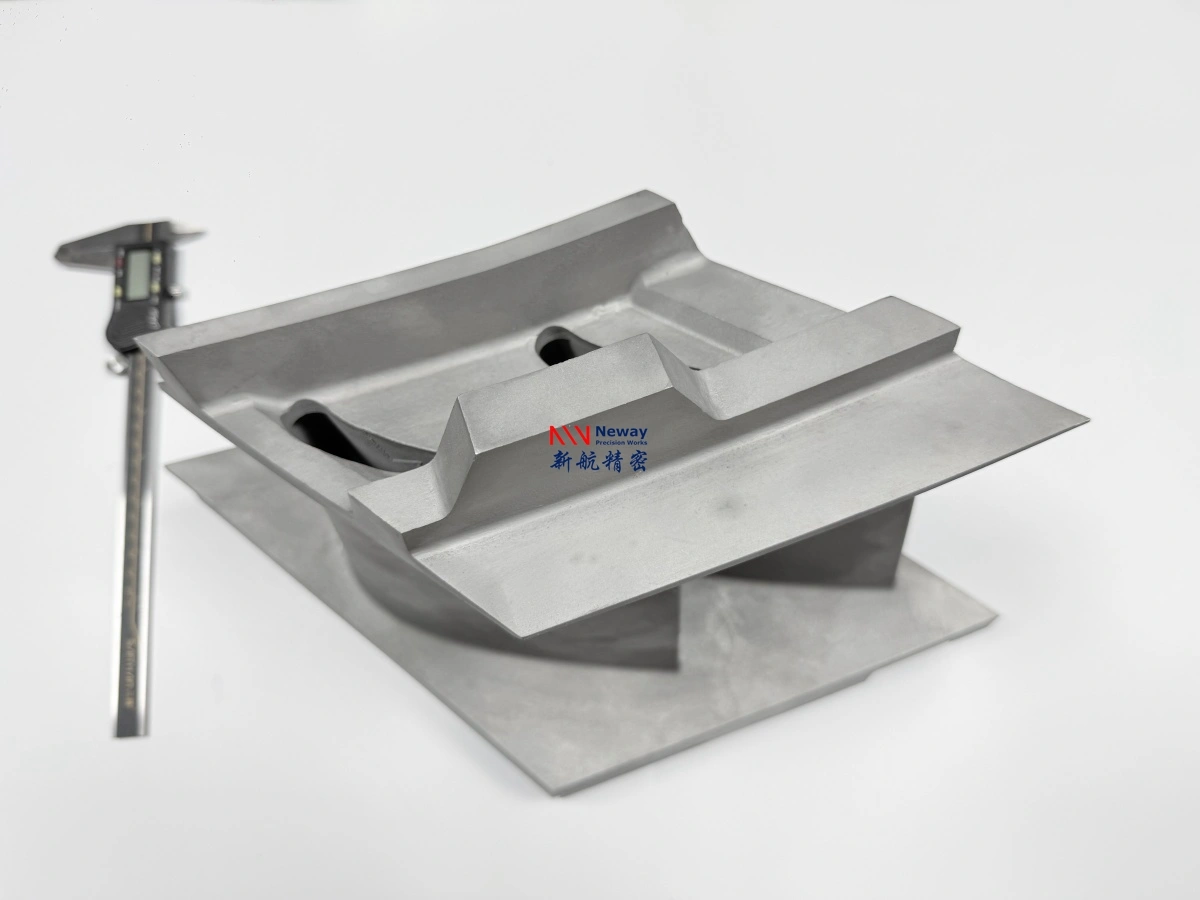
Metal additive manufacturing can produce near-net geometry, but it should not be used as the only method for every tight tolerance. Threads, bores, dowel holes, bearing seats, sealing surfaces, flat mounting pads, and precision slots usually need CNC or EDM after printing. Internal channels may need CT or flow-related inspection if the buyer requires evidence.
The drawing should identify datums before machining is quoted. If there is no datum strategy, the supplier may not know how to locate the part after heat treatment, support removal, or HIP. Temporary machining pads or fixture tabs can be useful for prototypes that will later become repeat parts. Removing those features too early can make the finished part harder to control.
When the buyer wants a fast prototype, it may be acceptable to simplify tolerance requirements. When the buyer wants a production-intent component, final tolerances should be assigned only to features that truly control function. This keeps the quote focused and avoids applying expensive machining to non-critical surfaces.
Quote accuracy improves when the drawing distinguishes as-printed surfaces from finished interfaces. A broad profile tolerance applied to the whole part can force unnecessary secondary work. A clearer drawing may allow printed surfaces on non-contact walls while reserving CNC stock for datums, bolt patterns, sealing lands, and assembly faces.
Separate Required Quote Lines from Optional Cost Scenarios
Heat treatment, HIP, CNC post-machining, EDM, surface treatment, polishing, blasting, coating, and passivation can all change finished cost. They should not be listed as a loose note. Each operation should be marked as required for acceptance or optional for evaluation.
For example, HIP may be required for a fatigue-sensitive or density-critical part, but may be unnecessary for a rough fit-check prototype. CNC may be required for threaded holes and sealing faces, but not for every outer wall. Surface treatment may be required for corrosion, appearance, or touch surfaces, but should match the application and material.
Optional lines are useful when purchasing needs a fast comparison. A quote can show the base printed part, then separate adders for HIP, extra CMM points, CT review, coating, or a tighter surface finish. That format helps the engineering team decide which operations belong in the first build and which can wait until prototype feedback is available.
Quote stage | Typical buyer goal | Scope that should be priced |
|---|---|---|
Concept prototype | Check geometry, assembly, and rough function. | Printing, support removal, basic cleanup, and limited dimensions. |
Functional sample | Test load, flow, fit, or heat behavior. | Material route, thermal processing if needed, selective CNC, and inspection on critical features. |
Pilot lot | Confirm repeatable manufacturing route. | Controlled orientation, post-processing sequence, fixture plan, and documented inspection. |
Low-volume production | Receive repeatable finished parts. | Released drawing, stable material, finishing route, inspection records, and lot control. |
Report Packages That Change a Metal AM Quote
Inspection should not be added only to make a quote look complete. CMM is useful for machined datums, bores, position tolerances, and external interfaces. CT may be useful for internal channels, trapped powder concerns, or hidden lattice geometry. Material records, heat-treatment records, HIP records, and surface reports should be requested when they affect acceptance.
If the buyer is not sure which records are needed, separate the required report package from optional inspection lines. That gives purchasing a baseline price and a documented path for higher-risk parts. It also avoids treating every prototype like a qualified production component.
Inspection scope also changes scheduling. CMM usually follows final CNC because it verifies the finished datum scheme. CT is normally discussed before the build when internal channels, powder removal, or hidden support risk must be understood. Leak checks, conductivity checks, or hardness checks should be named only when they are part of the acceptance requirement.
Send a Quote Package That Can Be Manufactured and Accepted
Before asking for a metal 3D printing quote, prepare the CAD file, 2D drawing, material grade, quantity, project stage, application environment, critical dimensions, datums, machined surfaces, surface finish, heat treatment or HIP expectations, inspection records, and target delivery window. Identify whether the part is a new prototype, a repeat order, or a production transfer.
If the cost of metal 3D printing is the main concern, ask for a finished-part price breakdown rather than only a build price. The useful comparison separates printing, post-processing, machining, surface treatment, and inspection. That lets the buyer adjust design or acceptance requirements before the purchase order, instead of discovering the missing scope after release.
Related FAQs
What are the common heat treatment processes used for 3D printed parts?
Can heat treatment improve the fatigue resistance of 3D printed parts?
Is post HIP surface treatment required to achieve a final polished finish?
How does EDM machining improve the surface finish of 3D printed parts?
How does heat treatment improve the mechanical properties of 3D printed metals?