What stainless steel materials are commonly used in Selective Laser Melting (SLM)?
What Stainless Steel Materials Are Commonly Used in Selective Laser Melting (SLM)?
Short Answer on SLM Stainless Grades
Common stainless steels used in SLM metal additive manufacturing include 316L, 17-4 PH, 15-5 PH, 304L, 410, and 420, but they are not interchangeable. Austenitic 316L and 304L are selected for different corrosion and strength needs, while precipitation-hardening 17-4 PH and 15-5 PH require a specified thermal condition. Martensitic 410 and 420 require control of hardening, distortion, and crack sensitivity. Stainless Steel 3D Printing should identify the grade, powder lot, build direction, final state, and inspection method before a property value is used for design.
Austenitic Grades: 316L and 304L
316L is often considered when corrosion resistance, ductility, and weldability are important. Its corrosion performance still depends on chloride level, temperature, crevices, surface roughness, passivation, and cleaning. A smooth external surface does not prove that a rough internal channel is suitable for a corrosive fluid. Define the service environment and the final surface condition.
304L is a general-purpose austenitic option when its corrosion and strength range fits the application. It should not be selected simply because it is familiar. Compare fluid exposure, temperature, welding or joining requirements, magnetic response, surface finish, and mechanical condition. For either austenitic grade, the SLM parameter set, powder oxygen and moisture, porosity, orientation, and post-processing can change the delivered result.
SLM forms the alloy through repeated melt pools. Insufficient overlap can cause lack-of-fusion porosity, while excessive local energy can create keyhole pores or spatter. Build orientation changes surface condition, thermal history, and the direction of a load path. Density from a small coupon should be treated as process evidence, not automatic proof for every wall, corner, or passage.
Precipitation-Hardening Grades: 17-4 PH and 15-5 PH
17-4 PH develops strength through a controlled solution and aging sequence. H900, H1025, and other conditions have different balances of strength, toughness, ductility, corrosion behavior, and dimensional movement. A laser-fused part that is strong in one thermal condition may not meet the requirement in another. Heat Treatment is therefore part of the material route. Record furnace temperature, hold time, atmosphere, load, cooling, and part position.
15-5 PH also requires a grade-specific powder and thermal cycle. It may be considered when toughness, corrosion behavior, and strength need a different balance from 17-4 PH. It is not a drop-in substitute. State the chemistry, required condition, orientation, minimum properties, dimensional limits, and any stress-corrosion or fatigue requirement. Verify hardness and dimensions after aging, then use representative mechanical evidence for the controlling load direction.
Martensitic Grades: 410 and 420
410 and 420 can provide hardness and wear resistance after heat treatment, which makes them candidates for tools, valves, pump components, and wear inserts. The same hardening step can increase distortion and crack sensitivity, especially when the printed surface is rough or the section changes quickly. Specify quench, temper, hardness range, surface preparation, allowable crack condition, and machining sequence. Do not apply 316L or 17-4 PH data to a martensitic grade.
Material Selection by Application
Application need | Candidate direction | Condition to verify | Do not assume |
|---|---|---|---|
Corrosion-resistant fluid housing | 316L or 304L after a service review | Fluid, temperature, surface, cleaning, pressure, and leak result | Generic corrosion resistance for every channel |
High-load bracket | 17-4 PH or 15-5 PH | Age condition, orientation, hardness, fatigue or tensile evidence, and datums | As-built strength equals final strength |
Wear insert or valve trim | 410 or 420 when the hardening route is qualified | Hardness, temper, crack inspection, grinding allowance, and wear test | Hardness alone proves service life |
Repeated nested batch | Binder jetting may be compared with SLM | Fired shrinkage, furnace uniformity, accepted yield, and final dimensions | Printed quantity equals accepted quantity |
Post-Processing and Verification
Stress relief can reduce movement during support cutting, but it does not remove all defects. HIP may reduce suitable internal pores, but it cannot make an open crack acceptable. Machining is used for critical bores, faces, and fits only when allowance and distortion are controlled. Passivation or polishing changes the surface state and must follow cleaning and inspection. If a part has internal passages, verify powder removal and flow before applying a surface treatment.
Request powder chemistry and particle-size data, machine and parameter revision, build orientation, atmosphere record, thermal cycle, dimensional report, density or defect result, and final surface condition. Use ASTM F3184 or ASTM F3303 only when the exact stainless alloy and laser powder bed fusion scope apply. ASTM E8/E8M may be considered for tensile properties, ASTM E18 for hardness, and ASTM E466 for fatigue. The quality plan must state specimen condition, orientation, test temperature, acceptance limit, uncertainty, and disposition.
Two Buyer Scenarios
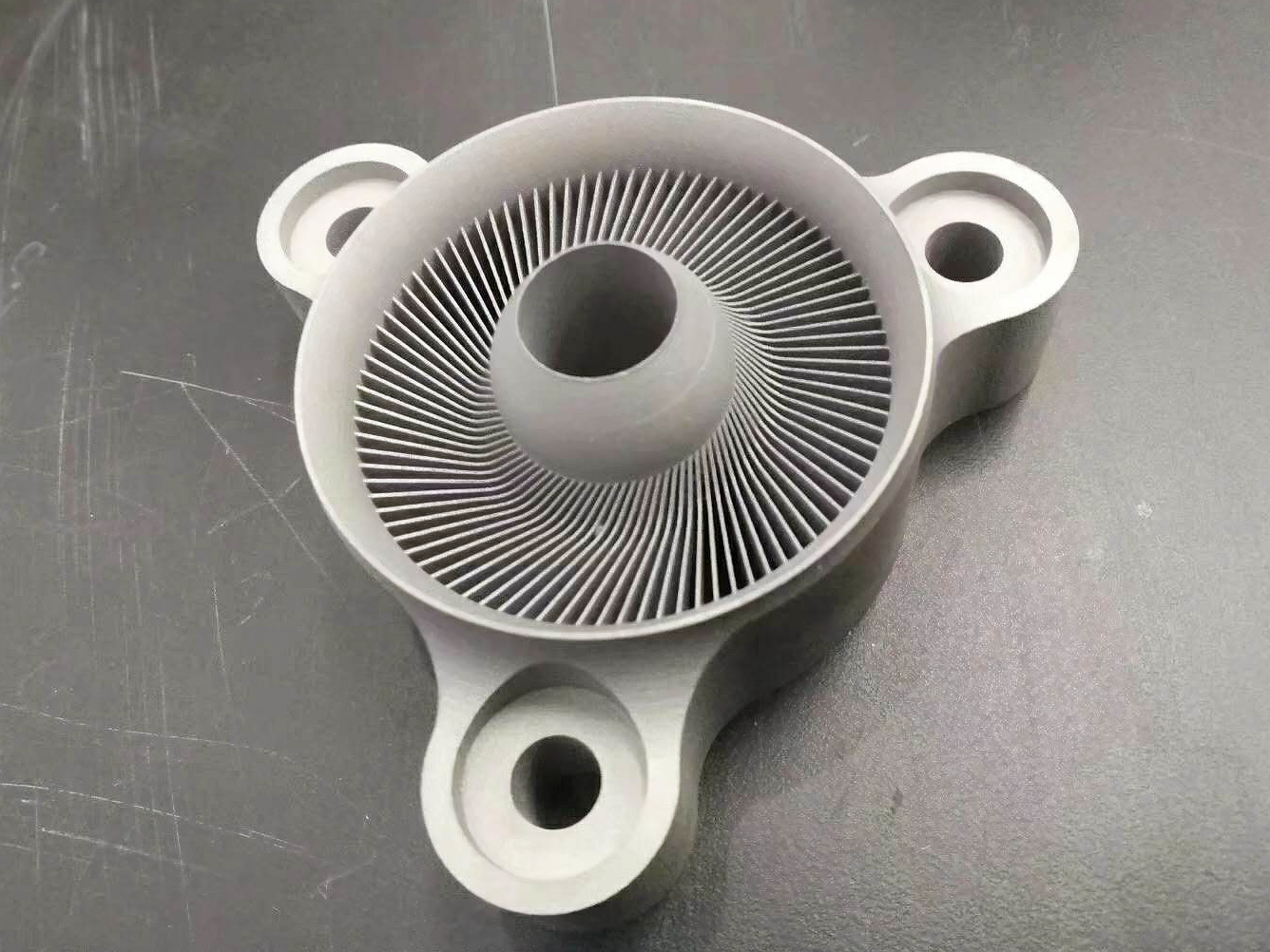
316L channel housing. Choose 316L when the fluid and temperature review supports it and SLM adds useful channel geometry. Verify density or internal defects, channel continuity, cleaning, pressure or leak behavior, dimensions, and surface condition. Hold the lot when a channel cannot be inspected or when the corrosion claim is not tied to the actual service environment.
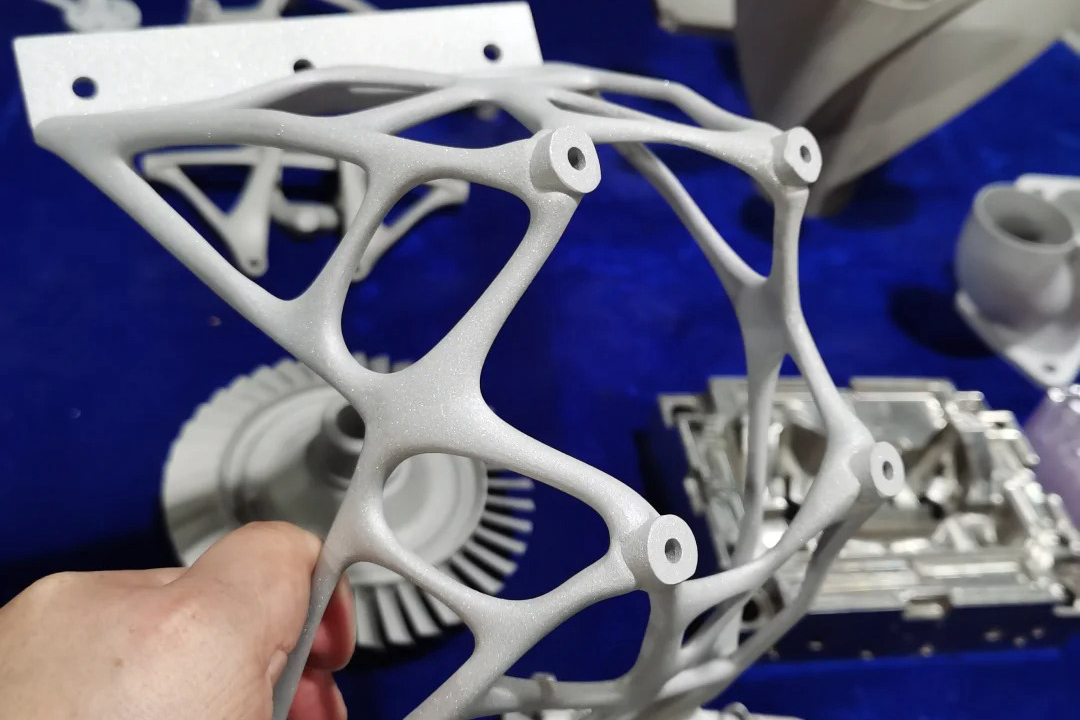
17-4 PH actuator bracket component. Choose 17-4 PH when the required strength and aging condition are specified for the component. Orient the build for the applied load, then verify heat-treatment records, hardness, machined datums, surface defects, and representative mechanical evidence. If the specification changes from H900 to H1025, recheck both properties and dimensions instead of treating the change as a minor finishing adjustment.
RFQ Decision
Provide the grade, chemistry, powder lot, CAD revision, quantity, orientation, minimum wall, service environment, load, final thermal condition, machining allowance, surface finish, and inspection plan. Choose the material by mechanism and final state, not by a single tensile number. Release the part only after the selected grade, process record, dimensions, defects, surface condition, and application evidence meet the approved specification.
.webp)