What are the key benefits of using resin-based 3D printing in the medical industry?
What are the key benefits of using resin-based 3D printing in the medical industry?
Resin-based 3D printing can benefit medical product development by producing detailed anatomical models, dental models, surgical-planning aids, custom-fit prototypes, visual communication models, and selected device-development parts without hard tooling. SLA, DLP, CLIP, and PolyJet can reproduce fine geometry, smooth surfaces, transparent features, or multiple material responses. The benefit is conditional: a printed model, a patient-contact device, a sterilizable instrument, and an implant are different regulatory and engineering categories. Resin printing technology alone does not establish biocompatibility, sterility, implant suitability, or clinical approval.
Where Resin Printing Adds Medical Value
An anatomical model can help a surgeon or design team inspect a patient-specific shape, plan access, or communicate a procedure. A dental model can represent an arch, occlusion, or appliance fit. A surgical-planning aid may use DLP or SLA for detail and surface quality. PolyJet can add color or flexible regions for education or a tactile anatomy model. CLIP may help when a development team needs repeated models quickly. Each use should state whether the part is for visualization, planning, fit, training, or patient contact.
For a patient-specific planning model, verify the image-to-CAD conversion, coordinate alignment, critical anatomical dimensions, and deviation map after printing. For a dental model, inspect arch geometry, margins, occlusal contacts, and cleaning or storage conditions. For a custom-fit prototype, measure contact pressure, fit, and deformation after the specified handling. A high-resolution model is useful only when its error is understood relative to the clinical decision. The vat photopolymerization route can provide detail, but the final clinical interpretation needs a validated workflow.
Material and Contact Boundaries
Medical resin claims must be tied to a named formulation, intended contact, contact duration, cleaning or sterilization method, and post-cure. A material documented for an external model is not automatically suitable for mucosal contact. A dental model resin is not automatically suitable for a long-term intraoral appliance. An engineering or high-temperature resin is not automatically suitable for implantation. Residual monomer, cure conversion, surface condition, extractables, aging, and the complete device design can affect safety.
For a surgical guide development project, specify the intended tissue contact, sterilization method, dimensional fit, drill interface, and use duration. For a dental tray or model, specify cleaning, disinfection, and storage. For a medical-device prototype, keep the prototype label separate from a validated production device until the material, process, and design controls are complete. Review the formulation documentation and applicable quality system with the responsible regulatory or clinical authority. Use a patient-contact safety term only when the named formulation, device design, contact duration, cleaning or sterilization method, and verification evidence support the stated scope; it is not an unconditional synonym for resin 3D printing.
Process Choice for Medical Models
SLA is often screened for larger detailed models and smooth masters. DLP can suit small, repeatable dental or planning models when the projection field and resin are qualified. PolyJet is useful when color, texture, transparency, or rigid and flexible regions improve understanding. CLIP may reduce cycle time for repeated development models when the material and cure state are consistent. Select based on anatomical feature size, model quantity, inspection access, material documentation, finishing, and cleaning. A nominal resolution statement is not a clinical accuracy result.
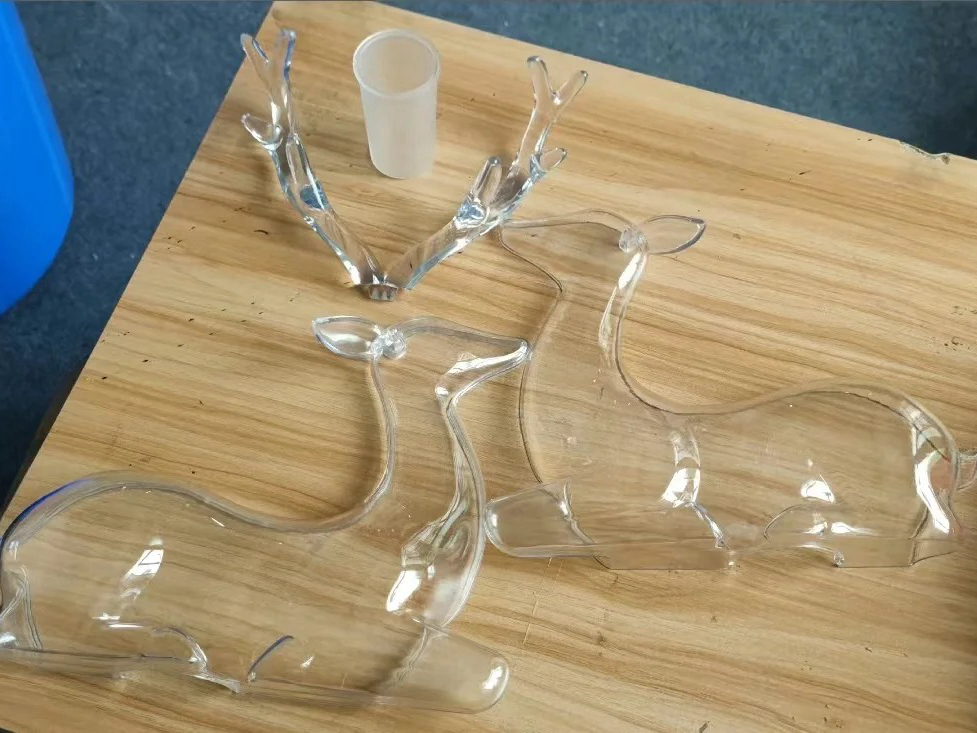
For an anatomical model with thin walls or internal cavities, control support placement, drainage, washing, and post-cure, then verify the measured deviation against the planning criterion. For a transparent vascular model, inspect optical clarity, wall thickness, leaks, and the fluid used in the demonstration. For a flexible training model, define hardness, tear, compression, and aging, then compare the result after the stated conditioning period. PolyJet interfaces and flexible regions can respond differently to solvents and humidity, so the combined model needs a combined check. The material-jetting service can support multi-material models when those interfaces are part of the test plan.
Medical Failure Controls and Validation
Dimensional error can result from imaging segmentation, CAD conversion, cure shrinkage, support removal, or post-cure distortion. Control the data revision, coordinate system, orientation, support, cure recipe, and measurement method. Under-cure or trapped resin can create contamination or unstable dimensions; control wash and dry steps and inspect inaccessible cavities. Sterilization or disinfection can cause swelling, cracking, discoloration, or loss of strength. Run the actual method and number of cycles on the final condition.
Use a representative anatomical or device geometry, not only a generic coupon, when the clinical decision depends on fit. Record the resin product and lot, machine build, support material, washing, post-cure, storage, sterilization or cleaning, and inspection result. A quality system may require traceability, nonconformance control, risk analysis, and design verification. ASTM or ISO methods may be relevant, but the responsible authority must select the applicable standard and acceptance limit. A failed result requires containment and documented disposition before any clinical or customer use.
RFQ and Release for Medical Development
Provide the data or CAD revision, intended use, anatomical or device region, critical dimensions, tolerance, quantity, resin formulation, contact category, cleaning or sterilization method, load, temperature, transparency or flexibility, surface requirement, and delivery condition. State whether the output is a visualization model, planning aid, dental model, fit prototype, training model, or regulated device-development article. Request material documentation, lot traceability, machine and cure records, dimensional or deviation report, surface inspection, and any functional or environmental test. Release the part only within the documented use scope; a model can be highly valuable without being represented as an approved implant or patient-contact device.
For RFQ preparation, request the resin 3d printing after the buyer defines the material state, quantity, and required verification method.
For final release, compare the resins with the inspection record, service condition, and disposition of any unresolved risk.