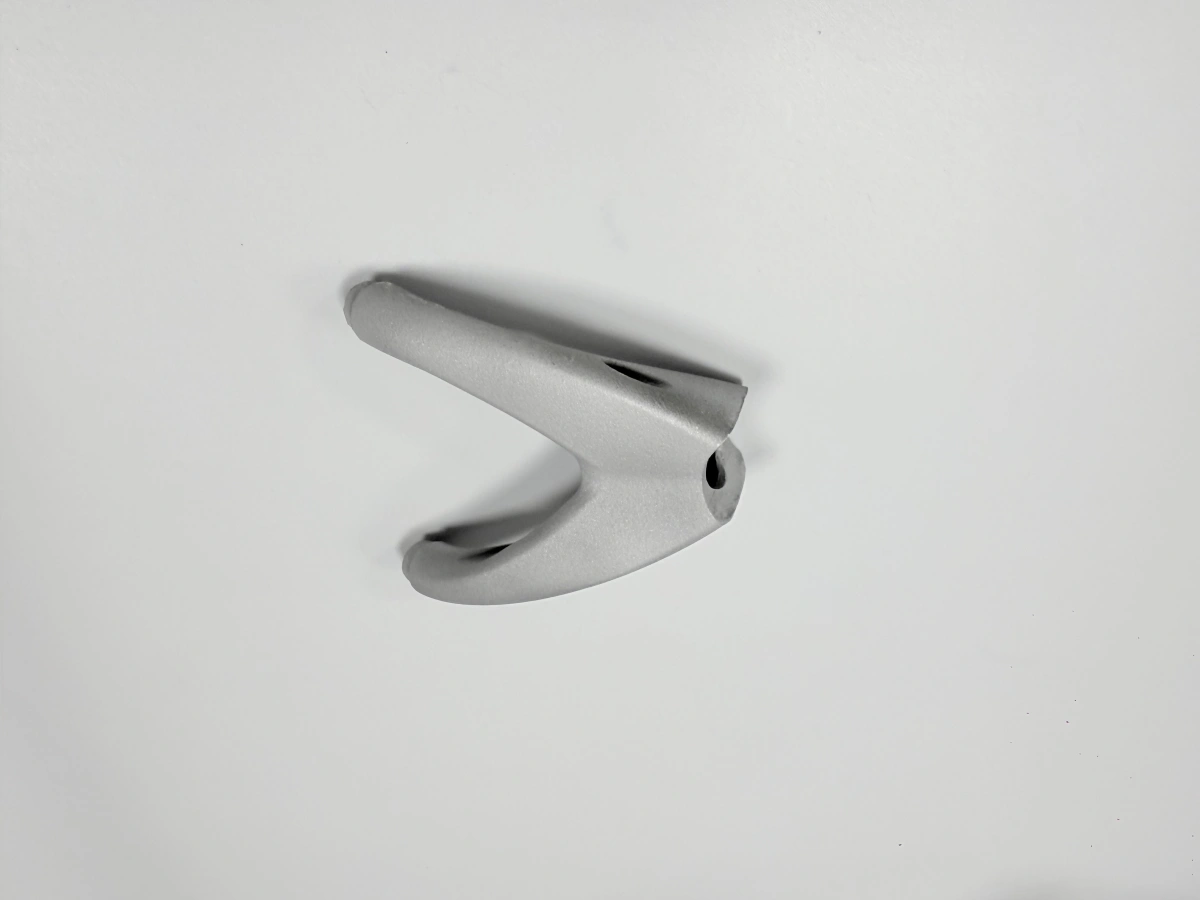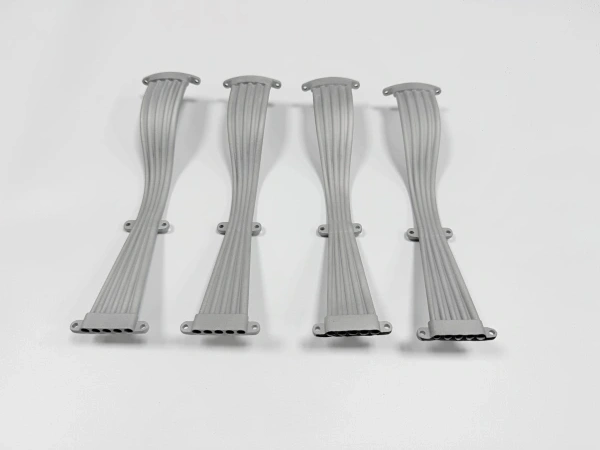
EBM can benefit aerospace copper parts because copper absorbs electron-beam energy in vacuum without the optical reflectivity problem faced by some infrared lasers. That makes EBM a candidate for dense thermal hardware, heat exchangers, or combustion-chamber research in machine-supported materials such as C101 copper or GRCop-42. It does not guarantee a conductivity value or aerospace grade. Powder chemistry, vacuum behavior, build temperature, alloy condition, pores, internal surfaces, heat treatment, machining, leak testing, NDE, and route qualification determine the accepted part.
Copper's high reflectivity and oxidation sensitivity make it difficult to process using laser-based systems in atmospheric conditions. EBM’s vacuum chamber prevents oxidation and hydrogen embrittlement, resulting in high-purity parts with improved electrical and thermal performance. This is crucial in aerospace applications such as RF components, power electronics cooling plates, and engine components, where material purity directly impacts efficiency.
Copper parts in aerospace are often exposed to extreme thermal loads. Alloys like GRCop-42, designed for high-temperature applications, retain mechanical strength and resist creep at temperatures exceeding 600°C. EBM enables uniform grain structures and stable microstructures that support thermal fatigue resistance, essential for propulsion system components and engine nozzle liners.
EBM can produce internal cooling networks and thin thermal structures, but powder must be removed, channels must be inspectable, and rough internal walls can change pressure drop and heat transfer. Weight reduction should be optimized with conduction path, structural load, fatigue, leak margin, joining, and inspectability. A lighter part can still perform worse if reduced cross-section or porosity raises thermal or electrical resistance.
If EBM is proposed for aerospace copper hardware, require exact machine-alloy maturity rather than assume that electron-beam absorption solves the whole process. Provide model and drawing, copper grade or GRCop specification, quantity, heat flux and temperature, pressure and coolant, thermal cycling, vibration and fatigue, conductivity, strength, critical passages, joining, surface, NDE, leak or proof test, traceability, and approval records. Ask how powder chemistry, oxygen, vacuum behavior, build temperature, surrounding powder sintering, orientation, support, channel cleanup, heat treatment, machining, and final conductivity are controlled. The hot bed may reduce thermal gradients, but surface texture, feature resolution, powder-cake removal, and material availability can be limiting. Vacuum does not ensure pure finished copper across powder handling, machine deposits, heat treatment, machining, and cleaning. For combustion or heat-exchanger research, validate pressure drop, heat transfer, wall thickness, porosity, oxidation, leak integrity, and life under representative cycling. Coupons should share the production build, orientation, thermal condition, and final surface; polished bars or conductivity specimens alone do not qualify a channel wall. Compare EBM with green-laser or infrared laser powder bed fusion, directed energy deposition, machining, formed and brazed assemblies, electroforming, and casting. Flight or pressure release needs design-authority approval, inspection coverage, deviation control, and revalidation rules. The links below can support development, not automatic aerospace qualification:
3D Printing Technologies: EBM is one candidate for copper aerospace thermal hardware, not a universal optimum. Compare its machine-supported alloys, hot powder bed, surface, feature resolution, powder-cake removal, and capacity with green-laser or infrared laser powder bed fusion, directed energy deposition, electroforming, machining, and formed or brazed assemblies. Use the same final metrics: chemistry, conductivity, strength at temperature, channel wall and roughness, pressure drop, heat transfer, leak and proof behavior, thermal fatigue, NDE, joining, dimensions, traceability, yield, and qualification. Require a representative channel and thermal or pressure test, not only density and conductivity coupons. If internal geometry cannot be cleaned or inspected, redesign or choose an assembly route. Flight acceptance must follow design-authority evidence and change control. EBM's vacuum and preheated bed can change residual-stress behavior and avoid the optical absorption problem of laser processing, but they do not by themselves prove pure-copper maturity, fine channels, smooth surfaces, or flight properties. Ask for the exact machine, powder specification, parameter qualification, minimum removable channel, witness locations, surface allowance, thermal route, and inspection coverage. A qualification article should reproduce long channels, turns, manifolds, wall transitions, interfaces, and cleaning access, followed by CT or other agreed NDE, flow, leak, proof, thermal-cycle, vibration, and final conductivity testing. Review oxygen pickup, contamination, powder recovery, and foreign-object controls from build through assembly.
Evaluate Electron Beam Melting (EBM) only where the supplier has a machine-specific copper route and can demonstrate final conductivity, density and defect condition, channel cleanup, surface, dimensions, thermal behavior, and capacity. Vacuum and preheat can be useful process characteristics, but they do not prove superior thermal integrity. Compare representative EBM hardware with qualified laser, electroformed, machined, or brazed alternatives under the same flow, pressure, leak, thermal-cycle, vibration, and traceability requirements.
Aerospace-Grade Copper Materials:
Choose from Copper C101, CuCr1Zr, and GRCop-42 for heat transfer, structural, and propulsion applications.
Aerospace Application Support:
Explore our aerospace and aviation solutions, supported by heat treatment, CNC machining, and surface treatment for mission-critical components.