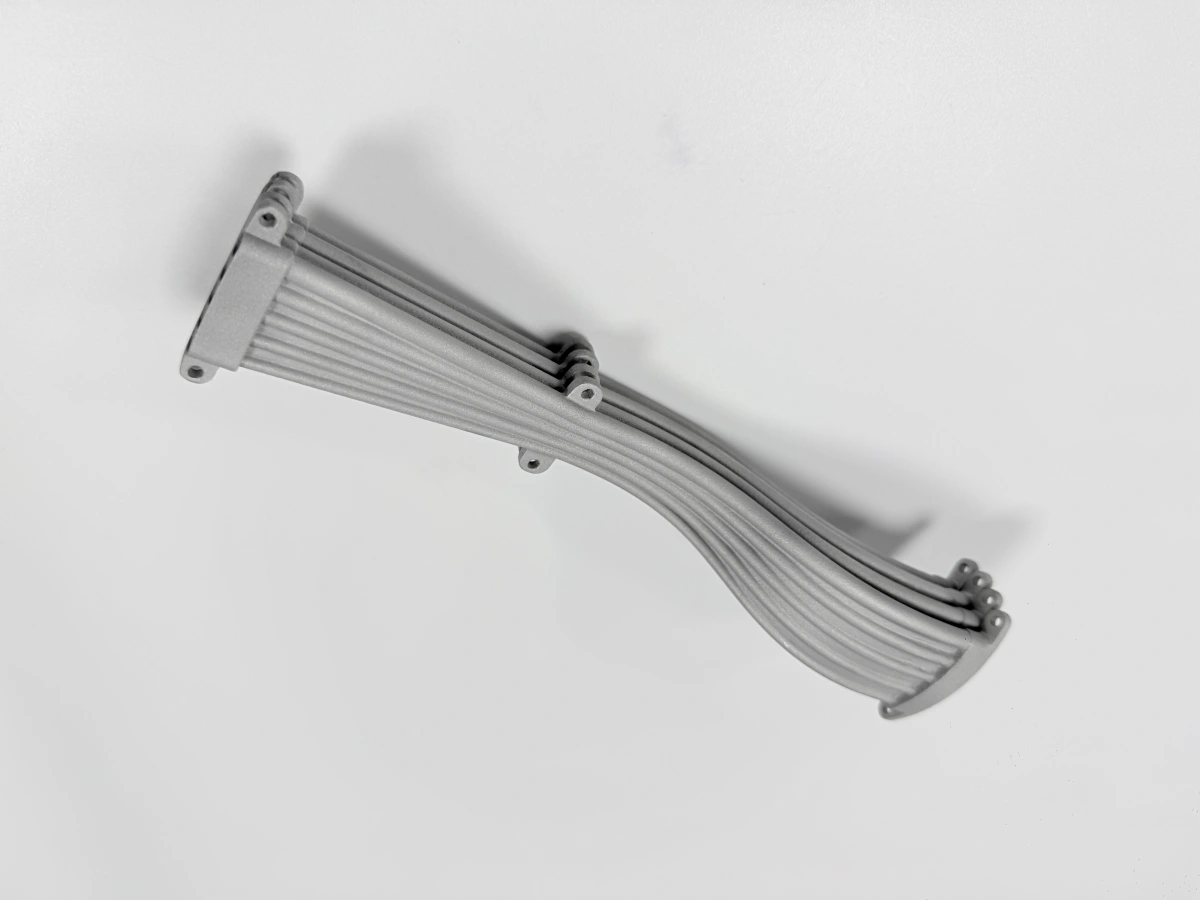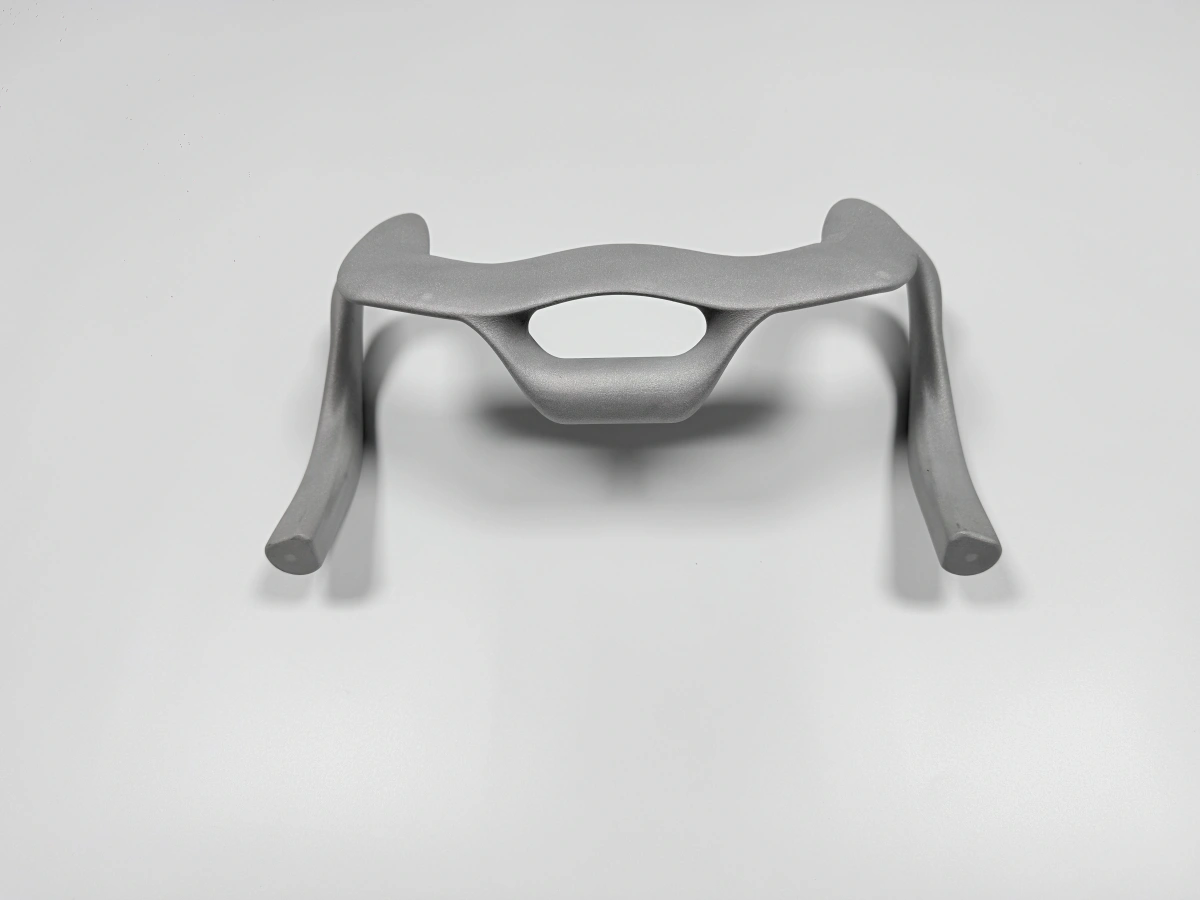
Hastelloy X 3D Printed Parts for Combustion, Aerospace, and Energy Applications
At Neway, we do not start metal 3d printing quote work by promising a process name. We start by reading the model, the drawing, and the buying reason. Metal 3D Printing Cost: The Quote Review We Use is useful only when it helps the buyer decide what should be quoted, what must be inspected, and where cost or lead time can move.
This page is written from our engineering and quoting workflow, not as a generic definition. The buyer usually wants to align engineering, purchasing, and quality before the quote is approved. To do that, we need to understand whether Neway should quote PBF, DED, machining, or a combined route before we treat the request as a normal price inquiry.
The most expensive mistakes in custom metal AM quoting are rarely caused by printing alone. They come from unclear material notes, missing acceptance criteria, underestimated post-processing, or supplier quotes that do not include the same scope. We use the checks below to make the commercial comparison more honest.
The decision we try to make
When we review metal 3d printing quote requests at Neway, we first decide whether the inquiry is a printable part, a finished component, or only an early cost check. That distinction matters because missing CAD, drawing, material, quantity, and acceptance notes can change the process route, the quote scope, and the delivery promise.
For Powder Bed Fusion, our engineers look for the feature that controls the job: a sealing face, a thin wall, a loaded bracket, a heat-exposed surface, a conductive path, or a datum that must be machined after printing. Once that feature is clear, the commercial discussion becomes more useful because we can align engineering, purchasing, and quality before the quote is approved.
Cost review is also an engineering review. Powder use, machine time, support volume, heat treatment, HIP, CNC machining, surface treatment, and inspection are not separate surprises; they are part of the same manufacturing scope. When a buyer asks for metal 3d printing cost: the quote review we use, our team checks whether titanium 3d printing or another downstream step will dominate the final price more than the printing operation itself.
Lead time follows the same logic. A part that prints quickly can still wait for stress relief, machining, coating, CMM inspection, or approval of a first article. We call this out because a short quoted lead time without post-processing detail can create schedule conflict later. A good quote should show which steps are included and which steps require buyer confirmation.
Data we ask for before pricing
The fastest way to make data we ask for before pricing useful is to remove guessing from the RFQ. We ask for the current CAD file, drawing revision, target alloy, order quantity, finish expectation, inspection level, and any customer standard before we comment on price.
If the buyer only sends a model, we can still start a technical review, but the quote will carry assumptions. Those assumptions usually sit around titanium 3d printing, support removal, heat treatment, machining stock, surface finish, and final inspection. We would rather name those assumptions early than repair them after the purchase order.
Supplier comparison should be based on equal scope. If one supplier quotes only printing and another includes superalloy 3d printing, dimensional inspection, packaging, and material records, the lower unit price may not be the lower project cost. We recommend asking each supplier to identify excluded work, assumed tolerances, and the point where a drawing change would trigger re-pricing.
From Neway's side, we prefer to make these limits visible early. A clear limitation is not a weakness; it is useful control. If a feature is too thin, too rough after support removal, or too difficult to measure after coating, we would rather discuss a design or process adjustment before the purchase order than after parts are already built.
Engineering risks we flag early
Our team does not treat Powder Bed Fusion as a default answer. We compare it with adjacent routes, including Powder Bed Fusion and superalloy 3d printing, because the lower-risk path can change when the part gets larger, thinner, hotter, more cosmetic, or more tightly toleranced.
This is also where supplier comparison becomes practical. A low unit price has little value if it excludes post-processing, cleaning, measurement, coating, or packaging. For this topic, the buyer should ask whether quote assumptions, process route, post-processing scope, and inspection records are included or only assumed.
For repeat work, we also look beyond the first delivery. The buyer may need the same route, same finish, same inspection method, and same packaging on later orders. That means we should record the build assumptions, post-processing sequence, and inspection plan. If the part may move from prototype to low-volume production, the RFQ should say that clearly.
Commercially, this protects both sides. The buyer gets a quote that can be compared and repeated. Neway gets a stable manufacturing target. For custom metal AM quoting, that stability matters because missing CAD, drawing, material, quantity, and acceptance notes can easily turn a simple reorder into a new engineering review.
What should be included in the quote
For production-minded buyers, the quote should show how Neway will protect the approved geometry after the first build. We look for drawing revision control, repeat order notes, inspection frequency, material traceability, and the point where engineering questions must be closed.
If the part involves copper alloy 3d printing, we also check whether the final acceptance happens before or after secondary operations. That single detail can change cost, schedule, and responsibility for nonconforming features.
The best RFQs do not try to specify every manufacturing detail. They define the part function and acceptance requirement. Our engineering team can then recommend whether stainless steel 3d printing, machining stock, heat treatment, HIP, surface finishing, or inspection records should be part of the quote. That is usually faster than forcing a process that does not fit the part.
If the buyer is under time pressure, we still recommend closing the basic technical questions before PO release. A rushed quote with vague finish, material, or inspection language often costs more time than a careful review. Short, specific information is enough; vague urgency is not.
When we recommend a different route
A concise RFQ is better than a long but vague one. We prefer a short file package that states the application, critical dimensions, material standard, annual or batch demand, surface requirement, and what records the buyer needs with the shipment.
With those details, we can answer the commercial question behind Metal 3D Printing Cost: The Quote Review We Use: whether Neway can quote the work as printed, as printed plus finishing, or as a controlled finished-part order with documented inspection.
In our review, metal 3d printing quote is not a standalone buying category. It is a request that has to survive build orientation, support removal, material behavior, and final acceptance. If the part has a sealing surface, threaded feature, thin rib, enclosed channel, or cosmetic face, we mark that feature first and then decide whether Powder Bed Fusion should carry the main work or whether secondary operations must be quoted from the beginning.
This is where concise communication helps. We do not need a long purchasing note; we need the few details that change the route. Material grade, quantity, finish, critical dimensions, and inspection records are enough to separate a printable model from a finished component. When those details are missing, we normally list assumptions in the quote rather than pretending the risk is solved.
Review item | Buyer should send | Neway engineering check | Commercial reason |
|---|---|---|---|
Post-processing | surface finish, support marks, machining stock, thread requirements, sealing faces, coating, and cleaning expectations | sequence printing, stress relief, HIP, CNC, EDM, surface treatment, and inspection so final dimensions remain controlled | turns raw-print pricing into finished-part pricing, which is usually what purchasing actually needs |
Inspection evidence | critical dimensions, report format, CMM need, material certificate, NDT requirement, sample approval, and repeat-order records | define what will be measured, when it will be measured, and which records ship with the parts | makes acceptance criteria clear before the purchase order is released |
File package | native CAD or STEP, controlled 2D drawing, revision level, units, quantity, and delivery target | check feature access, datum logic, wall thickness, support areas, and whether the drawing tolerance matches the intended process | prevents a quick quote from becoming a re-quote after engineering review |
Material and process | alloy grade, substitute allowance, service temperature, corrosion exposure, conductivity need, and certification level | compare PBF, DED, machining, heat treatment, HIP, coating, and material availability before naming a route | keeps the buyer from comparing one complete quote with another quote that excludes the hard work |
Commercial Scope We Would Confirm
Before we treat the inquiry as quote-ready, we would confirm four commercial points: confirm whether the quote is for raw printed parts or finished parts; state which dimensions are critical and which follow general tolerance; define whether material certificates or inspection reports are required; separate cosmetic surfaces from functional surfaces. These are not extra paperwork. They decide whether the price covers the real order or only a partial manufacturing step.
For metal 3d printing cost: the quote review we use, the buyer should also ask what would change the quoted price. A tighter tolerance, certified material, faster delivery, added HIP, extra inspection, or cosmetic finishing may be reasonable, but it should be visible. If those items stay hidden, the quote may look attractive while the project risk is simply postponed.
RFQ line | Neway confirmation | Buyer decision |
|---|---|---|
CAD and drawing | revision, units, datums, critical features | prevents wrong assumptions before pricing |
Material request | grade, substitute limits, certification need | changes alloy availability and lead time |
Geometry risk | thin walls, supports, enclosed channels, stock | drives process route and finishing effort |
Post-processing | heat treatment, HIP, CNC, EDM, surface finish | separates raw print cost from finished-part cost |
Acceptance | inspection method, report type, sampling level | defines what evidence ships with the order |
What to Send Neway
For a faster review, send STEP or native CAD, the controlled drawing, material grade, quantity, target delivery date, surface requirement, and the inspection records your team must receive. If the part has a critical feature, mark it clearly. If the requirement is flexible, say so; that gives us room to suggest a lower-risk or lower-cost route.
When those details are available, our team can respond with a practical scope: process route, post-processing sequence, inspection plan, commercial assumptions, and open questions. That is the point where metal 3d printing cost: the quote review we use becomes a real quote conversation rather than another SEO phrase.
Related Questions We Usually Clarify
.webp)