
What post-processing are required to achieve aerospace-grade surface on superalloy components?
What post-processing methods are required to achieve aerospace-grade surface finish on superalloy components?
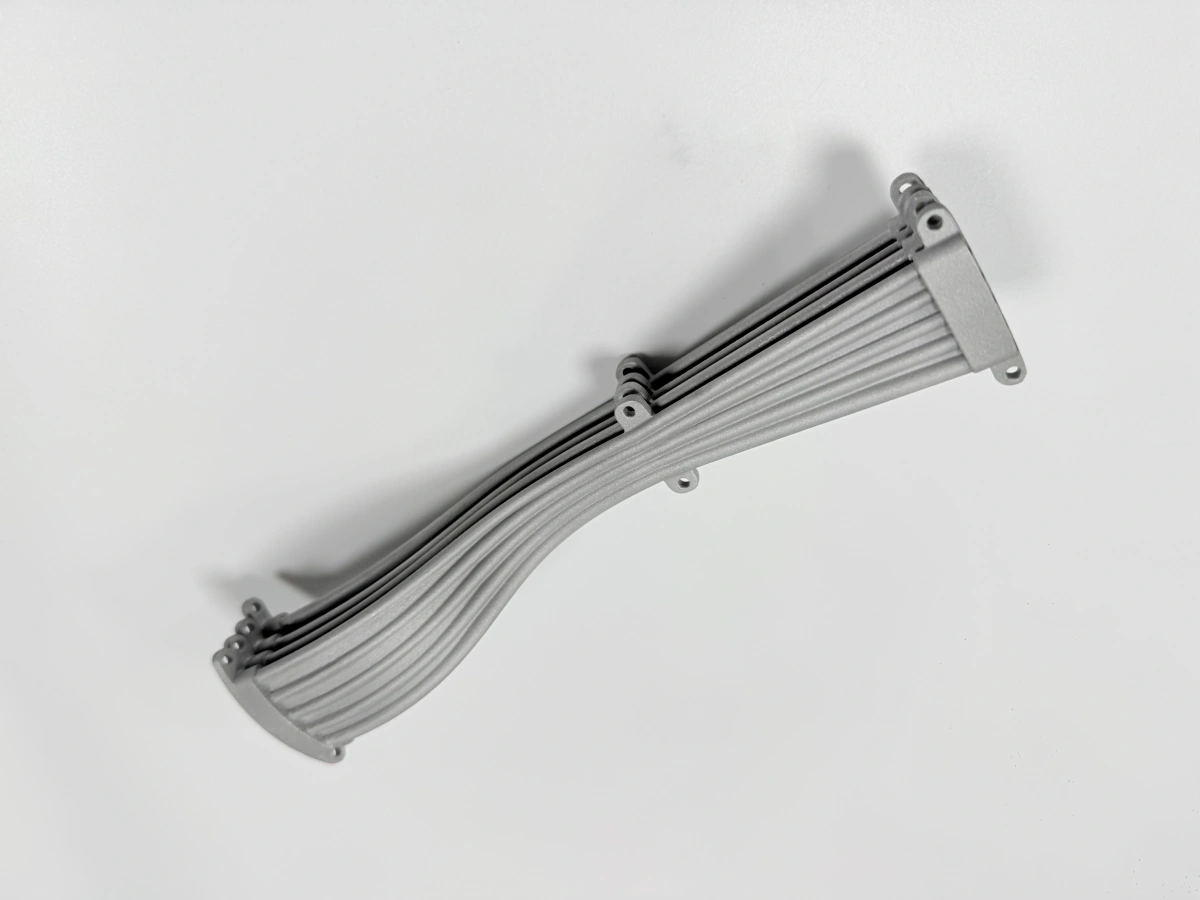
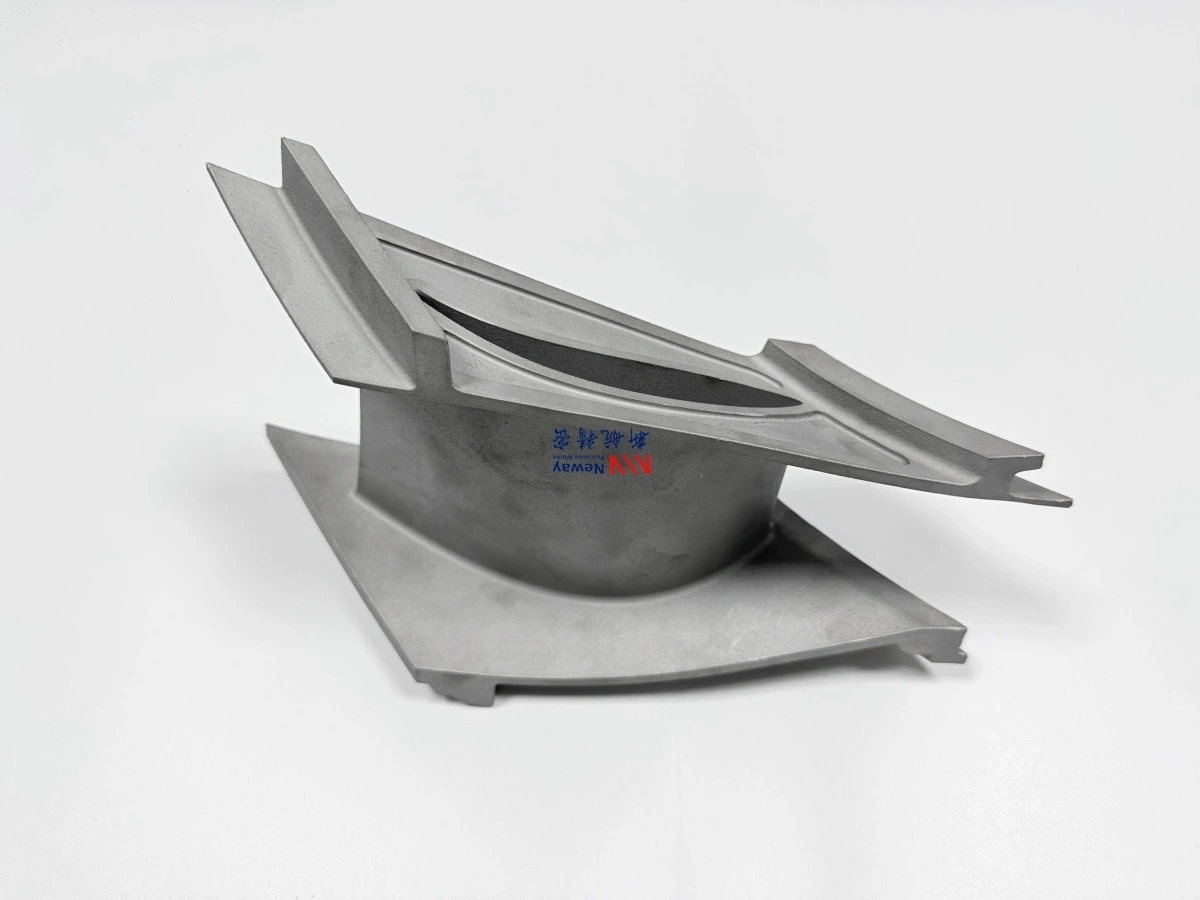
Aerospace-grade surface finish for superalloy 3D printed parts (e.g., Inconel 718, Hastelloy X, Rene 41) is not a single operation but a carefully engineered sequence. Components such as turbine blades, combustion chambers, and nozzle guide vanes demand low roughness (typically Ra ≤ 0.8–1.6 µm), no loose particles, and controlled surface integrity to resist fatigue, oxidation, and thermal stress. Below are the essential post-processing methods used to achieve these stringent requirements.
1. Initial Support Removal and Sandblasting
After printing, supports are removed manually or via CNC machining. The entire part then undergoes sandblasting using fine alumina or glass beads. This step removes partially melted powder particles, exposes surface defects, and creates a uniform matte finish. For aerospace applications, sandblasting must be carefully controlled to avoid embedding abrasive media into soft superalloy surfaces.
2. CNC Machining for Critical Interfaces
Functional surfaces such as flanges, seal slots, and threaded holes require tight tolerances (IT5–IT6) that cannot be achieved by as-printed surfaces. CNC machining with carbide or ceramic tools is performed on these specific areas. The machining strategy uses low cutting speeds and high feed rates to prevent work-hardening of nickel-based superalloys. After machining, burrs are removed via micro-deburring or tumbling.
3. EDM Machining for Mirror Finish on Complex Geometries
For intricate internal cooling holes, slots, and blind cavities that cannot be reached by conventional cutters, Electrical Discharge Machining (EDM) is indispensable. Using fine wire or sinker EDM with optimized parameters, it is possible to achieve mirror surface finishes (Ra down to 0.1–0.2 µm) without inducing mechanical stress. This is particularly valuable for turbine vane cooling channels and fuel injector nozzles. EDM also enables micron-level precision on superalloy parts.
4. Abrasive Flow Machining (AFM) for Internal Passages
While not explicitly listed in the provided database, a common aerospace-grade finishing method for internal channels is abrasive flow machining. However, for the purpose of this article, we focus on available referenced methods. Instead, a combination of EDM and electropolishing is used to smooth internal surfaces. For external and simple internal surfaces, tumbling with ceramic or high-density media can be applied to smaller superalloy parts to achieve a uniform radius and reduce roughness to ~0.4 µm Ra.
5. Electropolishing for Superior Smoothness and Corrosion Resistance
Electropolishing is a critical step for aerospace superalloy components. It removes a thin, uniform layer of material (typically 10–50 µm) through an electrochemical reaction, eliminating microscopic peaks and reducing surface roughness to Ra ≤ 0.2 µm. Additionally, electropolishing removes the recast layer left by EDM or laser melting, improves corrosion resistance, and reveals any sub-surface defects. This method is widely used on Inconel 718 turbine blades and Hastelloy X combustor liners.
6. Mechanical Polishing for Sealing and Bearing Surfaces
Critical sealing surfaces (e.g., blade tips, shroud interfaces) require Ra ≤ 0.1 µm or even mirror finish. Mechanical polishing with progressively finer abrasive media (up to 1 µm diamond paste) is performed manually or with automated robotic systems. Care must be taken not to alter airfoil profiles. After polishing, parts are cleaned ultrasonically to remove any embedded abrasive particles.
7. Hot Isostatic Pressing (HIP) to Enhance Surface Integrity
Although HIP is primarily a densification process, it also contributes to surface finish. Hot Isostatic Pressing (HIP) closes near-surface porosity and micro-cracks that would otherwise appear as surface defects after machining. As noted in the resource improved surface finish: achieve smooth, high-quality finishes with HIP, HIP can significantly reduce surface roughness by eliminating voids and homogenizing the microstructure. For critical rotating parts, HIP is performed before final polishing to ensure a defect-free surface layer.
8. Optional Thermal Barrier Coating (TBC) and Pre-coating Finish
For hot-section components that will receive a Thermal Barrier Coating (TBC), the surface finish must be prepared to a specific roughness (typically Ra 2–4 µm) to ensure bond coat adhesion. In such cases, controlled sandblasting or grit blasting is used rather than electropolishing. However, the question focuses on the finish itself; TBC is an additional layer.
9. Inspection and Validation of Aerospace-Grade Surface
Every finished superalloy component must be validated using:
Surface roughness measurement (contact profilometer or optical interferometer) at critical zones.
Stereo microscope QA for surface defect grading (scratches, pits, recast layer).
3D scanning (FAI) to ensure no geometric deviation was introduced during polishing.
For extreme requirements, 450 kV industrial CT can reveal sub-surface defects that could affect surface integrity after fatigue cycling.
10. Recommended Post-Processing Sequence Summary
Step | Method | Achieved Surface Roughness (Ra) | Aerospace Application |
|---|---|---|---|
1 | Sandblasting | 3–6 µm | Initial cleaning, bond coat prep |
2 | CNC machining (critical zones) | 0.8–1.6 µm | Seal slots, threads, flanges |
3 | EDM mirror finishing | 0.1–0.4 µm | Cooling holes, complex cavities |
4 | Electropolishing | ≤0.2 µm | Overall smoothness, corrosion resistance |
5 | Mechanical polishing (selected areas) | ≤0.05–0.1 µm | Sealing surfaces, blade tips |
6 | HIP (before final polish for critical parts) | Closes porosity, improves measurable finish | Turbine discs, rotating blades |
11. Conclusion
Attaining aerospace-grade surface finish on superalloy 3D printed components is a systematic process that integrates sandblasting, precision CNC machining, EDM mirror finishing, electropolishing, and selective mechanical polishing. For the highest reliability, HIP should be applied before final finishing to eliminate sub-surface porosity that could compromise surface integrity. Each method is supported by rigorous PDCA-based quality assurance and inspection using stereo microscopes, 3D scanning, and CT. For detailed application examples, refer to superalloy 3D printing case studies and the typical surface treatments for 3D printed parts guide.
.webp)