What Are The Typical Surface Treatments for 3D-printed Parts?
Introduction
While additive manufacturing enables unprecedented design freedom, the as-built surface condition of 3D-printed parts often falls short of functional and aesthetic requirements. Layer lines, partially melted particles, and surface roughness are inherent to most additive processes, particularly metal-based technologies.
At Neway, we integrate advanced surface finishing techniques into our 3D printing workflow to transform printed components into application-ready products. Surface treatment is not merely cosmetic—it directly affects wear resistance, fatigue life, corrosion performance, and assembly compatibility.
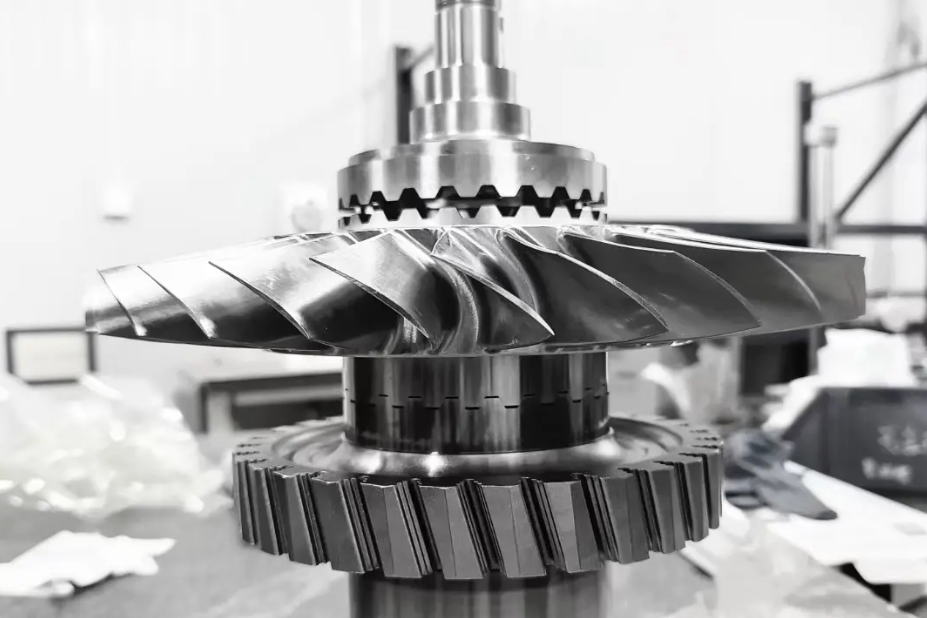
Why Surface Treatment Is Required for 3D-Printed Parts
Unlike traditional manufacturing methods, additive processes build parts layer by layer, leading to unique surface characteristics:
• Stair-step effects on angled surfaces
• Powder adhesion or partially fused particles
• Micro-porosity and surface irregularities
• Residual stresses affecting surface integrity
These factors make post-processing essential. Surface treatments improve dimensional accuracy, reduce friction, enhance coating adhesion, and ensure compliance with functional specifications.
Mechanical Surface Finishing Methods
CNC Machining for Critical Surfaces
For functional interfaces requiring tight tolerances, CNC machining is the most effective solution. It is commonly applied to:
• Mating surfaces and sealing faces
• Threaded holes and precision bores
• Bearing seats and alignment features
Machining ensures dimensional accuracy and surface roughness levels as low as Ra 1.6–3.2 μm, depending on material and tooling strategy.
Tumbling and Vibratory Finishing
Tumbling is widely used to smooth edges and remove surface irregularities. Parts are placed in a vibratory or rotating container with abrasive media, gradually refining the surface.
This method is suitable for small to medium-sized components and is often used as a pre-treatment before coating or plating.
Sand Blasting
Sand blasting removes adhered particles and creates a uniform matte finish. It also enhances coating adhesion by increasing surface roughness at a controlled scale.
Blasting media can be adjusted (glass beads, aluminum oxide, etc.) depending on the desired surface texture.
Chemical and Electrochemical Treatments
Anodizing for Aluminum Parts
Anodizing is an electrochemical process that forms a protective oxide layer on aluminum surfaces. It improves:
• Corrosion resistance
• Surface hardness (up to HV 300–500)
• Wear resistance
• Aesthetic appearance (coloring options)
This process is widely used for aluminum alloys such as A380 and EN AC-46000 (AlSi9Cu3) in both casting and additive manufacturing applications.
Electropolishing
Electropolishing removes a thin layer of material from the surface using an electrochemical process, resulting in a smoother and more reflective finish. It is particularly effective for stainless steel components produced via additive manufacturing.
This treatment also enhances corrosion resistance and reduces bacterial adhesion, making it suitable for medical and food-grade applications.
Coating Technologies
Powder Coating
Powder coating provides a durable, uniform layer that protects against corrosion, impact, and environmental exposure. The coating thickness typically ranges from 60–120 μm.
This method is ideal for structural components and outdoor applications.
Liquid Painting
Painting offers flexibility in color, texture, and finish quality. It is commonly used for consumer-facing products where visual appearance is critical.
Multi-layer systems (primer + topcoat) can be applied to enhance adhesion and durability.
Advanced Coatings (PVD, Thermal Spray)
For high-performance applications, advanced coatings such as Physical Vapor Deposition (PVD) or thermal spray coatings can be applied. These coatings improve:
• Wear resistance
• Thermal stability
• Surface hardness
They are often used in aerospace, tooling, and high-temperature environments.
Hybrid Manufacturing Approach
Surface treatment is rarely a standalone step. Instead, it is part of a broader hybrid manufacturing strategy that combines additive and traditional processes.
For example, a WAAM or powder-bed printed component may undergo:
• Initial machining for critical geometry
• Blasting or tumbling for surface preparation
• Coating or anodizing for performance enhancement
In some cases, additive manufacturing is used alongside aluminum die casting to optimize both cost and structural performance.
Quality Control and Inspection
Surface-treated parts must meet strict quality standards. At Neway, we validate surface and dimensional integrity using advanced die castings inspection systems, including:
• Surface roughness measurement (Ra, Rz)
• Coating thickness testing
• Adhesion testing
• Corrosion resistance testing (salt spray)
• Dimensional verification (CMM)
This ensures that surface treatments deliver both functional and cosmetic performance.
Applications of Surface-Treated 3D-Printed Parts
Surface-treated additive components are widely used across industries:
• Aerospace: structural brackets and engine components
• Automotive: lightweight housings and performance parts
• Medical: implants and surgical tools
• Electronics: enclosures and heat-dissipation components
For instance, precision metal components used in electronics manufacturing can follow similar finishing strategies as seen in consumer electronics hardware.
One-Stop Surface Finishing Solutions at Neway
Neway provides fully integrated finishing capabilities through its one-stop service. This allows customers to combine additive manufacturing, machining, and surface treatment into a single workflow.
By managing all processes in-house or through coordinated supply chains, we ensure:
• Consistent quality across all stages
• Reduced lead time
• Lower logistics and coordination costs
• Improved traceability and process control
Conclusion
Surface treatment is a critical step in transforming 3D-printed parts from raw builds into high-performance components. From mechanical finishing and chemical treatments to advanced coatings, each method serves a specific engineering purpose.
At Neway, we combine additive manufacturing with precision finishing technologies to deliver parts that meet the highest standards of performance, durability, and aesthetics. By selecting the right combination of processes, manufacturers can fully unlock the potential of 3D printing.
FAQs