Grade 23 Titanium AM for Medical Prototype Hardware and Fixtures
Grade 23 titanium AM can be useful for medical prototype hardware, surgical instrument development parts, test fixtures, and non-implant components, but the RFQ must define the boundary clearly. A buyer should not treat a printed Grade 23 part as automatically qualified for medical use. Manufacturing support, material selection, cleaning access, machining, inspection, and customer validation are separate responsibilities.
For medical-adjacent titanium work, Neway reviews how the part will be handled and accepted before quoting the route. A fixture used in a lab, an instrument handle prototype, a trial assembly component, and an implant-like development geometry have different evidence needs. The quote should identify what Neway manufactures and what the buyer must validate under its own medical, regulatory, or internal engineering standard.
This article is for buyers who need a practical purchasing boundary for medical and healthcare prototype projects. It focuses on Grade 23 titanium 3D printing service scope, not regulatory approval language.
Grade 23 Titanium Requests That Need Clear Use Boundaries
Grade 23, often requested as Ti-6Al-4V ELI, is not just a purchasing label. The buyer should state why Grade 23 is being requested: prototype similarity, lower interstitial requirement in the drawing, customer material preference, or a development route that may later require qualification. Without that reason, a supplier can only quote the material name and may miss the documentation expectation.
Medical prototype RFQs should identify the part type. A surgical instrument component may require polished or machined hand-contact zones. A test fixture may care more about dimensional stability and repeat clamping. A non-implant device component may need controlled interfaces and cleaning access. An implant-like geometry may need porous surfaces or lattice review, but Neway does not replace the buyer's biological, clinical, or regulatory validation.
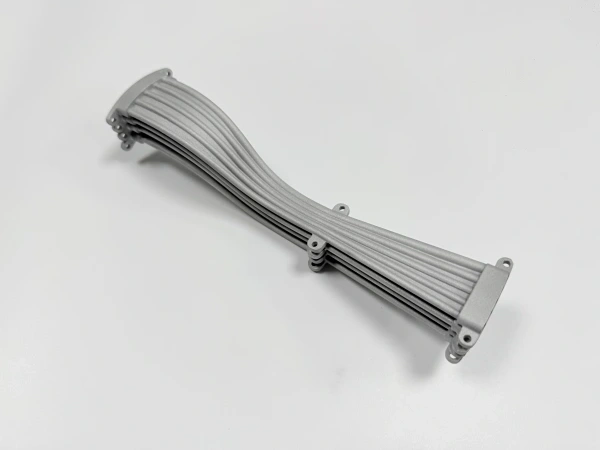
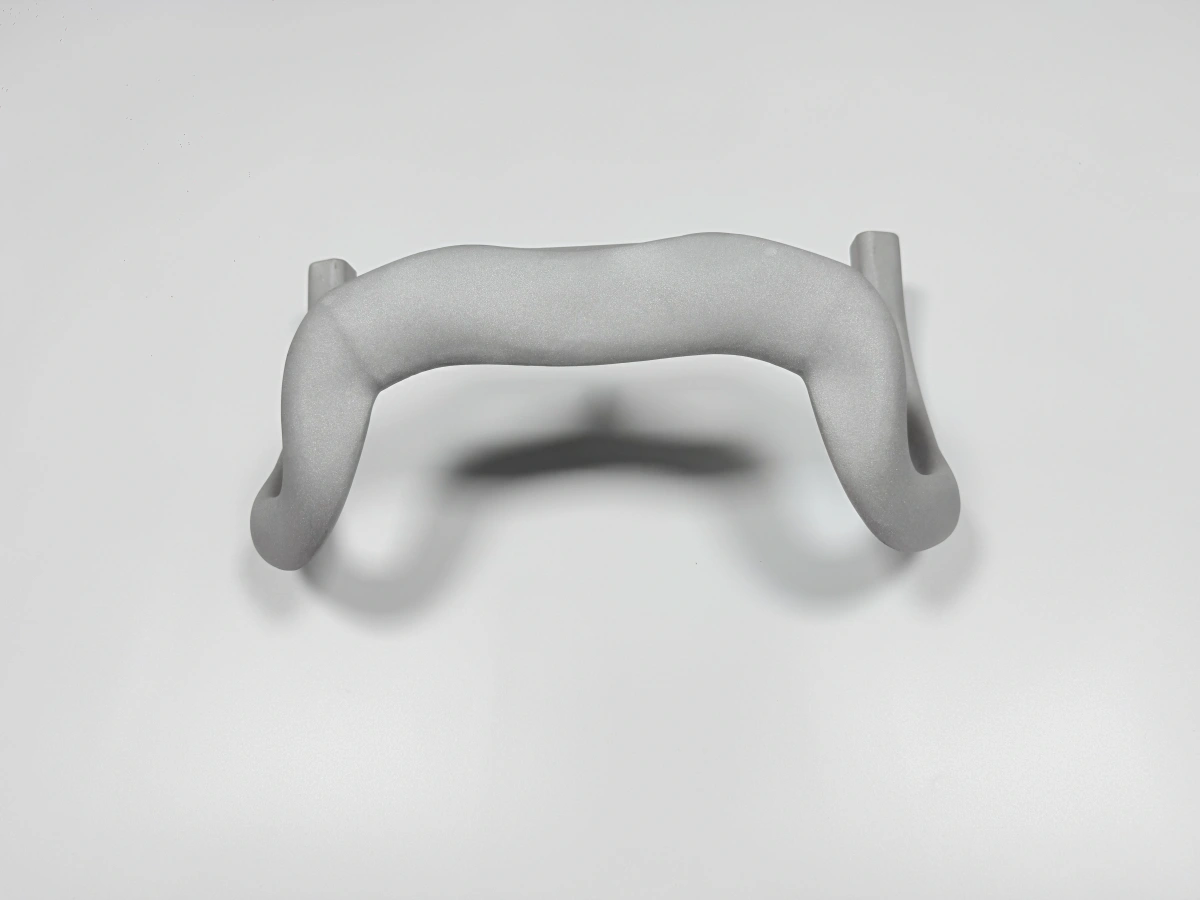
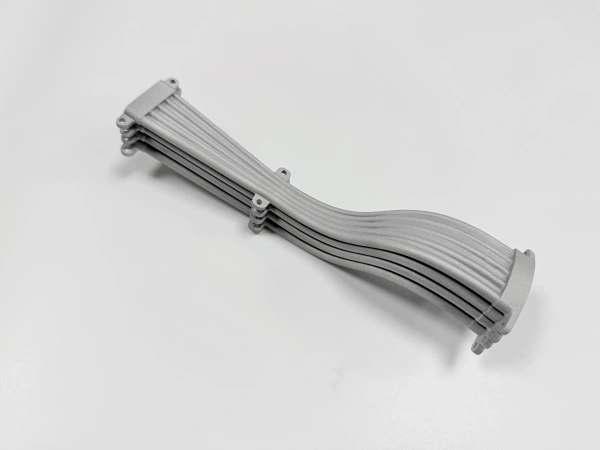
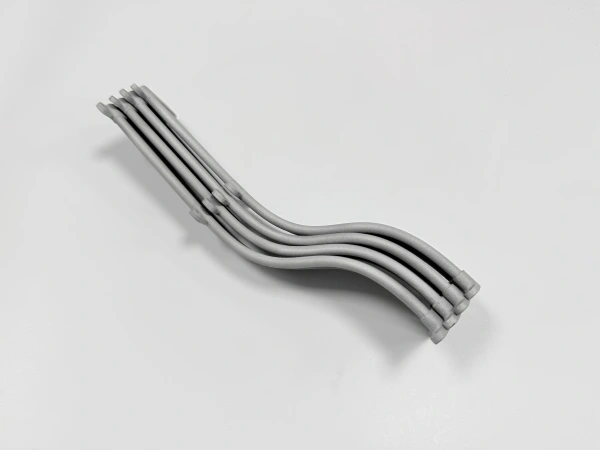
Titanium 3D printing may be appropriate when the geometry needs lightweight structure, internal access, complex contours, low-volume iteration, or part consolidation. If the geometry is a simple block, plate, straight shaft, or spacer, conventional machining may provide a cleaner manufacturing route for the prototype stage.
Cleaning Access and Porous Surface Risks in Prototype Hardware
Cleaning access should be discussed before printing, especially when a part has deep blind cavities, enclosed channels, lattice zones, or rough internal surfaces. A medical prototype can be dimensionally correct and still be difficult to clean or inspect. If the buyer needs a defined cleaning process, that expectation should be supplied as a requirement rather than assumed from the phrase medical titanium.
Porous or textured surfaces require careful scope language. A lattice or roughened area may be useful for a development geometry, but it also changes powder removal, visual inspection, and finishing options. If the buyer wants a smooth machined zone next to a porous region, the transition should be visible on the drawing. Support placement near porous surfaces should also be reviewed because support marks may be unacceptable in a functional or evaluation area.
Surface treatment should be separated from dimensional work. Blasting, polishing, and local blending may improve handling or appearance, but they do not prove cleanliness or medical suitability. If the part needs a buyer-specified cleaning validation, sterilization study, or biocompatibility assessment, that belongs to the buyer's validation package unless a separate approved scope is defined.
Part type | Manufacturing concern | Required buyer standard | Neway manufacturing scope | Validation owner |
|---|---|---|---|---|
Instrument prototype | Grip zones, edges, and assembly interfaces may need finishing | Drawing notes for finish, cleaning, and inspection | Print, finish, machine selected surfaces, and provide agreed records | Buyer confirms usability and medical acceptance |
Test fixture | Clamping faces and locating holes control repeat test setup | Fixture drawing, datum scheme, and dimensional evidence needed | Print route, CNC datums, threads, bores, and CMM if requested | Buyer validates fixture function in its test method |
Non-implant component | Machined interfaces and cleaning access may drive quote scope | Customer specification for material records and finishing | Manufacture to supplied drawing and listed post-processing | Buyer owns device-level qualification |
Implant-like development geometry | Porous zones, trapped powder, and surface state need review | Explicit development, inspection, and validation instructions | Prototype manufacturing support only unless otherwise agreed | Buyer owns regulatory and implant validation |
Machined Zones for Instruments, Fixtures, and Test Parts
Medical prototype buyers often need printed titanium shape plus selected CNC machining. Threads, bores, pin holes, sealing faces, bearing seats, datum pads, and assembly rails should not be left as generic printed features when they control fit. Neway will usually ask which surfaces touch another part, which surfaces are measured, and which surfaces must be protected from support contact.
The machining plan also affects how the part is held. A delicate instrument prototype may need temporary tabs or sacrificial stock so that final faces can be machined after stress relief. A fixture may need broad pads machined from a stable datum rather than from a visually convenient printed face. If the buyer omits the 2D drawing, the supplier cannot know which surfaces deserve this treatment.
Powder bed fusion is often reviewed for these titanium geometries because it can produce complex low-volume shapes. The buyer still needs to define the finished condition. As-printed contour, blasted surface, polished region, and machined interface are different acceptance states.
Records Buyers Should Define From Their Own Standard
Traceability expectations should come from the buyer's drawing, purchase specification, or quality plan. Material records, build records, heat treatment records, HIP records, dimensional reports, surface finish checks, and visual inspection notes may all be relevant, but they should not be bundled automatically into every prototype. A lab fixture and a production-intent medical component do not need the same record package.
For Grade 23 titanium AM, buyers should identify whether they need material grade evidence, powder or batch documentation, post-processing records, and dimensional evidence. If a buyer later asks for records that were not required at the RFQ stage, the supplier may not be able to reconstruct the exact evidence package. That risk is commercial as much as technical.
Inspection timing should match the finished state. A measurement before support removal cannot verify a machined hole. A visual review before polishing cannot confirm a polished surface. A CMM report should reference the drawing datums and the stage at which the part is ready for measurement.
Cleaning evidence should also be named carefully. A manufacturing supplier can quote cleaning access review, visible powder removal checks, surface finishing, packaging expectations, or buyer-specified inspection notes. That is different from proving a device cleaning validation. If a pocket, blind channel, lattice, or textured surface cannot be seen or reached, the buyer should decide whether the design is still acceptable for the prototype purpose or whether the geometry needs a drain, split line, removable insert, or machined access feature.
For medical prototype hardware, documentation scope should be priced at the same level as the intended decision. A concept model may only need material and dimensional confirmation. A fixture used in repeated testing may need a controlled drawing revision, CMM evidence on locating features, and records for the post-processing route. A qualification-intent development part may need additional buyer-defined requirements before Neway can quote it responsibly.
What Neway Can Manufacture Versus What Buyers Must Validate
Neway can support Grade 23 titanium medical prototype manufacturing by reviewing the geometry, suggesting print orientation, planning support removal, quoting machining on functional zones, applying agreed finishing, and preparing specified inspection records. That support does not mean the part is automatically cleared for medical use, human implantation, surgical application, or any regulated device function.
Before requesting a quote, provide the STEP file, 2D drawing, material grade, quantity, part-use category, medical-adjacent standard or customer specification, cleaned or polished zones, porous or lattice areas, machined interfaces, heat treatment or HIP expectations, surface finish requirements, inspection records, and target delivery timing. If the project is only a form-fit prototype, say so. If it is a qualification-intent part, define the evidence package before PO release.
A clear boundary protects both sides. It lets Neway quote a manufacturable titanium prototype, and it lets the buyer decide what additional validation belongs inside its own medical product development process.
Related FAQs
How does Ti-6Al-4V compare with CP Ti and Grade 23 in additive manufacturing?
What information is needed for a titanium 3D printing quote?
What post-processing is required for titanium alloy 3D printed parts?
How does electron beam melting benefit titanium parts for medical implants?
What industries benefit most from titanium alloy 3D printing?
.webp)