Aluminum AM vs CNC Machined Aluminum for Small Batches
Aluminum AM and CNC machined aluminum solve different small-batch problems. A buyer should not choose powder bed fusion only because the quantity is low, and should not choose CNC only because the material is aluminum. The better route depends on geometry, access, finished tolerance, surface expectation, and whether the design is still changing.
For Neway, the comparison starts with the part shape. Simple plates, shafts, rails, covers, and open housings usually favor CNC machining. Lightweight brackets, ducts, integrated manifolds, internal channels, topology-style frames, and parts that combine several machined pieces can justify aluminum additive manufacturing. The RFQ should make that difference visible before price comparison.
This article helps buyers decide whether aluminum 3D printed parts or CNC machined aluminum parts should be quoted first for prototypes and small batches. The key is to compare finished-part cost, not raw blank cost, because both routes may still need drilling, tapping, finishing, inspection, and assembly work.
CNC Wins When Aluminum Geometry Is Open and Direct
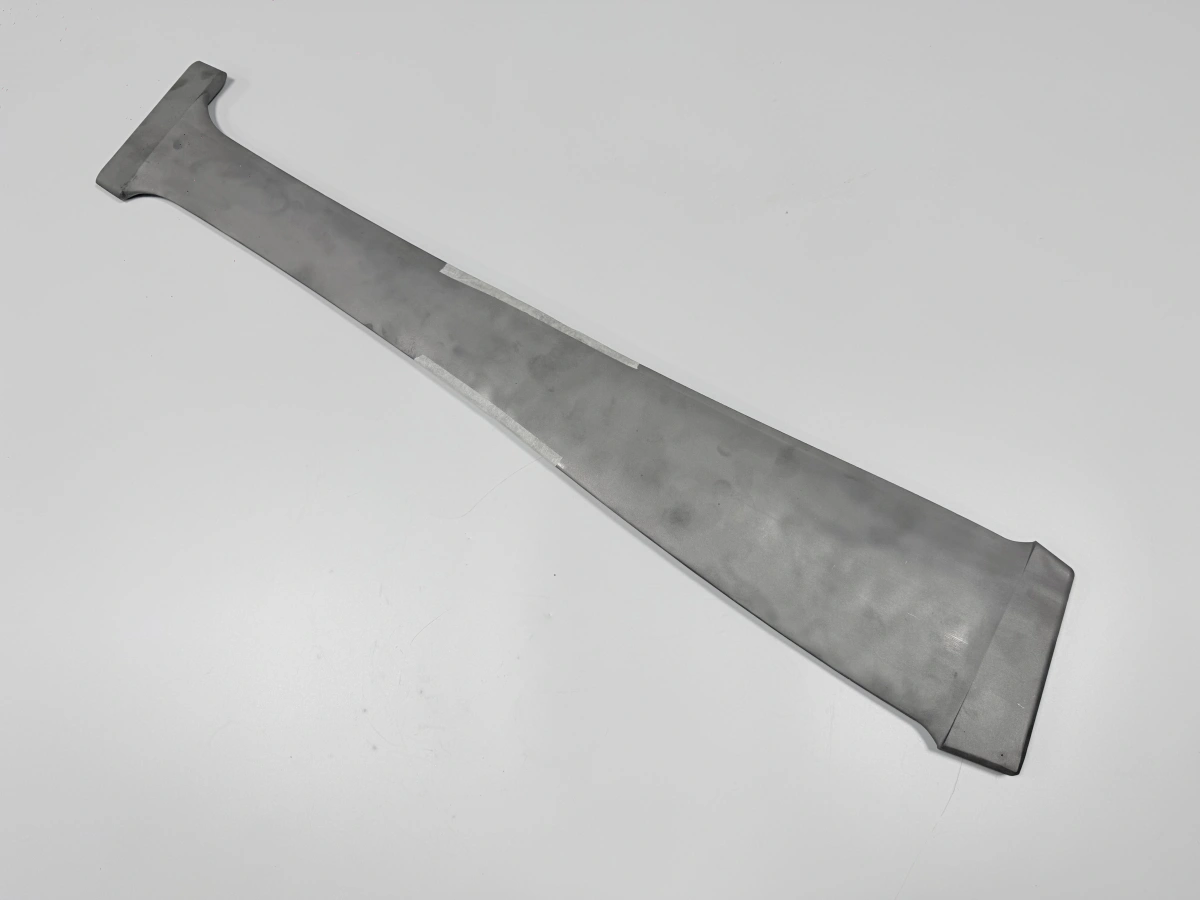
CNC machining is often the better first quote for simple aluminum parts. Flat plates, thick covers, blocks, shafts, spacers, rails, brackets with straight holes, and housings with open tool access usually machine efficiently from wrought stock. CNC also fits parts where broad flatness, hole position, thread quality, or cosmetic machined surfaces dominate the drawing.
Small quantity alone does not make AM better. One to ten pieces of a simple 6061 or 7075 component may still be faster and easier to quote as CNC, especially when the drawing already expects machined tolerances on most surfaces. Aluminum AM would add build setup, support removal, and finishing before the same CNC details are still required.
CNC becomes less attractive when the part requires deep internal passages, curved ducts, hidden manifolds, or major pocketing that removes most of the stock. In those cases, the machining time and fixture complexity can rise while the design still fails to achieve the weight or integration target.
Aluminum AM Wins When Shape Freedom Changes the Part
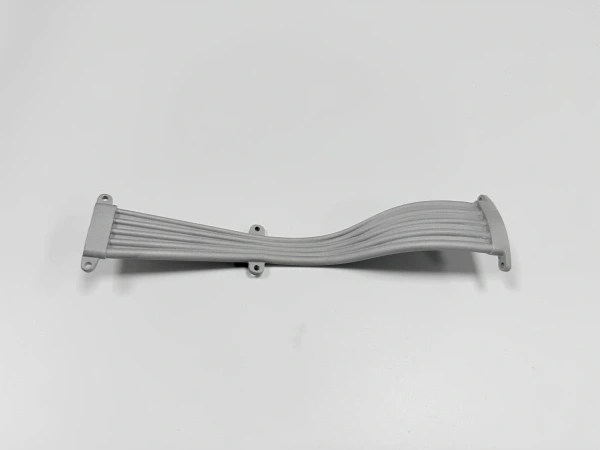
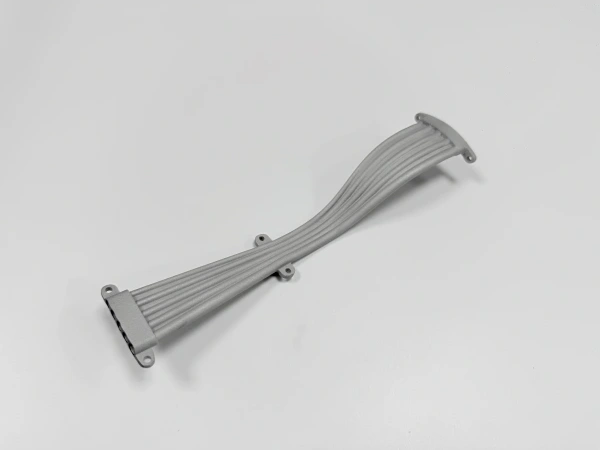
Aluminum powder bed fusion is worth quoting when the buyer gains a functional benefit from printed geometry. Examples include lightweight brackets with integrated bosses, ducts with curved internal paths, heat-exchanger-like channels, sensor housings with routing space, and assemblies consolidated into one printed body.
The value is not only in reducing setup cost. AM can create shapes that CNC would split into several pieces or avoid entirely. If printing removes fasteners, reduces leak paths, shortens assembly, or allows a lighter rib layout, it may be the stronger small-batch route even when the printed blank costs more than a machined blank.
Aluminum AM still needs finishing decisions. Threads, bores, bearing seats, sealing faces, datum pads, and precision mounting surfaces usually require CNC after printing. The quote should separate printed geometry from finished interfaces so the buyer can see why the route is being recommended.
Small-batch part condition | Route to quote first | Reason for the decision |
|---|---|---|
Flat plate, rail, shaft, spacer, or open cover | CNC machined aluminum | Tool access is direct and most requirements are machined features. |
Lightweight bracket with ribs and integrated bosses | Aluminum AM plus selective CNC | Printing creates the load path and weight reduction; CNC finishes interfaces. |
Curved duct or internal channel | Aluminum AM | Internal geometry is difficult or impossible to machine from solid stock. |
Design frozen for repeat volume | Compare CNC, AM, and tooling routes | Once geometry is stable, repeat cost can change by quantity and tooling logic. |
Quantity Changes the Cost Logic, But Not by Itself
For one or two concept parts, the fastest route may be the one with the least programming and finishing risk. If the geometry is simple, CNC may still win. If the geometry is complex, AM can avoid long machining time or assembly. For ten to fifty pieces, nesting efficiency, support removal, machining fixtures, and inspection time become more important. For repeated small batches, the buyer should compare finished-part repeatability, not only the first sample price.
AM cost is affected by build height, support volume, orientation, powder use, support removal, heat treatment if required, CNC stock, surface finishing, and inspection package. CNC cost is affected by stock size, material waste, tool access, setup count, fixture design, cycle time, tool wear, deburring, and inspection. A low-volume metal 3D printing service quote should show which of those items are included.
Design changes can shift the decision. Adding internal channels may push the part toward AM. Removing ornamental pockets may push it back toward CNC. Splitting a complex printed part into two machined pieces may reduce risk if assembly is acceptable. Combining welded or bolted parts into one print may reduce downstream labor if the printed route can meet acceptance requirements.
Quantity should be discussed with the design maturity. For one to five parts, the buyer may prioritize lead-time risk, revision flexibility, and how fast a design can be tested. For ten to fifty parts, fixture repeatability, nesting, support removal labor, and inspection time start to matter more. For a recurring small batch, the strongest route is often the one that gives stable finished interfaces with the fewest design changes between lots.
Tolerances and Surface Finish Should Be Assigned by Feature
Aluminum AM is not a substitute for CNC tolerance on every surface. If a drawing applies tight position, flatness, or sealing requirements across the whole part, the printed route must include a machining plan. The same applies to threaded holes, reamed bores, bearing seats, gasket lands, dowel holes, and datum pads.
CNC machined aluminum can deliver controlled surfaces directly where the tool reaches. Printed aluminum needs a split drawing: as-printed surfaces, cleaned support regions, machined interfaces, and finished cosmetic faces. Surface treatment may be added after machining or support cleanup, but it should be tied to function, appearance, corrosion expectation, or buyer specification.
The tolerance plan also affects supplier comparison. A CNC quote may include all holes, slots, and faces in the base operation, while an AM quote may separate printing, stress relief, support removal, machining, and finishing. If the buyer compares only the first line item, the route can look misleading. A fair comparison uses the same final drawing and the same inspection evidence for both routes.
Feature on aluminum part | CNC route impact | AM plus CNC route impact |
|---|---|---|
Threaded holes | Usually machined directly from stock. | Printed pilot or solid area may still need tapping after build. |
Sealing face | Machined face can be controlled in one setup if accessible. | Needs print stock, support avoidance, and final machining. |
Internal channel | May require splitting, drilling, plugging, or assembly. | Can be printed, but powder removal and inspection path must be reviewed. |
Cosmetic outside wall | Can be milled or finished from stock if accessible. | May need blasting, polishing, or coating after support removal. |
When the Buyer Should Ask for Two Quotes
Ask for both AM and CNC quotes when the design is near the boundary. Good candidates include aluminum housings with both open and hidden features, brackets that may be simplified, ducts that could be split and machined, or low-volume parts that may later move to a more mature production route. The comparison should use the same drawing revision and the same acceptance requirements.
For RFQ review, send the STEP model, 2D drawing, alloy preference, quantity, prototype or repeat stage, critical dimensions, threads, bores, sealing faces, flatness requirements, surface finish, inspection records, and target delivery window. Mark which features can change for manufacturability. If AM is being compared with CNC, ask Neway to separate printed blank, CNC finishing, surface treatment, and inspection so the finished-part decision is clear.
If the buyer is not ready to choose, the RFQ can request two manufacturable versions of the same part. One version can keep the current CNC-friendly geometry. The other can use aluminum AM to reduce weight, combine components, or open internal channels. That gives engineering a practical cost and risk comparison instead of a theoretical process debate.
Related FAQs
How do the strengths of 3D printed and sand cast aluminum parts compare?
Which surface finishing method provides the best surface roughness?
How does EDM machining improve the surface finish of 3D printed parts?
How does heat treatment affect the surface quality of 3D printed parts?
What are the common heat treatment processes used for 3D printed parts?
.webp)