Can a 3D Printed Wax Pattern Be Used for Investment Casting?
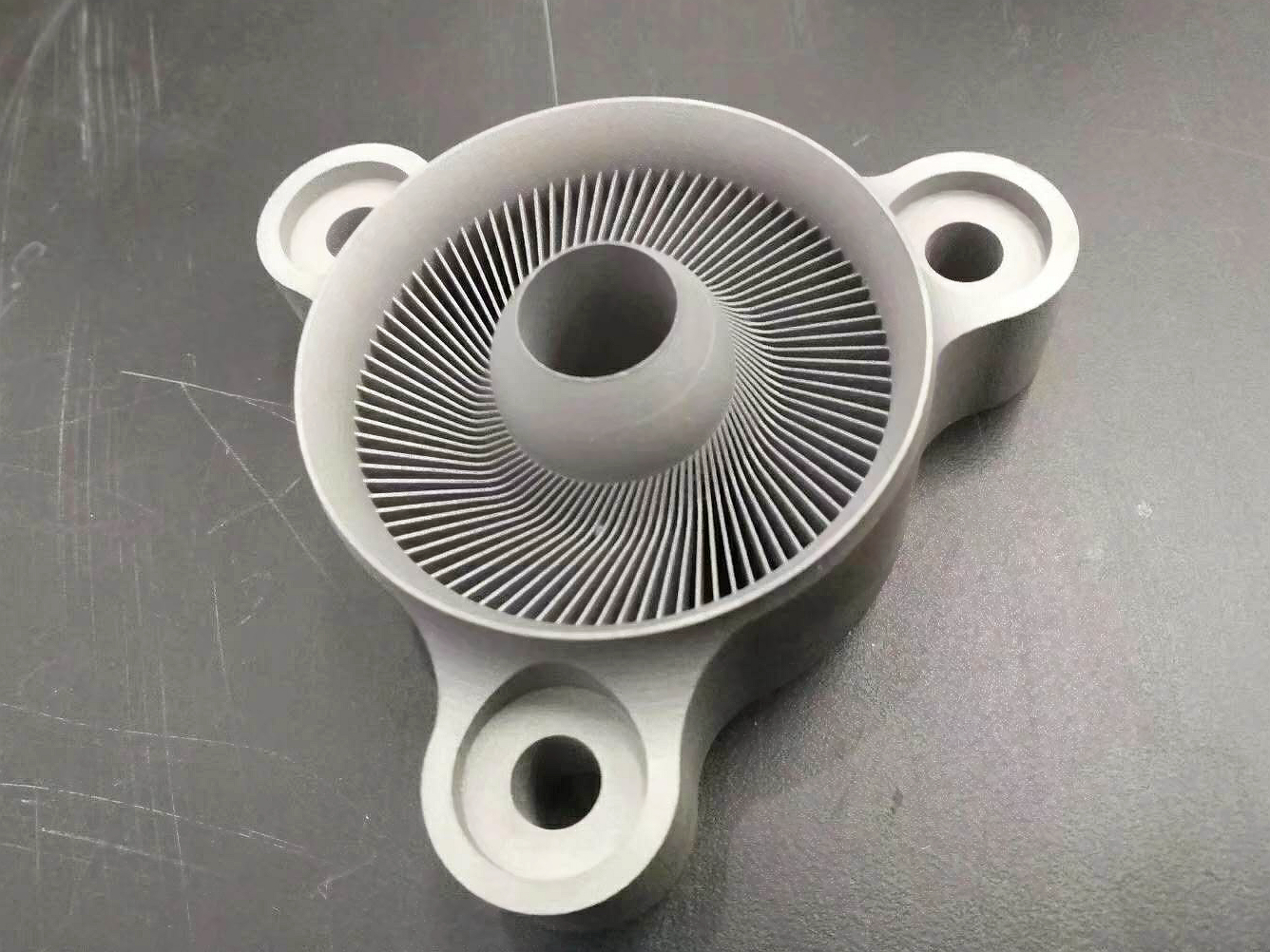
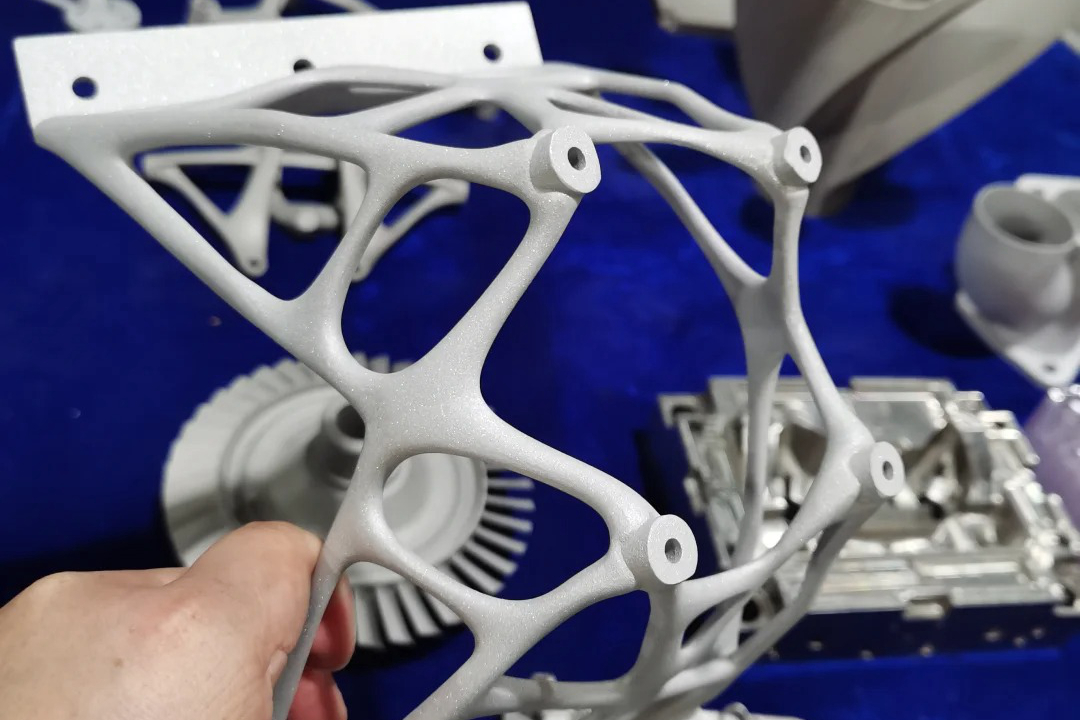
Yes — a 3D printed wax pattern can feed an investment casting route for stainless parts, provided three conditions hold: the pattern is scaled for casting shrinkage, the resin burns out cleanly, and the shell schedule matches the pattern's thermal behaviour. The route is the answer for one-off and small-batch manifolds where a steel mould cannot be justified; it is not a substitute for production patterns once the design is frozen.
The distinction matters because the printed pattern is one step of a lost-wax chain. The shell, the dewax, the burnout and the pour are unchanged, and each of them imposes a requirement on the pattern that a printed part does not face when it is shipped as a prototype. For the RFQ side, see the printed wax pattern RFQ review; this page answers the feasibility question, not the quote.
What does a 3D printed wax pattern need for investment casting?
The first requirement is dimensional. Casting steel shrinks between 1.5% and 2.5% depending on section and alloy, so the pattern is printed at the inverse scale before it ever reaches the shell. A pattern printed at nominal size produces a casting that is systematically small, and no amount of machining recovers a flange that has moved below its stock line.
The second is thermal. In the autoclave the pattern expands before it melts, and a shell that was built for a wax pattern at 150–180 °C and 6–8 bar can crack if the printed resin expands differently. The practical controls are a slow ramp — no more than 2 °C per minute — and a shell schedule that is agreed with the pattern supplier, not assumed.
The third is handling. A printed pattern is lighter and more brittle than a wax one, and support marks or layer lines become shell defects if they are not removed. Pattern inspection before treeing is a release gate, not a formality: dimensions, surface and the absence of loose resin all have to pass before the pattern is committed to the shell line.
Layer thickness sits behind all three. At 25–50 µm the surface is fine enough for a casting pattern, but the layer lines transfer to the shell and then to the casting skin.
Which resin and ash limit matter?
Burnout cleanliness is the material property that decides whether the pattern route works. A resin that leaves more than 0.05% ash deposits residue in the mould cavity, and that residue shows up as black skin, inclusions or a carburised layer on the casting. The limit is checked from the supplier's TDS and confirmed with a small burn sample, not assumed from the resin's marketing name.
Burnout temperature and time follow from the same requirement: 800–1100 °C for 1–2 h is the window that burns the pattern out completely without over-firing the shell. A short burnout at low temperature leaves carbon behind; an over-long burnout at the top of the range can degrade the shell binder and reduce its strength.
The shell schedule itself — 5 to 8 layers, 6–10 mm total — is chosen with the pattern in mind. A thin-wall manifold with long runners needs the upper end of that range, because the shell has to hold a large, slender cavity through dewax and pour without cracking or running metal.
Pour temperature completes the chain: 1550–1650 °C for stainless, with vacuum or inert protection during the pour. The pattern route does not change that number; it only changes what the mould has to survive before the metal arrives.
When is a printed pattern the wrong choice?
It is the wrong choice when the design is frozen and the volume is stable. At that point a steel or aluminium mould pays for itself, the pattern cost per part falls, and the batch consistency of an injection-moulded wax pattern is better than a printed one. The printed route wins on one-offs and small batches, not on mature production.
It is wrong when the part cannot be split or oriented for printing, when the wall is below what the process can hold, or when the drawing expects as-cast tolerances that no casting route delivers. Those cases need a different conversation about design or about machining stock, not a different pattern material.
Finally, the printed pattern does not remove the need for casting inspection. Dimensional checks, flatness at the flange and thread engagement after machining are still required, and the record still ends at the release gate rather than at a customer approval or a dyno result.
Send the model, the alloy and the batch size to Neway; we will confirm the pattern route, the shrink scale and the inspection gate before quoting.
.webp)