Stainless Steel 3D Printing Service: Grade and Process Choices
Stainless steel 3D printing service should start with grade and process, not only the words "stainless steel." A corrosion-focused 316L part, a strength-focused 17-4PH component, a familiar 304 request, and a binder jetting production part can lead to different manufacturing routes, post-processing steps, and inspection records.
Neway reviews stainless RFQs by asking what the part must do after printing. A fluid-contact 316L component may need corrosion review, surface finishing, and passivation. A 17-4PH bracket may need heat treatment and machined interfaces. A binder jetting batch may prioritize repeat production economics and sintering control rather than the same feature resolution as powder bed fusion.
This article helps buyers compare stainless grades and processes before requesting quotes for stainless steel 3D printing. The goal is to send an RFQ that makes the material, build process, post-processing, and finished-part acceptance clear enough for manufacturing review.
Which Stainless Grade Is the Buyer Actually Requesting
Many RFQs say "stainless steel" without naming the grade. That is not enough for a reliable quote. SUS316L is often discussed when corrosion resistance, fluid exposure, or clean surface behavior matters. SUS630 / 17-4PH is usually considered when strength and heat treatment response are part of the requirement. 304 may appear because the buyer already uses it in machined or fabricated stainless parts, but it should still be reviewed against additive manufacturing availability and purpose.
The drawing should state whether the grade is mandatory or whether alternatives can be quoted. If a buyer only needs a corrosion-resistant prototype, 316L may be practical. If the part is a load-bearing latch, bracket, actuator part, or wear-prone interface, 17-4PH may deserve review. If the part is production hardware with many repeats, binder jetting stainless production parts may be part of the discussion.
Application environment should be described in plain engineering terms. For example, a pump component may care about fluid exposure and sealing faces. A fixture may care about stiffness, threads, and repeated clamping. A food or laboratory component may care about cleanability and surface finish. A mechanical latch may care about strength and heat treatment. These differences are more useful than writing only "stainless AM" on the RFQ.
Stainless route | Typical buying reason | RFQ point to confirm |
|---|---|---|
316L / SUS316L | Corrosion resistance, fluid-contact components, clean surfaces, and general stainless prototypes. | Environment, surface finish, passivation requirement, and machined sealing faces. |
17-4PH / SUS630 | Strength, heat treatment response, brackets, tooling inserts, and mechanical hardware. | Heat treatment condition, critical dimensions, and inspection records. |
304 expectation | Buyer references a familiar wrought or fabricated stainless grade. | Whether 304 is mandatory or whether an AM-suitable stainless alternative is allowed. |
Binder jetting stainless | Repeat production parts where batch economics and sintering route matter. | Sintering shrinkage, density expectation, finishing, and tolerance plan. |
PBF and Binder Jetting Serve Different Stainless Buying Goals
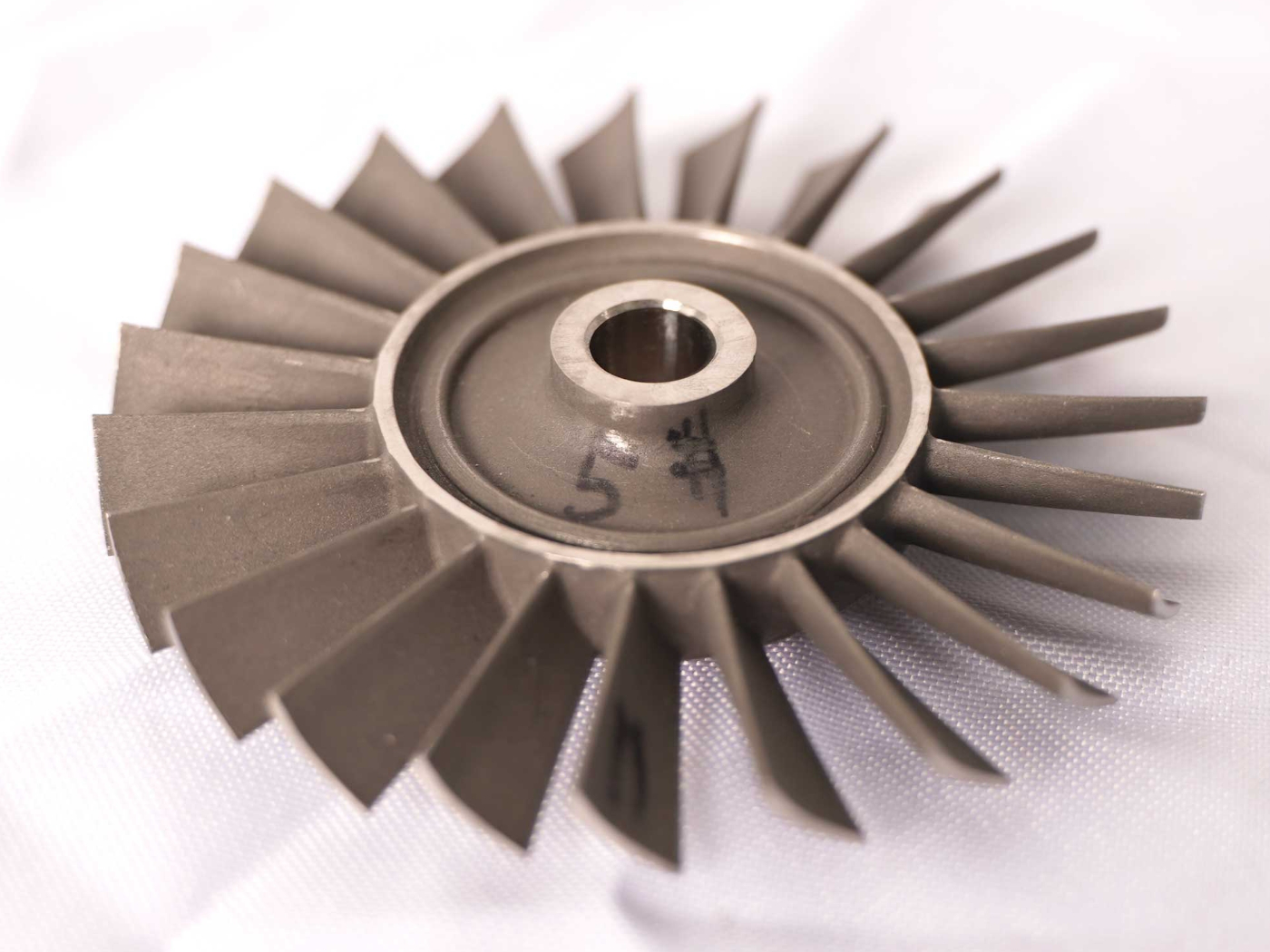
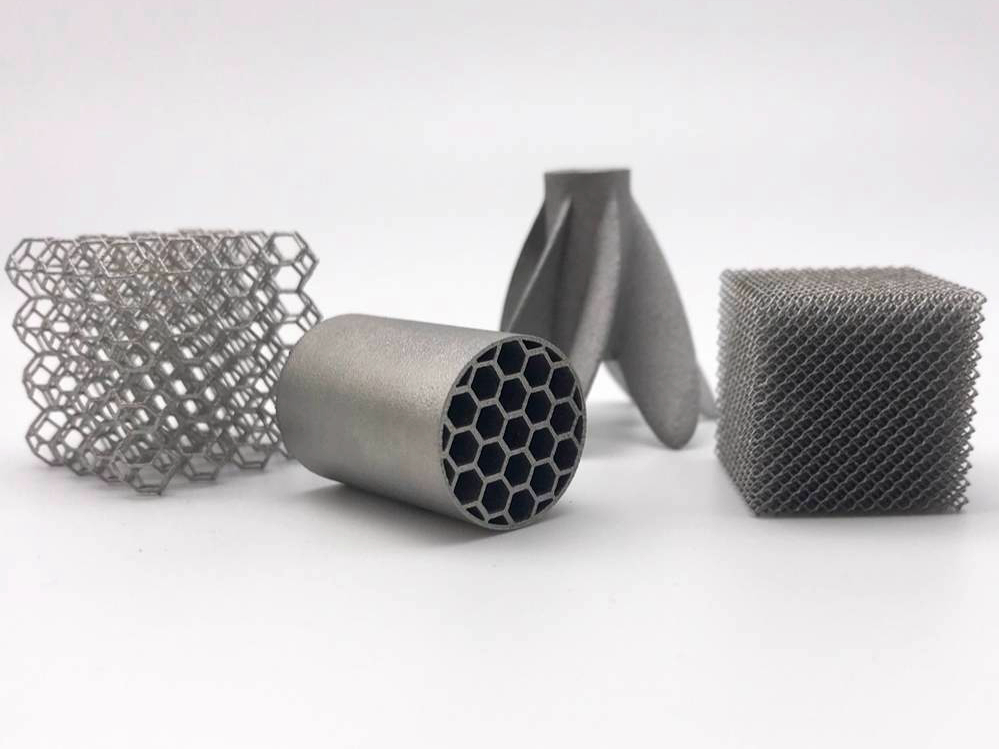
Powder bed fusion is usually reviewed for detailed stainless parts, prototypes, complex channels, thin features, and components that need near-net geometry before selective CNC finishing. It can support custom 3D printed stainless steel parts where feature definition, build orientation, support strategy, and post-machining access matter.
Binder jetting is usually discussed for repeat production where parts are printed in a green state and then sintered. The buyer should expect a different route: depowdering, sintering shrinkage review, possible infiltration or heat treatment depending on material and specification, and finishing after sintering. It should not be treated as the same process with a different price line.
The process decision affects feature size, surface condition, internal geometry, tolerance, and inspection. A tight fluid passage may be better reviewed for PBF. A repeated small stainless component with accessible features may be reviewed for binder jetting. A simple block or plate may still be more practical by CNC machining.
Buyers should also consider the stage of the program. PBF can be useful for one-off prototypes, complex stainless parts, and geometry that will be revised. Binder jetting may be more interesting after the design stabilizes and the buyer wants repeat quantities. A route that is sensible for the first sample may not be the best route for the next production batch, so the RFQ should say whether the request is exploratory or repeatable.
Corrosion, Strength, and Heat Treatment Drive Grade Choice
316L and 17-4PH are not interchangeable. 316L is often selected for corrosion-related stainless applications, while 17-4PH is selected when the buyer needs a precipitation-hardening stainless route. A drawing that requires 17-4PH should include heat treatment expectations or acceptance condition. A drawing that requires 316L should state the corrosive environment, fluid contact, passivation, and surface finish requirements if they affect acceptance.
Heat treatment can change the quote. For 17-4PH, the requested condition, machining sequence, and dimensional inspection should be reviewed before release. For 316L, stress relief may be discussed depending on geometry and downstream machining, while passivation or surface treatment may be more important for the final acceptance. Neway should not promise material performance beyond the supplied specification and engineering review.
Corrosion language should also be specific. A buyer may need general corrosion resistance, a cleaner surface after finishing, or compatibility with a defined fluid. Those are not the same requirement. If passivation, polishing, blasting, or other surface treatment is mandatory, it should appear on the drawing or purchase specification. If it is only being compared, it can be quoted as an option.
Finished Stainless Parts Usually Need Selective Machining
Stainless AM can create complex geometry, but functional interfaces still need planning. Threads, bores, dowel holes, sealing faces, bearing seats, flat mounting pads, and gasket surfaces should be marked for CNC finishing. If the part is printed by PBF, support marks and rougher surfaces should be separated from machined surfaces on the drawing. If the part is binder jetted, sintering movement and post-sintering machining allowance should be reviewed.
Passivation, polishing, blasting, or coating should be tied to environment and acceptance. A 316L fluid-contact surface may need a different finish than a 17-4PH mechanical bracket. A cosmetic housing may need visible surface treatment, while a hidden fixture may only need burr removal and dimensional checks. Treating every surface the same usually adds cost without improving the part.
Inspection should follow the selected route. PBF stainless parts may need CMM checks on machined features, visual review after support removal, and records for heat treatment or surface treatment when specified. Binder jetting stainless parts may need sintered dimension checks, lot review, and post-sintering machining verification. Internal channels, if present, may require additional evidence because ordinary external measurement cannot confirm hidden geometry.
Process choice | Feature risk to review | Finished-part control |
|---|---|---|
PBF stainless | Support contact, build orientation, internal channel access, and residual stress. | CNC interfaces, stress relief if needed, surface cleanup, and CMM checks. |
Binder jetting stainless | Green part handling, sintering shrinkage, density expectation, and batch consistency. | Sintered dimensions, post-sintering machining, finishing, and lot inspection. |
CNC stainless | Tool access, stock removal, tool wear, and setup count. | Direct machined tolerance and surface finish where geometry is accessible. |
Quote Data for Stainless Grade and Process Review
For a reliable stainless steel 3D printing service quote, provide the STEP model, 2D drawing, grade, process preference if any, quantity, application environment, critical dimensions, machined surfaces, heat treatment requirement, passivation or surface treatment requirement, surface finish, inspection records, and prototype or production stage.
If the process is still open, ask for PBF and binder jetting as separate manufacturable options. If the grade is still open, ask whether 316L, 17-4PH, or another stainless route should be reviewed. If the part is simple and fully accessible, allow Neway to compare CNC. That keeps the RFQ focused on the finished part rather than a process label.
For production-intent RFQs, include the expected repeat quantity, drawing revision, acceptance standard, and whether the first order is a pilot lot or a released production batch. That lets the supplier quote the correct level of documentation instead of treating a low-risk sample like a controlled production part or treating a production part like a concept prototype.
Related FAQs
How does heat treatment improve the mechanical properties of 3D printed metals?
What are the common heat treatment processes used for 3D printed parts?
Which surface finishing method provides the best surface roughness?
How does EDM machining improve the surface finish of 3D printed parts?
How does heat treatment affect the surface quality of 3D printed parts?
.webp)