Ti-6Al-4V 3D Printing Cost: Quote Drivers Buyers Control
Ti-6Al-4V 3D printing cost changes when the buyer changes the part envelope, build height, support strategy, orientation, finishing scope, or inspection package. A small titanium part can become expensive if it stands tall in the build, traps supports in hard-to-clean areas, or needs several precision machined interfaces. A larger part may quote better when orientation, nesting, and surface requirements are realistic.
Neway reviews Ti-6Al-4V cost requests by separating the additive build from the work needed to turn the printed shape into a usable titanium component. The build consumes machine time and powder capacity; supports add material and labor; stress relief, HIP, CNC machining, and inspection records add separate operations. Buyers can control several of these drivers before sending RFQ files.
This article is for teams comparing Ti-6Al-4V 3D printing service quotes for prototypes, low-volume brackets, housings, fixtures, and custom titanium parts. It avoids price ranges because geometry and acceptance scope decide the real cost.
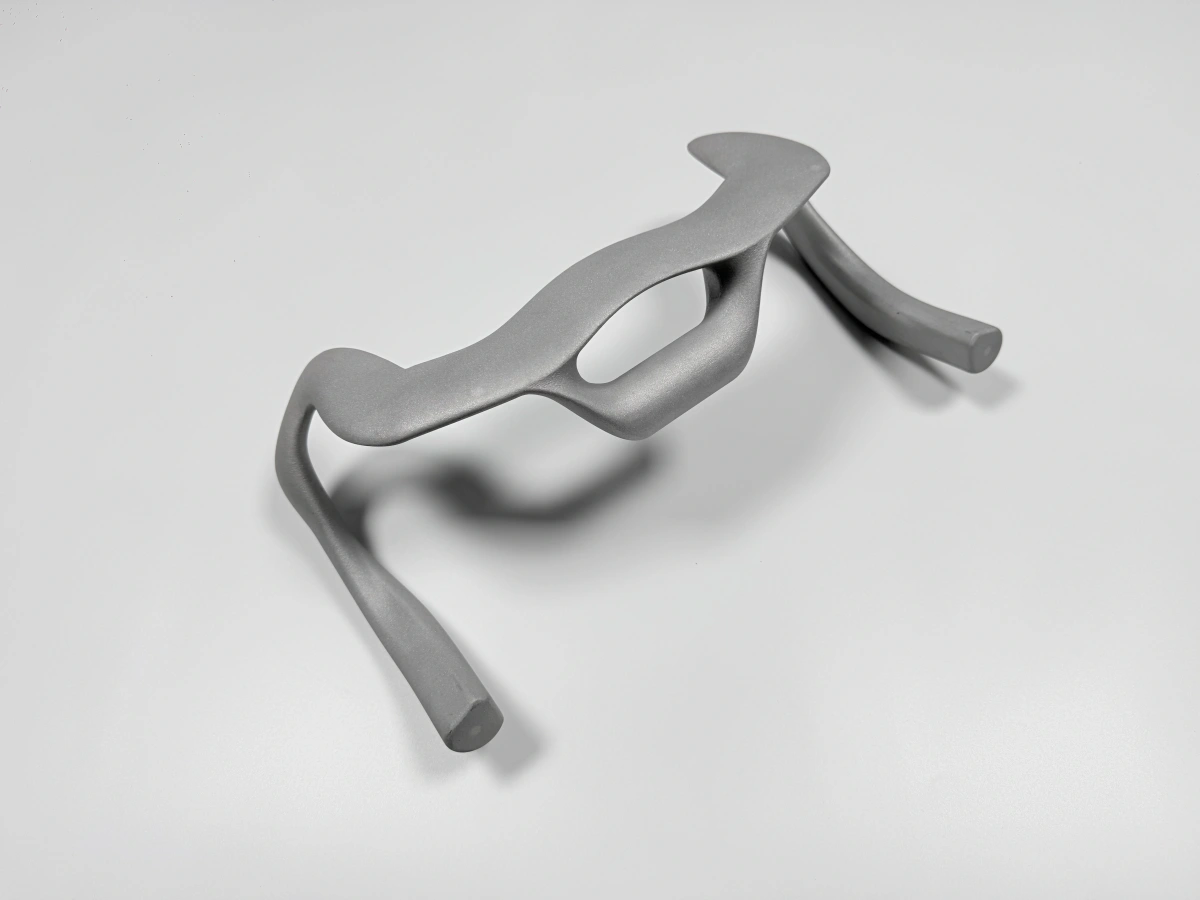
Build Height and Orientation Can Dominate Machine Time
For powder bed fusion titanium parts, the tallest dimension in the chosen orientation can strongly affect machine time. A part that lies low may finish faster than the same part standing upright, even if the material volume is similar. Orientation also changes supports, surface finish, distortion risk, and machining access, so the lowest build height is not always the lowest finished-part cost.
Buyers can help by marking faces that need machining, no-support areas, visible surfaces, and internal paths that must remain clean. If every outer surface is treated as cosmetic, the orientation choice becomes harder. If only two datums and one sealing face are critical, the supplier can protect those areas and allow less critical surfaces to remain printed or lightly finished.
Ti-6Al-4V 3D printing cost should therefore be reviewed as a finished route. A tall orientation may reduce supports on a precision face; a flat orientation may improve height but add support marks to a hidden surface. The RFQ should allow engineering discussion when the part is not fully frozen.
Support Volume, Removal Access, and Powder Use Are Connected
Support material is not just extra powder. It also adds build preparation, removal labor, local cleanup, and potential rework if scars land on functional surfaces. Thin titanium ribs, overhanging bosses, underside flanges, and angled ducts can all increase support effort. Internal supports or trapped powder are especially costly when they require redesign or added access openings.
Nesting affects cost when multiple parts fit in the same build. A single prototype may pay for unused machine capacity, while a repeat lot can sometimes improve utilization. However, forcing too many titanium parts into one build may increase risk if heat distribution, support access, or orientation compromises critical features. Nesting efficiency matters, but it should not override acceptance requirements.
Powder use includes the part, supports, and process-related handling. Buyers do not need to calculate powder volume themselves, but they can reduce waste by removing unnecessary mass, avoiding thick solid sections that do not serve the function, and allowing lattice or hollowing only where powder removal can be verified.
Cost lever buyers influence | How it affects Ti-6Al-4V pricing | Practical RFQ action |
|---|---|---|
Build height | Changes layer count and machine occupancy | Permit orientation review instead of fixing presentation direction |
Support volume | Adds material, removal labor, and surface cleanup | Mark faces where support marks are not allowed |
Nesting efficiency | Can reduce unit cost for repeat lots | State prototype quantity and expected follow-up quantity separately |
CNC stock | Adds machining time and fixture planning | Identify threads, bores, sealing faces, and datums |
Inspection package | Changes reporting time and acceptance evidence | Request only records needed for the part function |
Stress Relief, HIP, and Heat Treatment Should Not Be Bundled Blindly
Stress relief or heat treatment may be required to control residual stress, stabilize geometry, or meet a buyer's material condition. For a simple fit-check prototype, the route may be lighter. For a fatigue-sensitive bracket or production-intent component, thermal processing records may be part of the quote.
HIP is a separate cost line. It may be appropriate when the buyer needs internal defect reduction evidence, fatigue-related confidence, pressure relevance, or a specification that calls for it. It may be optional for early geometry validation. Asking for HIP as an alternate line keeps prototype pricing and production-intent pricing visible.
Thermal processing can also affect machining order. If the part may move after stress relief or HIP, precision bores, threads, and sealing faces should usually be machined afterward. Quoting CNC before the thermal route is clear can make the first price look lower than the delivered part will require.
CNC Stock Drives Finished Titanium Part Cost
Many 3D printed titanium parts are not finished when they leave the build plate. CNC machining is commonly needed for threaded holes, dowel locations, bearing seats, gasket lands, flat mounting faces, and precision bores. Each machined feature needs access, fixturing, tool path planning, and inspection.
Buyers can reduce cost by marking which surfaces are functional and which can remain as printed. Applying tight tolerance to an entire organic bracket can force unnecessary inspection and finishing. It is usually more cost-effective to define machined pads, datums, and controlled interfaces while allowing non-critical contours to follow additive manufacturing geometry.
Design changes can also reduce machining cost. A small datum pad may improve fixturing. A boss may be printed oversize for post-machining. A thread can be moved to improve tool access. A deep blind hole can be replaced with a through feature if powder removal and machining access allow it.
Cost-driven DFM should be practical rather than cosmetic. Removing unsupported overhangs can reduce support volume. Grouping machined features on accessible faces can reduce setups. Replacing a tight tolerance on an entire curved surface with control on two functional pads can reduce inspection effort. Splitting a trapped internal feature into a cleanable geometry may reduce rework risk even if it adds a joining or fastening decision.
Prototype Quantity and Repeat Lots Have Different Economics
Prototype cost often includes one-time orientation review, DFM discussion, support strategy, and setup effort spread over very few parts. A repeat lot may benefit from stable orientation, fixtures, machining programs, and inspection routines. The buyer should not expect a one-piece prototype price to scale linearly into a later batch, or a batch price to apply to a single urgent sample.
For repeat titanium parts, the quote should separate build cost, support removal, heat treatment, optional HIP, CNC finishing, surface treatment if needed, and inspection records. That separation helps the buyer see which requirement controls price. For prototypes, a simplified package may be acceptable if the part is not used for final qualification or safety-related testing.
Design revisions also affect cost. If the part is likely to change, it may be better to quote a small prototype run with limited documentation first, then move to a more controlled repeat route after geometry approval. If the design is frozen, the supplier can plan orientation, nesting, and machining with fewer unknowns.
Inspection Requests Can Cost More Than Buyers Expect
Inspection cost depends on evidence, not just part size. A simple dimensional check on two machined faces is different from a full CMM report, CT review of internal channels, material certificate package, heat treatment record, HIP record, surface roughness measurement, and first-article report. Each record has a purpose and should be tied to part function.
For Ti-6Al-4V 3D printing cost control, define critical-to-function features before RFQ release. External datum faces, precision bores, and threaded ports may need dimensional reports. Internal cooling paths or lightweight cavities may need CT or cleaning confirmation. Cosmetic surfaces may only need visual acceptance. Mixing these into one broad requirement can inflate the quote.
A useful RFQ includes STEP files, 2D drawings, Ti-6Al-4V or TC4 grade requirement, quantity, expected repeat volume, critical dimensions, CNC surfaces, heat treatment and HIP expectations, surface finish zones, inspection records, and whether the part is a prototype, pilot lot, or repeat production item. The more precisely these choices are stated, the easier it is to compare titanium AM quotes without hiding cost in assumptions.
Related FAQs