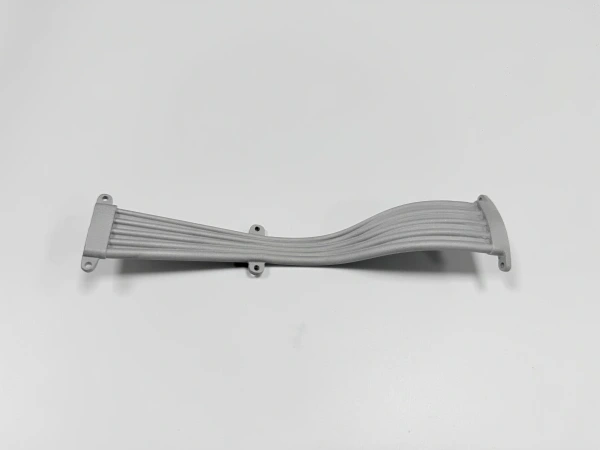
Copper Heat Exchanger 3D Printing Channel and Leak Test Review
A copper heat exchanger 3D printing service quote should begin with the channel path, not the outside envelope. The part may look compact in CAD, but manufacturability depends on whether powder can exit, whether ports can be machined, whether sealing faces are reachable, and how the buyer will verify leak or pressure requirements. Without those inputs, a supplier may quote a printable body while the buyer expects a tested thermal component.
Neway reviews copper 3D printing heat-exchanger RFQs by separating three tasks: creating the internal channel geometry, finishing the external interfaces, and proving the part meets the required acceptance method. A copper AM part can be valuable when channels are compact, curved, or integrated with mounting features, but the same part can become risky if cleaning and testing are not designed into the model.
This article is for buyers preparing copper cooling plates, thermal blocks, heat exchanger inserts, energy-system parts, and compact liquid or gas path components. It focuses on quote-ready channel decisions rather than general copper material promotion.
Channel Geometry That Makes Copper AM Worth Reviewing
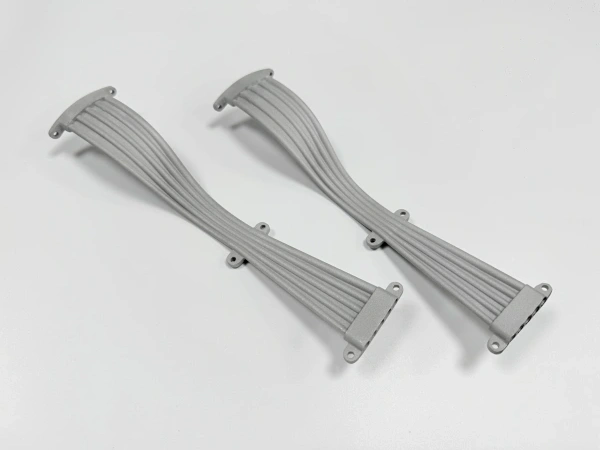
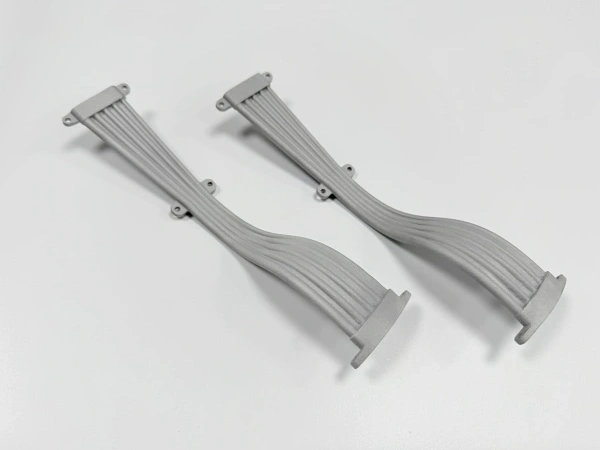
Copper AM is worth reviewing when the heat exchanger needs channels that are difficult to drill, braze, or machine from separate pieces. Curved paths, compact manifolds, integrated mounting bosses, merged cooling passages, and reduced part count can make additive manufacturing useful. If the part only has straight holes and flat external plates, conventional machining or brazed construction may be more practical.
The RFQ should show inlet and outlet locations, channel continuity, port sizes, cleaning access, and the intended heat-transfer surfaces. A channel that is attractive in CAD can fail the manufacturing review if it creates trapped powder, blind pockets, unsupported overhangs, or surfaces that cannot be inspected. The buyer should also identify whether the channel carries liquid, gas, or another medium because acceptance testing can change.
Material choice belongs in the same discussion. C101 copper may be requested for conductivity, while other copper alloys may be reviewed when strength or temperature stability is more important. The buyer should not treat every copper AM route as interchangeable; heat transfer, pressure, connection style, and mechanical loading decide the practical route.
Powder Removal Access Before Leak Testing
Powder removal should be reviewed before leak testing is specified. A small channel with no clean exit path may retain powder or debris, which can block flow and make testing unreliable. Sharp turns, sudden section changes, dead-end pockets, and narrow bypass paths deserve attention. If the design does not allow removal, the issue should be solved in CAD before the part is quoted as a finished heat exchanger.
Access can be improved by changing port locations, adding temporary cleaning openings, revising channel transitions, or dividing the component into a different assembly strategy. Those choices affect the quote because they may add machining, plugs, welds, or inspection steps. A buyer should decide whether temporary openings are allowed and how they will be closed or inspected after cleaning.
Leak testing after poor cleaning can create false confidence. A blocked channel may pass a simple leak check while failing flow performance. A cleaned channel with a rough internal surface may still need a buyer-defined flow or pressure review. Neway can quote the manufacturing route more clearly when the RFQ separates powder removal, leak testing, and flow verification.
Sealing Faces and Ports That Need Machining
Ports, gasket lands, threaded fittings, O-ring grooves, bolt pads, and sensor seats should not be treated as raw printed features unless the drawing accepts that condition. These are the places where the heat exchanger connects to the outside system. A printed channel body may be acceptable, but the interface often needs CNC machining after printing and thermal processing.
Machined ports also help testing. A leak test fixture needs stable surfaces and predictable connection geometry. If the port face is rough, tilted, or affected by support removal, test results can be hard to interpret. A quote should include final machining for ports and sealing surfaces when those features control acceptance.
Thread timing is another buyer decision. Some threads can be machined after printing. Others may need inserts, plugs, or a revised connection because access is limited. If a thread opens into an internal channel, the drawing should state cleanliness requirements and whether burrs or debris near the flow path are acceptable. Those are not cosmetic details for heat exchanger parts.
Leak testing should be planned after the surfaces used by the fixture are finished. If a test fixture seals against a rough printed pad, the result may reflect the temporary fixture contact rather than the heat exchanger body. If the port is machined after a preliminary leak check, a final leak check may still be needed. Buyers should state whether testing is required before machining, after machining, after plugging temporary cleaning ports, or at final shipment condition.
Channel feature | Manufacturing risk | Cleaning access | Test evidence | RFQ decision |
|---|---|---|---|---|
Curved cooling passage | Powder retention and unreachable rough zones | Needs clear inlet and outlet path | Leak, pressure, flow, or buyer-defined test | Confirm whether channel geometry can be cleaned |
Manifold transition | Sharp turns may trap powder or reduce flow consistency | Review transition shape and outlet access | Flow check if specified by buyer | Allow DFM changes before quoting finished part |
Threaded port | As-printed threads are not suitable for controlled connection | Machining access must be available | Thread gauge and leak fixture fit | State thread timing and sealing method |
O-ring or gasket land | Surface condition controls sealing | External access usually required for machining | Dimensional and surface review | Mark machined sealing surfaces on drawing |
Temporary cleaning opening | Closure method can become a new leak risk | Improves powder removal if accepted | Final leak test after closure | Decide if auxiliary openings are allowed |
How Thermal Function Changes Material and Inspection Requests
Thermal function changes what evidence buyers may need. A simple prototype may only require dimensional confirmation and a basic leak check. A functional energy component may need pressure testing, material records, channel-cleaning confirmation, port inspection, and surface condition review. If the part is used near electronics, batteries, power equipment, or high-temperature hardware, the acceptance method should match the real operating risk.
Powder bed fusion can support compact copper AM geometry, but it does not remove the need for finished interfaces. Heat exchanger buyers should expect the quote to include printing, powder removal, support removal, machining, cleaning, and testing when those steps are required. The quote should also state which tests are included and which tests remain buyer-side.
Energy and power applications may add temperature, corrosion, pressure, and fatigue considerations. Neway will not assume a part is suitable for critical service without buyer-provided requirements and engineering review. The RFQ should define the development stage and any specification that controls acceptance.
There are also cases where AM is not the right first choice. Straight drilled channels, simple cold plates, large flat plates with no integrated geometry, or parts that require internal surfaces to be machined after build may be better handled by CNC, brazing, or another assembly route. If cleaning access is impossible and no auxiliary opening is allowed, the part may need redesign before a copper AM quote is meaningful.
Buyer Inputs Needed for a Copper Heat Exchanger Quote
To receive a reliable copper heat exchanger AM quote, provide STEP data, a 2D drawing, material preference, quantity, heat-transfer function, fluid or gas medium, inlet and outlet definitions, channel cleaning access, port details, sealing faces, thread requirements, pressure or leak test expectations, surface finishing notes, inspection records, and target delivery timing. If any value is not fixed, state that it is open for DFM review.
The strongest RFQ does not ask only whether 3D metal printing copper is possible. It shows how the channel will be cleaned, how the external interfaces will be machined, and how the buyer will accept the finished part. That information lets Neway quote the printed copper body and the functional heat exchanger scope separately when needed.
Related FAQs
.webp)