Better Surface Protection: TBC Guarding Against Oxidation and Corrosion
Introduction
In high-temperature and aggressive environments, surface degradation mechanisms such as oxidation, hot corrosion, and thermal fatigue significantly limit the service life of metal components. For applications operating above 600°C—and especially beyond 900°C—conventional surface treatments are no longer sufficient.
Thermal Barrier Coatings (TBCs) provide an advanced solution by creating a protective and thermally insulating layer on component surfaces. At Neway, TBC technology is integrated into our manufacturing ecosystem, complementing processes such as metal casting, 3D printing, and post-processing workflows to deliver components capable of operating in extreme environments.
What Is a Thermal Barrier Coating (TBC)?
A Thermal Barrier Coating (TBC) is a multi-layer coating system designed to protect metallic substrates from high temperatures, oxidation, and corrosion. A typical TBC system consists of:
• Top Coat (Ceramic Layer): Usually yttria-stabilized zirconia (YSZ), with low thermal conductivity (~1.5–2.5 W/m·K)
• Bond Coat: Typically MCrAlY (NiCoCrAlY), providing oxidation resistance and adhesion
• Thermally Grown Oxide (TGO): A thin Al₂O₃ layer formed during service, enhancing bonding
• Substrate: Base metal (e.g., nickel-based superalloy, stainless steel, or aluminum alloy)
This layered structure enables TBC systems to withstand extreme temperatures and environmental exposure.
Temperature Protection Performance
TBCs significantly reduce the temperature experienced by the base material:
• Temperature reduction capability: 100–300°C (depending on coating thickness and system design)
• Typical operating temperature of TBC systems: up to 1100–1200°C
• Ceramic coating thickness: 100–500 μm
• Thermal conductivity reduction: up to 70–90% compared to metal substrates
This allows components to operate at higher external temperatures while maintaining structural integrity internally.
Oxidation and Corrosion Resistance
One of the primary functions of TBC systems is to protect against oxidation and hot corrosion:
• Oxidation rate reduction: up to 10–100× compared to uncoated surfaces
• Corrosion resistance improvement: significant reduction in sulfide and chloride attack
• TGO layer stability: maintains protective oxide thickness at ~1–10 μm
• Service life extension: 2–5× increase in high-temperature environments
The bond coat plays a critical role by forming a stable alumina layer that prevents oxygen diffusion into the substrate.
TBC for Casting and Additive Manufacturing Components
TBC is widely applied to components produced through both casting and additive manufacturing.
For example, components produced via aluminum die casting or high-temperature alloys can benefit from TBC when exposed to elevated temperatures or corrosive environments.
In additive manufacturing workflows, especially those involving high-performance alloys, TBC is often applied after densification and finishing steps such as CNC machining to ensure optimal surface preparation and coating adhesion.
TBC Application Processes
The performance of TBC systems depends heavily on the deposition method. Common processes include:
Air Plasma Spray (APS)
• Most widely used method
• Produces porous ceramic structure for thermal insulation
• Coating thickness: 200–500 μm
Electron Beam Physical Vapor Deposition (EB-PVD)
• Produces columnar microstructure
• Higher strain tolerance and thermal cycling resistance
• Used in aerospace turbine components
High-Velocity Oxygen Fuel (HVOF)
• Primarily used for bond coats
• Dense, well-adhered metallic layers
Surface preparation such as sand blasting is critical to ensure proper coating adhesion.
Mechanical and Thermal Benefits
TBC systems provide measurable performance improvements:
• Thermal fatigue life increase: 2–5×
• Oxidation resistance improvement: up to 100×
• Surface temperature reduction: up to 300°C
• Reduction in thermal stress: 20–40%
• Improved component lifespan in cyclic environments
These benefits are essential for components subjected to repeated heating and cooling cycles.
TBC vs Other Surface Treatments
Compared to conventional surface treatments:
• Anodizing provides corrosion resistance but is limited to lower temperatures (<300°C)
• Painting and powder coating offer protection but degrade at high temperatures
• TBC is specifically designed for extreme thermal environments (>800°C)
Thus, TBC is the preferred solution for high-temperature and high-reliability applications.
Applications of TBC
TBC is widely used in industries requiring high-temperature resistance and durability:
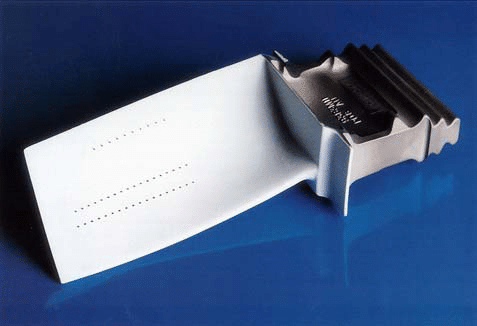
• Aerospace: turbine blades, combustion chambers
• Power generation: gas turbines and heat exchangers
• Automotive: exhaust systems and turbochargers
• Industrial equipment: high-temperature tooling
For example, high-performance automotive components, similar to automotive components, can benefit from TBC in high-heat environments.
TBC in Neway’s One-Stop Manufacturing
At Neway, TBC is integrated into our one-stop service, allowing seamless coordination between casting, additive manufacturing, machining, and coating processes.
This integrated approach provides:
• Improved coating consistency and adhesion
• Reduced lead times (by 15–30%)
• Better process control and traceability
• Optimized performance through coordinated engineering
Future Trends in TBC Technology
TBC systems continue to evolve with advancements in materials and processes:
• Development of advanced ceramics with lower thermal conductivity (<1.5 W/m·K)
• Multi-layer and functionally graded coatings
• Integration with digital monitoring and predictive maintenance
• Improved resistance to CMAS (calcium–magnesium–alumino–silicate) attack
These innovations will further enhance the performance and durability of TBC systems.
Conclusion
Thermal Barrier Coatings (TBCs) are a critical technology for protecting metal components from oxidation, corrosion, and extreme temperatures. By reducing heat transfer and preventing chemical degradation, TBC systems significantly extend component lifespan and reliability.
At Neway, we combine TBC with advanced manufacturing and finishing processes to deliver high-performance components capable of operating in the most demanding environments. For applications where heat and corrosion are critical challenges, TBC provides a proven and effective solution.
FAQs
.webp)