Can MJF be used for high-volume production?
Overview of Multi Jet Fusion for Scalable Manufacturing
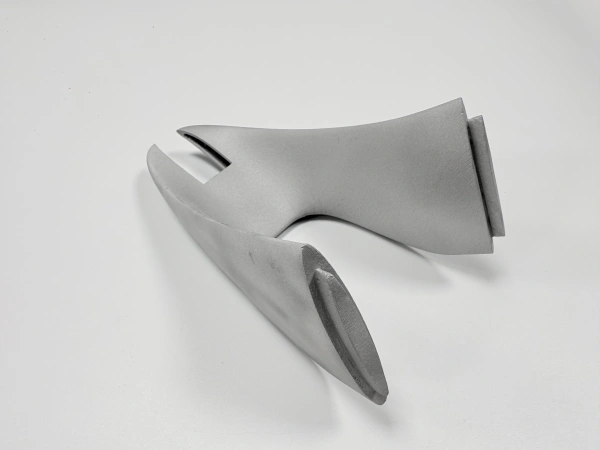
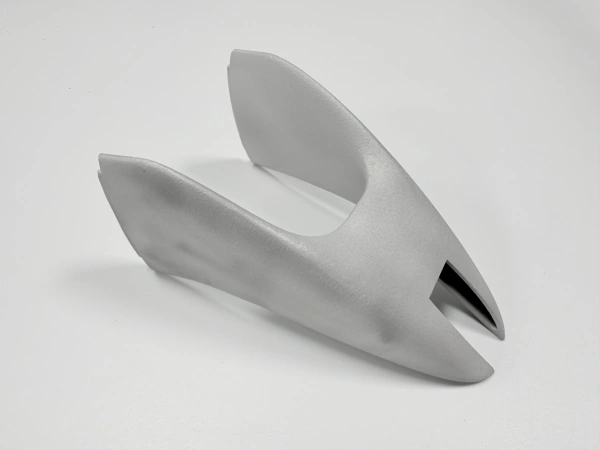
Multi Jet Fusion (MJF) has emerged as one of the most promising additive manufacturing technologies for high-volume production. Unlike many traditional 3D printing methods designed primarily for prototyping, MJF was developed specifically to support scalable manufacturing with high build speeds and consistent mechanical performance.
Industrial manufacturers increasingly rely on professional 3D Printing Service providers to produce production-grade components using MJF technology. Because the process can build large numbers of parts within a single print cycle, it provides an efficient solution for batch manufacturing and short-run production.
MJF belongs to the Powder Bed Fusion family of additive manufacturing technologies, where powder materials are selectively fused layer by layer to form functional parts. Compared with other additive processes, MJF delivers faster printing speeds and more uniform thermal distribution across the build platform.
In modern digital manufacturing environments, MJF is often used alongside technologies such as Material Extrusion, Vat Photopolymerization, Binder Jetting, and hybrid repair processes like Directed Energy Deposition. These technologies together support a wide range of production requirements.
Why MJF Is Suitable for High-Volume Manufacturing
One of the primary reasons MJF supports high-volume production is its ability to fuse an entire layer simultaneously rather than scanning the surface with a laser. During the printing process, specialized fusing and detailing agents are deposited across the powder bed before infrared energy is applied.
This approach allows multiple parts to be produced in a single build while maintaining consistent mechanical properties across the entire production batch.
Another key advantage is the ability to stack parts densely within the build chamber. Because the surrounding powder supports the geometry during printing, complex shapes and nested parts can be produced without support structures, improving production efficiency.
Materials Used in MJF Production
MJF primarily uses engineering thermoplastic powders that provide excellent durability and structural performance. The most commonly used material is Nylon (PA), which offers strong mechanical properties, chemical resistance, and dimensional stability.
For more demanding industrial environments, high-performance materials such as Polycarbonate (PC) may be used to improve thermal resistance and structural rigidity.
In applications requiring extreme mechanical and thermal performance, advanced polymers such as Polyether Ether Ketone (PEEK) provide exceptional strength and chemical stability.
For lightweight industrial components with excellent heat resistance, aerospace-grade polymers like Polyetherimide (ULTEM) PEI are also used in advanced additive manufacturing applications.
These materials allow MJF technology to produce durable components suitable for both functional prototypes and end-use industrial parts.
Post-Processing for Production Parts
While MJF printing produces strong parts directly from the build chamber, many industrial applications require additional finishing processes.
High-precision surfaces or critical interfaces may be refined using CNC Machining to achieve tighter dimensional tolerances.
In high-temperature operating environments, advanced coatings such as Thermal Barrier Coatings (TBC) may be applied to enhance durability and heat resistance.
Industries That Use MJF for Production
Because of its scalability and production efficiency, MJF is widely used in several industrial sectors.
The Automotive industry uses MJF to manufacture functional housings, airflow components, and low-volume production parts for vehicles.
The Consumer Electronics sector benefits from MJF's ability to produce durable device enclosures and structural components with consistent dimensional accuracy.
Manufacturers involved in Manufacturing and Tooling also rely on MJF to produce jigs, fixtures, and customized tooling with shorter lead times than traditional manufacturing methods.
Conclusion
Multi Jet Fusion has proven to be a highly capable additive manufacturing technology for high-volume production. Its ability to fuse entire layers simultaneously, combined with strong engineering materials and efficient build density, makes it suitable for batch manufacturing and end-use parts.
As additive manufacturing continues to evolve, MJF is becoming an increasingly important solution for companies seeking scalable, flexible, and cost-effective production methods.