
Titanium 3D Printing Service for Custom Lightweight Metal Parts
Titanium 3D Printing Service for Custom Lightweight Metal Parts
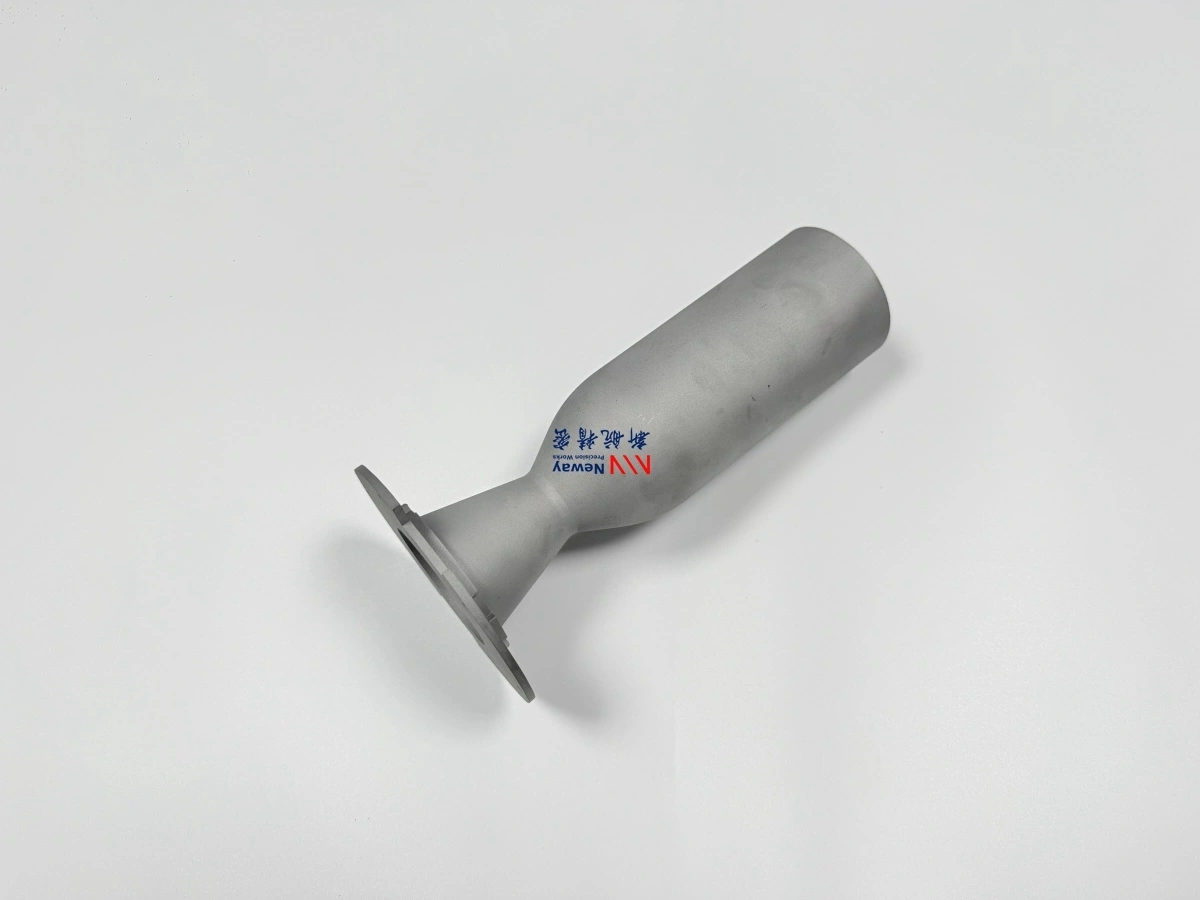
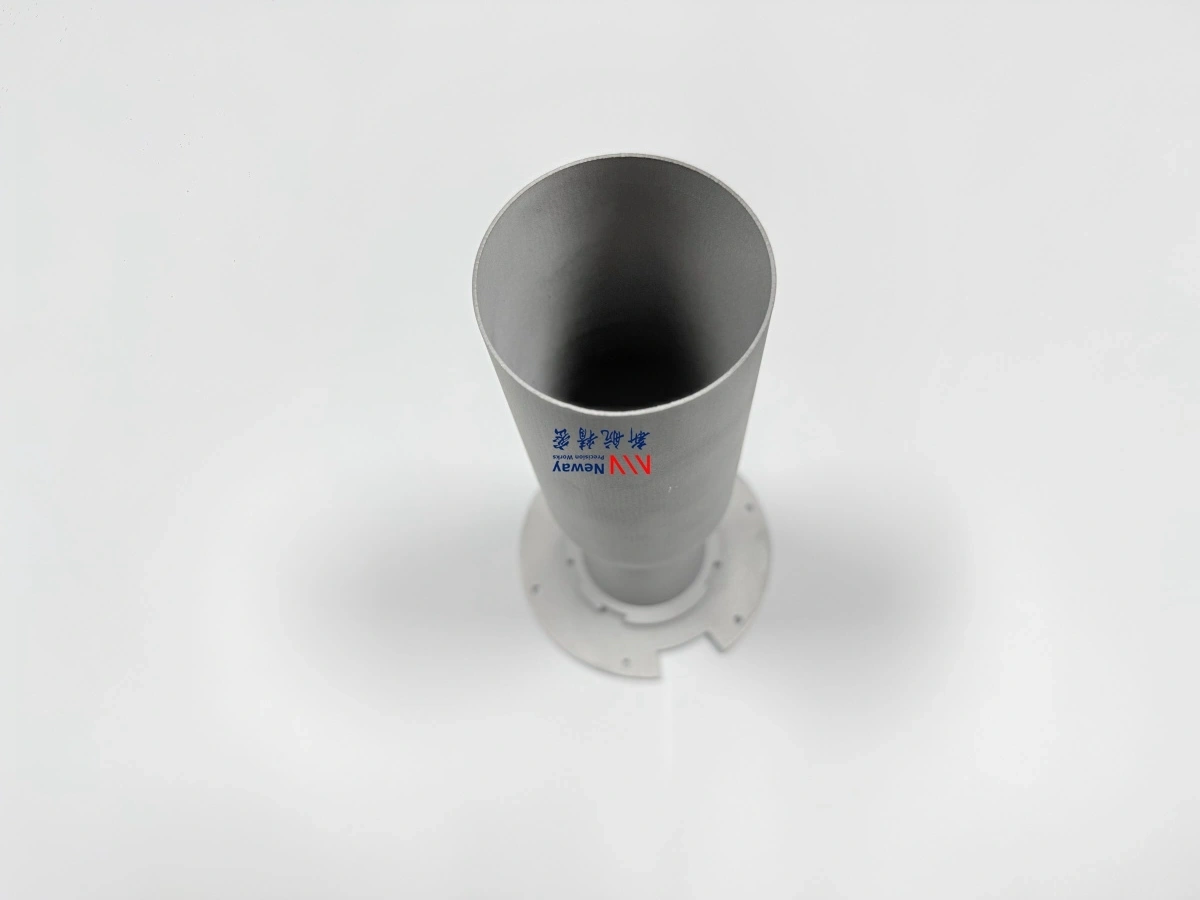
Titanium 3D printing is a practical manufacturing solution for custom lightweight metal parts that require high strength, corrosion resistance, complex geometry, and reduced assembly weight. Compared with conventional CNC machining from solid titanium billet, titanium additive manufacturing can produce lattice structures, internal channels, thin-wall features, topology-optimized brackets, and integrated functional components with fewer geometric limitations.
At Neway3DP, our titanium 3D printing service supports custom metal parts for aerospace, medical, automotive, robotics, energy, and high-performance industrial applications. We combine powder bed fusion, engineering review, heat treatment, HIP, CNC machining, EDM, and surface treatment to help customers move from prototype validation to low-volume or functional production.
This process is especially valuable when a part must be lightweight but still strong enough for functional testing or final use. It helps reduce material waste, shorten development cycles, and create complex structures that are difficult to manufacture by machining alone.
Why Choose Titanium 3D Printing for Custom Metal Parts?
Titanium alloys provide an excellent strength-to-weight ratio, good fatigue resistance, and strong corrosion resistance in demanding environments. These properties make titanium suitable for parts where aluminum may not provide enough strength and stainless steel may be too heavy.
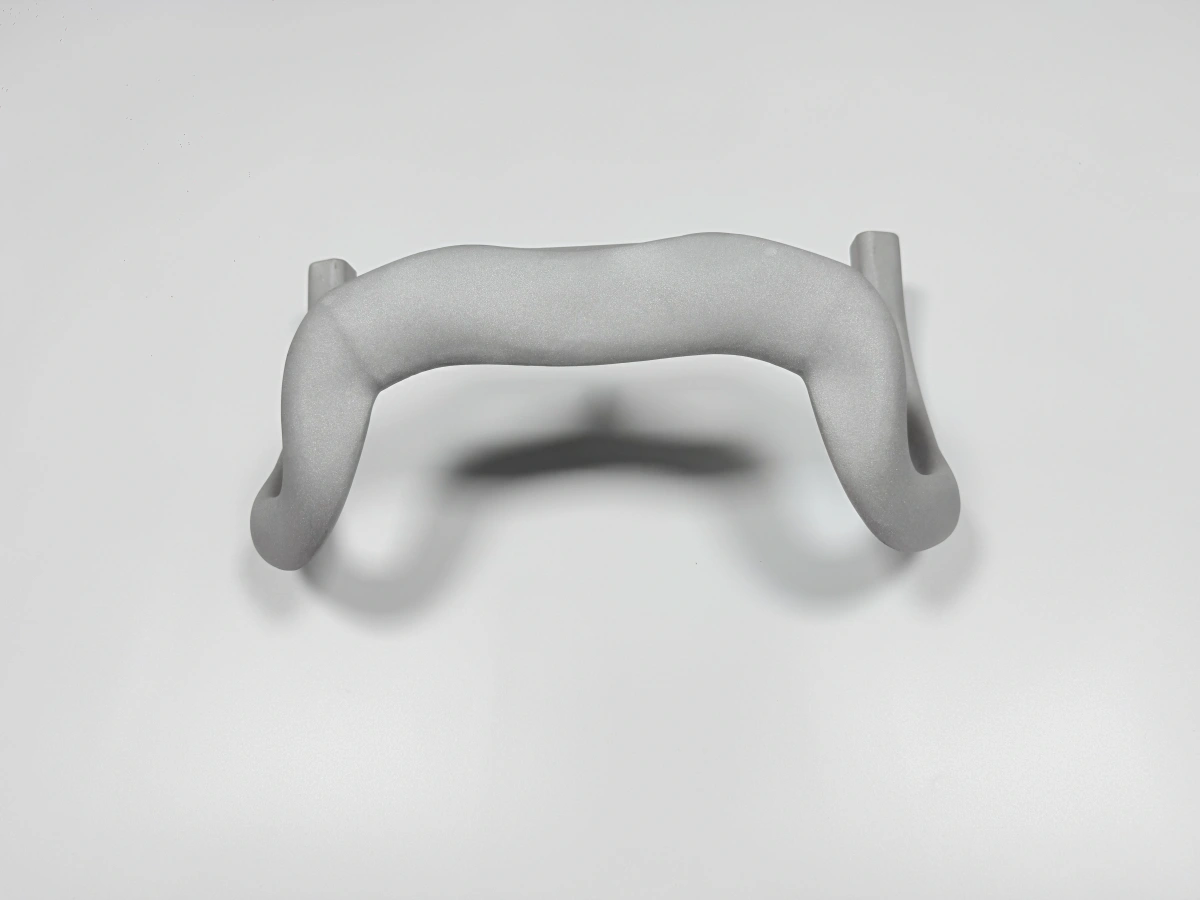
For complex components, titanium 3D printing is especially valuable when the part includes organic shapes, weight-reduction structures, internal cavities, conformal channels, or features that would require multiple CNC setups. Instead of removing large amounts of expensive titanium stock, additive manufacturing builds the part layer by layer and can reduce material waste for complex geometries.
Design Requirement | Why Titanium 3D Printing Helps |
|---|---|
Lightweight structure | Supports lattice, hollow, and topology-optimized designs for weight reduction |
High mechanical strength | Titanium alloys offer strong strength-to-weight performance for functional metal parts |
Complex geometry | Reduces dependence on multi-step machining, welding, and assembly |
Corrosion resistance | Suitable for medical, marine, aerospace, chemical, and industrial environments |
Low-volume production | Avoids expensive tooling for prototypes, pilot runs, and custom production batches |
Printable Titanium Materials for Additive Manufacturing
Material selection is one of the most important decisions in titanium additive manufacturing. Different titanium alloys have different strength levels, heat resistance, fatigue behavior, corrosion resistance, and industry acceptance. Neway3DP supports multiple titanium alloy materials for custom printed components.
Material | Common Name | Typical Application | Selection Notes |
|---|---|---|---|
Grade 5 / TC4 | Aerospace brackets, lightweight structural parts, medical devices, robotics components | Most widely used titanium alloy for metal 3D printing and functional lightweight parts | |
TA15 | Aerospace load-bearing parts, high-strength structural components, thermal-stability applications | Good choice when higher structural performance and elevated-temperature stability are required | |
Grade 23 | Medical implants, surgical components, biocompatible precision parts | Lower interstitial version of Ti-6Al-4V for improved ductility and medical applications | |
Commercially Pure Titanium | Corrosion-resistant parts, medical components, chemical equipment, lightweight functional parts | Lower strength than Ti-6Al-4V but excellent corrosion resistance and formability |
Titanium 3D Printing Process for Precision Metal Parts
Most custom titanium metal parts are produced using powder bed fusion, including SLM or DMLS-type processes. A high-energy laser selectively melts titanium powder layer by layer according to the 3D CAD model. This process is suitable for dense metal parts with complex geometry and high dimensional repeatability.
For titanium components, process control is critical. Titanium is reactive at high temperature, so oxygen control, powder quality, laser parameters, build orientation, support design, and post-print stress relief all influence final part quality. Engineering review before printing helps reduce distortion, support-removal difficulty, surface roughness problems, and machining allowance risk.
Process Step | Purpose | Engineering Focus |
|---|---|---|
DFM review | Evaluate printability, tolerance risk, and post-processing requirements | Wall thickness, support areas, orientation, datum surfaces, tolerance zones |
Build preparation | Set part orientation, support structure, and machining allowance | Reduce distortion, support damage, and difficult surface finishing |
Powder bed fusion printing | Build dense titanium parts layer by layer | Laser parameters, oxygen control, powder consistency, thermal stability |
Support removal | Separate part from build plate and remove supports | Protect functional surfaces, thin walls, and delicate features |
Post-processing | Improve strength, density, accuracy, and surface finish | Heat treatment, HIP, CNC machining, EDM, polishing, blasting, inspection |
Post-Processing for Titanium 3D Printed Parts
Titanium 3D printed parts usually require post-processing before final use, especially for functional components. As-printed parts may have residual stress, support marks, rough surfaces, and dimensional variation in critical features. Post-processing improves mechanical performance, surface condition, and assembly accuracy.
Neway3DP can combine titanium additive manufacturing with heat treatment, hot isostatic pressing, CNC machining, EDM machining, and surface treatment according to the drawing requirements.
Post Process | Why It Is Used | Typical Titanium Part Features |
|---|---|---|
Heat treatment | Relieves residual stress and stabilizes mechanical properties | Load-bearing brackets, housings, medical parts, robotics components |
HIP | Improves internal density and fatigue performance for critical applications | Aerospace brackets, structural parts, fatigue-loaded components |
CNC machining | Achieves tight tolerances on datum surfaces, holes, threads, and mating areas | Mounting interfaces, precision bores, sealing faces, threaded holes |
EDM | Creates fine slots, small features, and difficult-to-machine geometries | Internal profiles, precision cutouts, thin-wall features, small openings |
Surface treatment | Improves appearance, roughness, corrosion resistance, or functional surface quality | Medical, aerospace, consumer, and visible functional components |
Typical Applications of Custom Titanium 3D Printed Parts
Titanium additive manufacturing is suitable for projects where performance, weight reduction, and geometric freedom are more important than the lowest raw material cost. It is commonly used in industries that need strong, lightweight, corrosion-resistant, or biocompatible components.
Aerospace and Aviation
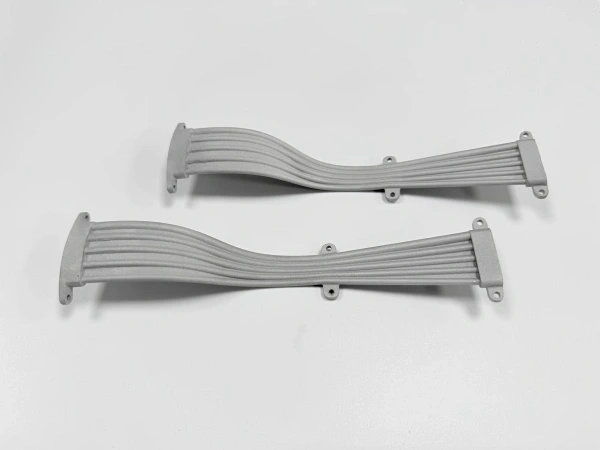
In aerospace and aviation, titanium 3D printing is used for lightweight brackets, ducting components, structural supports, drone parts, and test hardware. Weight reduction can be especially valuable because every gram saved may improve payload, fuel efficiency, or system performance.
Medical and Healthcare
In medical and healthcare, titanium alloys are used for implants, prosthetic components, surgical tools, and patient-specific devices. Porous surfaces, lattice structures, and customized shapes are key advantages for medical titanium additive manufacturing.
Automotive and Motorsport
For automotive and motorsport applications, titanium printing can support lightweight brackets, exhaust-related components, suspension development parts, and performance prototypes. It is most suitable when the design value comes from weight reduction, part consolidation, or rapid design iteration.
Robotics and Industrial Equipment
In robotics, titanium 3D printed parts can reduce moving mass while maintaining mechanical strength. Typical parts include end-effector components, lightweight arms, structural connectors, compact fixtures, and custom motion-system parts.
Design Guidelines for Titanium 3D Printed Parts
A successful titanium 3D printing project should start with design-for-additive-manufacturing review. Some features that are easy to model in CAD may be difficult to print, inspect, machine, or remove from supports. Early engineering review helps prevent unnecessary cost, production delay, and redesign after printing.
Design Area | Recommendation | Reason |
|---|---|---|
Wall thickness | Avoid overly thin unsupported walls unless reviewed by engineering | Thin titanium features may deform during printing, stress relief, or support removal |
Critical holes | Print undersized and finish by CNC machining when tight tolerance is required | Improves roundness, diameter accuracy, and assembly fit |
Threads | Use post-machined or tapped threads for functional assemblies | As-printed threads may not meet precision or durability requirements |
Datum surfaces | Add machining allowance on functional surfaces | Supports reliable inspection, repeatable assembly, and stable tolerance control |
Internal channels | Confirm minimum channel size, powder removal path, and inspection method | Prevents trapped powder, blocked flow paths, and cleaning difficulty |
Titanium 3D Printing vs CNC Machining
Titanium 3D printing does not replace CNC machining in every case. For simple plates, shafts, blocks, and low-complexity parts, CNC machining may still be more economical and more accurate. Titanium 3D printing becomes more competitive when the geometry is complex, the buy-to-fly ratio is high, or the design requires internal features that cannot be machined directly.
In many projects, the best solution is not purely additive or purely subtractive. A hybrid route can print the near-net-shape titanium part first, then CNC machine critical surfaces, holes, slots, and threads. This approach combines geometric freedom with precision manufacturing.
Requirement | Better Fit | Reason |
|---|---|---|
Simple geometry with tight tolerance | CNC machining | Faster and more precise for standard shapes, plates, shafts, and blocks |
Complex lightweight structure | Titanium 3D printing | Supports lattice structures, organic shapes, and topology-optimized features |
Internal channels or hollow structure | Titanium 3D printing | Enables shapes that are difficult or impossible to machine |
Functional surfaces and precision holes | 3D printing + CNC machining | Combines near-net shaping with final precision finishing |
What Information Is Needed to Quote Titanium 3D Printed Parts?
To provide an accurate quotation for custom titanium 3D printed parts, the engineering team needs enough information to evaluate printability, material choice, tolerance requirements, post-processing, inspection needs, and delivery risk. Incomplete information may lead to inaccurate pricing or later engineering changes.
For faster quotation, please provide the following information:
3D CAD model, preferably STEP, X_T, IGS, or STL format
2D drawing with tolerances, datum requirements, threads, surface finish, and inspection notes
Required titanium material, such as TC4, TA15, Grade 23, or CP-Ti
Quantity for prototype, pilot batch, or production order
Required post-processing, such as heat treatment, HIP, CNC machining, EDM, polishing, sandblasting, or passivation
Application environment, including load, temperature, corrosion exposure, fatigue requirement, or medical use
Special inspection requirements, such as CMM report, material certificate, density inspection, surface roughness report, or CT inspection
Target delivery schedule and shipping destination
Quality Control for Titanium Additive Manufacturing
Quality control for titanium 3D printed parts should match the final application. A prototype for design verification may only require dimensional inspection and visual review, while aerospace, medical, or load-bearing components may require more complete documentation and inspection control.
Common inspection and quality documents may include material certificates, dimensional reports, CMM inspection, surface roughness measurement, heat treatment records, HIP records, and final visual inspection. For critical internal structures, CT inspection or section analysis may be considered depending on the project requirements.
.webp)