Laser Metal Deposition vs WAAM for Large Energy Part RFQ Routes
Large energy-component RFQs often ask whether laser metal deposition or WAAM is the better metal AM route. The answer depends less on the name of the process and more on the shape of the blank, the heat input the part can tolerate, the amount of CNC stock required, and the inspection evidence needed after deposition. A route that is practical for a large near-net build may not be the right route for a repaired sealing surface or a turbine-related fixture.
Neway reviews direct energy deposition 3D printing requests by separating new-build blanks from repair, overlay, and feature build-up work. Laser metal deposition can be useful where a controlled bead, local build-up, or tighter deposition zone is important. WAAM is often discussed for larger structures where wire-fed deposition and broad build economics may be relevant. Both routes usually need downstream machining, and neither should be quoted as a finished part without checking final interfaces.
This article helps buyers decide how to frame an RFQ for large energy parts before asking for price. It focuses on route selection, CNC allowance, substrate condition, inspection access, and records, not on general metal 3D printing definitions.
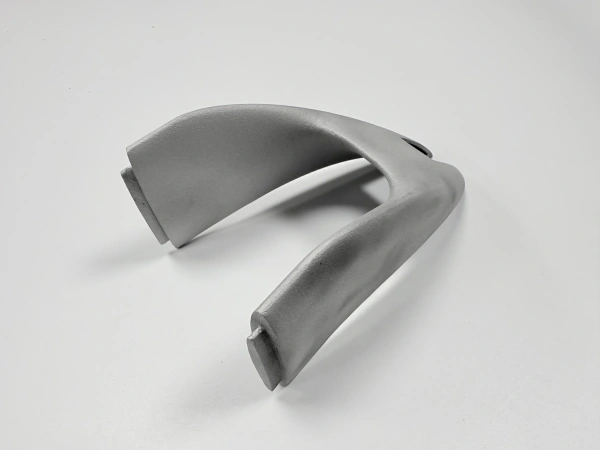
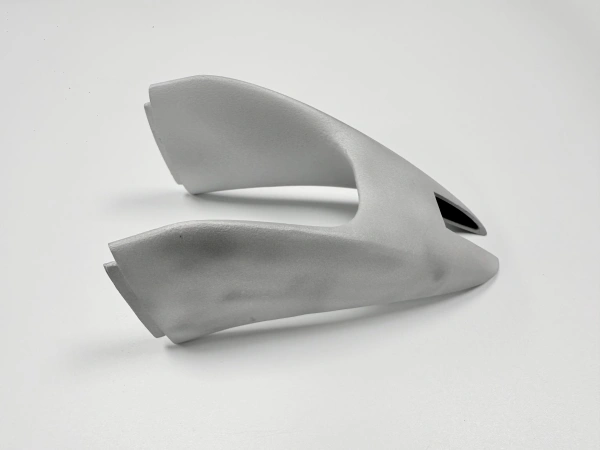
Large Part RFQs Where LMD and WAAM Are Both Discussed
LMD and WAAM enter the same conversation when the part is too large, too expensive, or too wasteful to approach as a small powder-bed component. Typical RFQ scenarios include energy fixtures, turbine-related tooling, large housings, structural brackets, repair build-up zones, thick flanges, wear lands, and near-net blanks that will be machined after deposition. The buyer should first define whether the order is for a complete new blank, a repaired existing component, or added material on a prepared substrate.
Laser metal deposition usually deserves review when the deposition zone must be more localized, when the feature is built onto a specific surface, or when a repair path needs controlled geometry before machining. WAAM may deserve review when the part is a large near-net structure where a broader deposition path can reduce the amount of starting stock. In both cases, the final quote depends on how much geometry is deposited and how much must be removed by CNC afterward.
Some large parts should not begin as a DED or WAAM job. A simple plate, shaft, ring, or flange with no material-saving benefit may be better machined from stock or produced by another conventional route. Metal AM becomes worth reviewing when the blank is large and complex, the material is difficult or costly to remove from billet, the geometry needs added local material, or repair avoids scrapping a high-value component.
How Heat Input Changes Distortion and Machining Stock
Heat input is one of the main reasons the route cannot be chosen from a keyword alone. Both laser metal deposition and WAAM introduce thermal cycles into the part or substrate. Large sections, asymmetric deposition, thin walls near thick masses, and repaired edges can move during and after build-up. The RFQ should state which surfaces must remain stable and which surfaces can be machined after deposition.
A near-net blank should include machining allowance where final dimensions matter. If the deposited surface is expected to become a sealing face, bearing pad, bolt interface, rail, or weld-preparation edge, it should not be accepted as-deposited. The buyer should mark those areas on the drawing so the quote includes adequate stock and machining access. Too little stock can make cleanup unreliable; too much stock can erase the cost benefit of deposition.
Fixturing also matters. A large energy component may need support during deposition and machining, especially if the substrate is a repair item or if the build-up occurs away from the main mass. The RFQ should mention whether the buyer will provide the base part, whether the base part has been inspected, and whether distortion after build-up is acceptable. If the substrate condition is unknown, Neway may need an inspection step before confirming the route.
When Near-Net Blanks Need More CNC Than Expected
A near-net blank is not a finished part. It is a material-saving route toward a machined component. Buyers sometimes assume that a larger deposited blank means less machining than billet work in every case. That may be true for some shapes, but it is not automatic. The blank still needs datum preparation, rough machining, final machining, drilling, tapping, sealing-face finishing, and inspection wherever the drawing requires controlled geometry.
For CNC machining after DED, the key questions are access and datum quality. Can the part be held without bending? Is there a stable reference after deposition? Are the important faces reachable by tools? Are holes and threads created after thermal processing? If the part has a large deposited wall next to a precision interface, the machining strategy may control the quote more than the deposition itself.
Buyers can improve the RFQ by separating as-deposited surfaces from finished surfaces. A large outer contour may stay rough if it only provides material bulk. A flange, bore, rail, seal, or mounting pad should be named as a finished feature. If the drawing does not make this distinction, suppliers may price different levels of completion, making quotations difficult to compare.
Part scenario | LMD fit | WAAM fit | CNC allowance concern | Buyer decision |
|---|---|---|---|---|
Local wear land build-up | Often worth reviewing for controlled local deposition | May be excessive if the added zone is small | Stock must clean up to the final contact surface | Define the restored profile and inspection method |
Large near-net structural blank | Useful where deposition detail and material choice fit the route | May be attractive for broad wire-fed build-up | Datums and finished pads need added material | Compare finished blank cost, not deposition cost alone |
Energy fixture with thick flanges | Can add features onto a prepared base | Can be reviewed for larger deposited sections | Flanges usually need machining after build-up | Mark bolt pads, bores, and sealing faces |
Repair of a high-value component | Route depends on substrate condition and repair zone access | May be practical only if geometry and heat input allow it | Restored surfaces need stock for cleanup | Provide damage photos, base material, and repair limits |
Simple plate or shaft | Usually difficult to justify without added material value | Usually difficult to justify without geometry benefit | Machining from stock may be simpler | Review CNC or conventional supply first |
Repair Geometry That Should Not Be Quoted Like New Build
Repair RFQs need different information from new-build RFQs. The base component may have wear, cracks, corrosion, heat exposure, previous welding, or unknown dimensional movement. Before laser metal deposition or WAAM repair is discussed, the buyer should identify the substrate material, damaged area, removed material, required restored envelope, and any regions that cannot receive extra heat.
A repair job may also need pre-machining before deposition. Damaged material may need to be removed, a clean groove or pocket may be prepared, and the repair boundary may need inspection. After deposition, the restored region normally needs machining back to the drawing requirement. If the RFQ treats repair as only "add metal here," the price will miss important steps that affect acceptance.
For energy components, repair acceptance can involve pressure boundaries, sealing faces, rotating interfaces, or thermal exposure. Neway will not assume that a repaired AM area is acceptable for a safety-critical application without buyer-provided requirements and engineering review. The quote should state whether the part is for development, fixture use, non-critical restoration, or a qualified production repair path.
Energy-Part Records That Affect DED Route Approval
Energy components can carry higher documentation expectations than general prototypes. A buyer may need material records, substrate inspection, build records, heat treatment records, dimensional reports, surface condition review, or NDT defined by the project. The required package should be listed before order placement because some records must be planned before deposition begins.
Energy and power projects also need operating context. Temperature exposure, pressure, fluid contact, corrosion risk, wear mode, load direction, and fatigue sensitivity all influence route review. For high-temperature sections, superalloy 3D printing or superalloy DED may require closer material and post-processing review than a simple steel fixture.
To receive a reliable route comparison, send CAD or STEP data, a controlled drawing, material or substrate grade, part size, quantity, application environment, deposition area, finished surfaces, machining allowance expectations, heat treatment needs, inspection records, photos for repair work, and the target delivery window. If LMD and WAAM are both being considered, ask suppliers to separate deposition scope, CNC scope, and records so the comparison reflects the finished part rather than only the build method.
Related FAQs