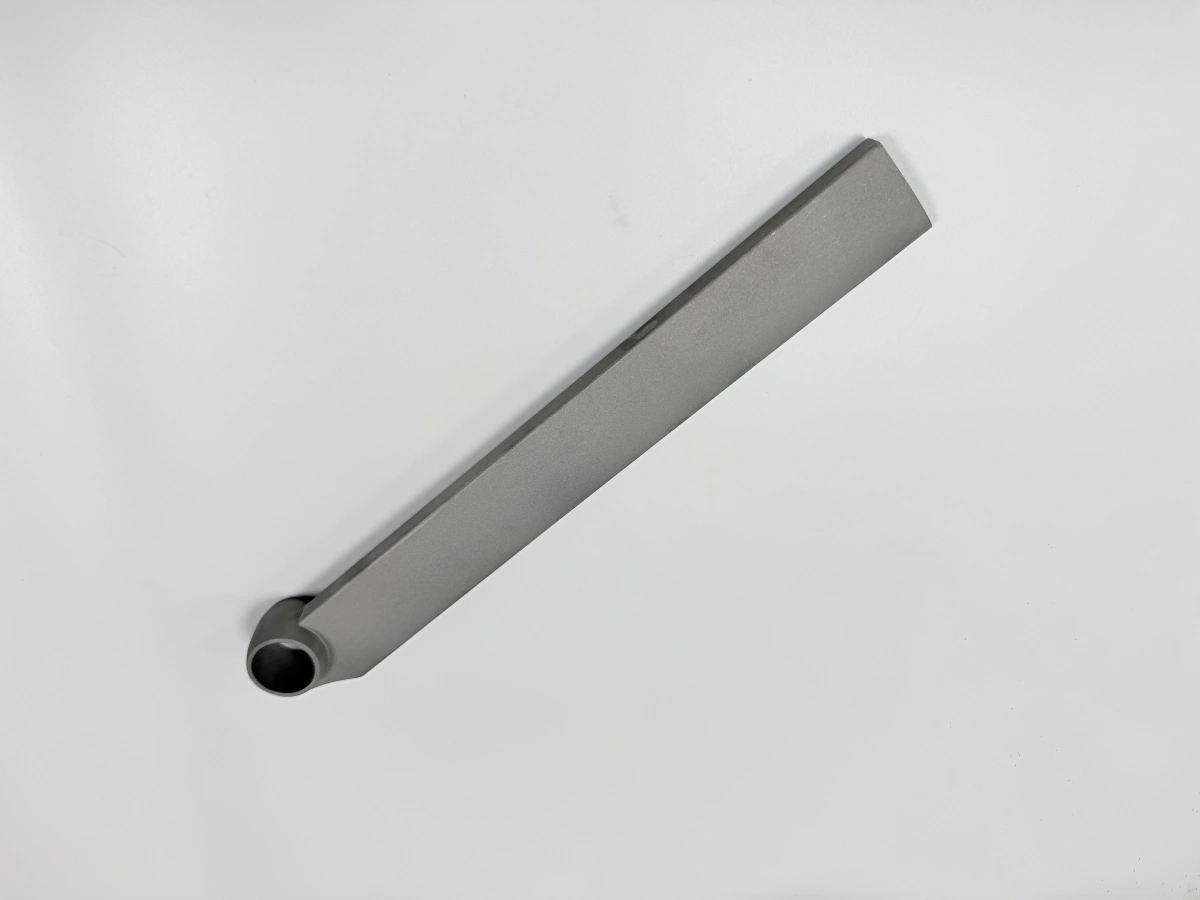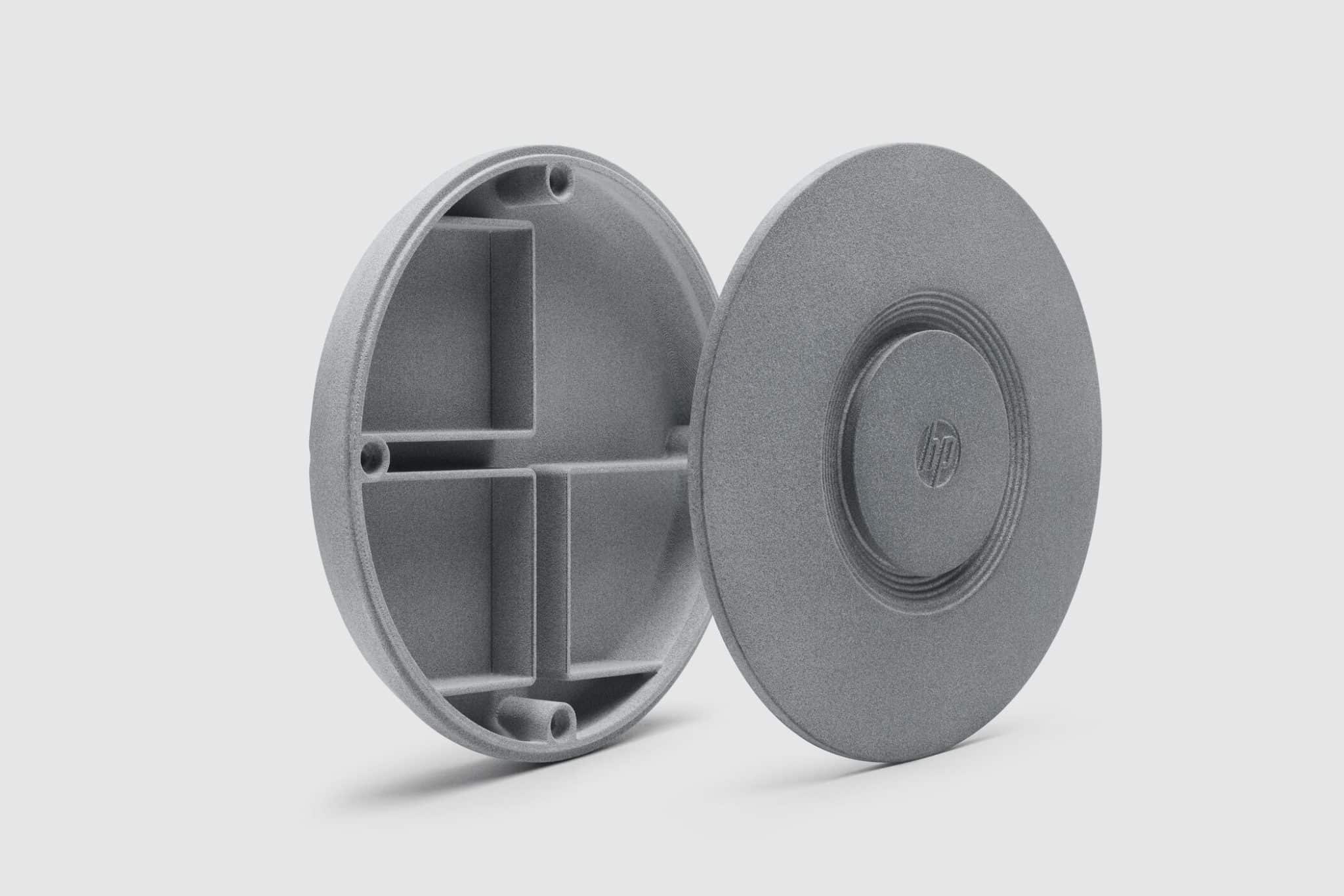
SLS is usually the best first choice for durable low-volume automotive plastic parts because nylon powder surrounds the geometry, avoiding attached supports and enabling ducts, clips, housings, brackets, and nested batches. MJF is a close alternative with different surface, productivity, and material options; FDM can suit large fixtures or lower-cost prototypes. Durability is not automatic. Select PA12, PA11, filled nylon, TPU, or another qualified grade from heat aging, impact, fatigue, fluids, moisture, UV, flame requirements, creep, and service life. Validate the final orientation, powder history, wall thickness, finish, and conditioning against the actual automotive test plan.
High strength-to-weight ratio, Excellent fatigue resistance, and chemical stability.ty Used for interior brackets, snap-fit housings, fluid system connectors
Enhanced stiffness and dimensional stability. Ideal for structural components and under-hood applications
Low weight can be combined with useful strength and stiffness, but load-bearing mounts, jigs, and brackets require orientation-specific tensile, impact, creep, fatigue, fastener, and temperature evidence. Define safety factor, duty cycle, moisture and fluids, then test the finished geometry after conditioning. A filled nylon datasheet does not by itself approve an automotive structural component.
Durability: SLS materials may perform well in cyclic service, but thermal oxidation, moisture conditioning, chemicals, notches, thin walls, and powder refresh can change results. Use application-specific aging and fatigue tests rather than a general long-term claim.
Design freedom: No support structures allow complex, lightweight parts with integrated clips, hinges, or ducting features
Production efficiency: High packing density in the build chamber supports cost-effective batch production
End-use readiness: SLS parts often require minimal post-processing and can be surface finished or painted
For a durable automotive plastic RFQ, provide the intended prototype, tooling, service, or production use; annual and batch quantity; load, impact, vibration, temperature and dwell; fuel, oil, coolant, cleaner and humidity exposure; UV and weathering; flame, smoke or toxicity requirement; creep and fatigue life; color and cosmetic zones; critical dimensions; inserts, joining and sealing; finish; inspection; and documentation. Select SLS, MJF, FDM, SLA, molding, or machining from the complete requirement rather than process reputation. PA12 may offer stable powder-bed processing, PA11 may provide greater ductility in selected grades, filled nylon can improve stiffness while reducing elongation and changing wear, and TPU can serve flexible functions; none is universally durable. Ask the supplier for exact grade, powder refresh and conditioning controls, orientation, wall and clearance guidance, cooling, depowdering, dyeing or sealing, insert installation, and measured properties after the intended moisture, heat, UV, and chemical exposure. Interior ducts, under-hood clips, fixtures, and exterior parts have different validation. A production-intent test part must use the final material, orientation, wall, color, finish, and assembly. Define dimensional condition because nylon moisture can shift size and properties. Compare accepted yield, batch nesting, cooling time, finishing, inspection, and supply continuity with MJF, injection molding, CNC, and formed plastic. The services below can support the route, but “automotive” and “durable” require part-specific tests and release evidence:
3D Printing Technologies: durable automotive plastic parts can come from FDM, SLS, MJF, or resin printing, but the decision starts with the service environment rather than a generic strength ranking. FDM offers broad engineering-thermoplastic choices and economical large parts, while layer bonding, raster direction, moisture, warpage, and support interfaces must be designed and tested. SLS and MJF are strong candidates for nylon ducts, clips, brackets, covers, and low-volume assemblies because surrounding powder supports complex geometry and batch nesting; final behavior still depends on PA11 or PA12 grade, powder history, orientation, wall transitions, cooling, conditioning, and finishing. SLA can provide fine detail and smooth surfaces for fit, airflow, or appearance evaluation, but a resin described as “tough” or “ABS-like” should not be treated as injection-molded ABS without comparative data. For an automotive RFQ, define continuous and peak temperature, fluids, UV exposure, humidity, vibration, impact, creep, fatigue, flame or smoke requirement, color, texture, critical dimensions, inserts, sealing faces, quantity, and expected life. Ask for test values in the printed orientation and conditioned state, then validate production-intent parts through thermal cycling, chemical exposure, fastening, leak, vibration, or load tests as applicable. Compare additive with injection molding, urethane casting, CNC machining, and sheet fabrication using total accepted-part cost. The best route is the one that meets the complete duty cycle with controlled repeatability, not simply the process with the highest datasheet tensile strength.
Utilize our Plastic 3D Printing capabilities, including high-performance SLS for engineering-grade nylon parts.
Material Selection:
Choose from Nylon (PA), carbon-filled composites, and high-strength blends optimized for thermal resistance and mechanical performance.
Automotive Application Support:
Explore our automotive solutions, supported by surface finishing, painting, and CNC machining for end-use component integration.