Wire Arc Additive Manufacturing (WAAM): A Detailed 3D Printing Overview
Introduction
As industrial demand shifts toward large-scale, high-strength, and cost-efficient metal components, traditional manufacturing methods such as casting and subtractive machining are increasingly complemented by advanced additive technologies. Among these, Wire Arc Additive Manufacturing (WAAM) stands out as a powerful solution for producing large metal structures with high deposition rates and material efficiency.
At Neway, we integrate WAAM into our broader 3D printing ecosystem to support customers requiring complex geometries, rapid lead times, and reduced material waste. WAAM is particularly advantageous in industries such as aerospace, energy, marine, and heavy equipment manufacturing, where large components and high-performance alloys are essential.
What Is Wire Arc Additive Manufacturing (WAAM)?
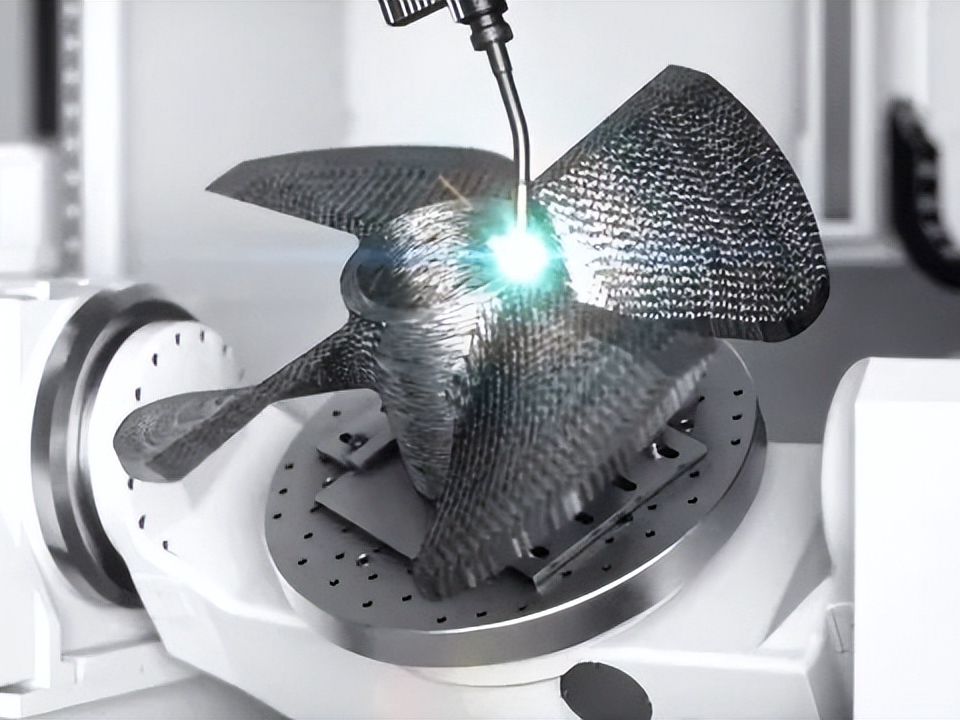
Wire Arc Additive Manufacturing (WAAM) is a metal additive manufacturing process that uses an electric arc as a heat source and metal wire as feedstock. The wire is melted and deposited layer by layer to build a component directly from a digital model.
The process is derived from welding technologies such as Gas Metal Arc Welding (GMAW), Gas Tungsten Arc Welding (GTAW), and Plasma Arc Welding (PAW). By combining robotic motion control with welding principles, WAAM enables the production of large-scale metal parts with relatively low equipment and material costs.
Compared to powder-based additive manufacturing processes, WAAM offers significantly higher deposition rates, making it ideal for structural components rather than small, high-precision parts.
How WAAM Works: Process Fundamentals
The WAAM process involves several coordinated steps:
• A metal wire is continuously fed through a welding torch
• An electric arc melts the wire and forms a molten pool
• A robotic arm or CNC-controlled system deposits material layer by layer
• Each layer solidifies before the next is applied
• The geometry is built progressively based on CAD data
Due to the thermal nature of the process, careful control of heat input, cooling rates, and deposition paths is critical to ensure dimensional accuracy and mechanical integrity.
At Neway, WAAM is often combined with CNC machining to achieve final tolerances and surface finish requirements, especially for functional interfaces.
Materials Used in WAAM
WAAM supports a wide range of engineering alloys, particularly those available in wire form. Common materials include:
• Aluminum alloys for lightweight structures
• Titanium alloys for aerospace and high-strength applications
• Stainless steels for corrosion resistance
• Nickel-based superalloys for high-temperature environments
• Copper alloys for thermal and electrical conductivity
Material selection depends on application requirements such as strength, fatigue resistance, corrosion behavior, and thermal stability. In some cases, WAAM can be used as a preform process, followed by traditional metal casting or machining workflows to optimize cost and performance.
Key Advantages of WAAM
1. High Deposition Rate
WAAM can achieve deposition rates of several kilograms per hour, far exceeding powder-based additive manufacturing processes. This makes it highly suitable for large components.
2. Material Efficiency
Unlike subtractive manufacturing, WAAM minimizes material waste, which is particularly important when working with expensive alloys such as titanium or nickel-based materials.
3. Cost-Effective for Large Parts
The use of wire feedstock reduces material cost compared to powder, while simpler equipment requirements lower capital investment.
4. Design Flexibility
WAAM allows engineers to create complex geometries, including internal structures and optimized load paths that are difficult to achieve through traditional processes.
5. Reduced Lead Time
By eliminating the need for tooling, WAAM accelerates production, especially when combined with rapid prototyping strategies.
Limitations and Engineering Challenges
Despite its advantages, WAAM presents several technical challenges:
Surface Roughness As-deposited surfaces are relatively rough and typically require secondary finishing such as post machining.
Dimensional Accuracy Thermal distortion and residual stress can affect accuracy, requiring careful process control and machining allowances.
Microstructure Control Cooling rates influence grain structure, which can impact mechanical properties such as fatigue resistance and toughness.
Process Stability Arc stability, wire feed consistency, and shielding gas control must be precisely managed to avoid defects such as porosity or lack of fusion.
WAAM vs Other Manufacturing Processes
WAAM is not a replacement for all manufacturing methods but rather a complementary technology. Compared to die casting, WAAM is more suitable for low-volume, large, and customized components, while processes such as aluminum die casting remain more efficient for high-volume production of complex parts with tight tolerances.
Similarly, while sand casting and forging are effective for large components, WAAM offers greater design flexibility and reduced material waste. However, it often requires hybrid manufacturing strategies that combine additive and subtractive processes.
Post-Processing and Finishing
WAAM parts typically undergo several post-processing steps to meet functional requirements:
• CNC machining for dimensional accuracy
• Heat treatment to relieve residual stress and improve mechanical properties
• Surface finishing for improved roughness and appearance
• Inspection using advanced die castings inspection methods such as CMM and non-destructive testing
In some applications, coatings or surface treatments may be applied to enhance corrosion resistance or wear performance.
Applications of WAAM
WAAM is widely used in industries requiring large, high-performance metal components:
• Aerospace structural components and repair parts
• Marine propellers and structural elements
• Oil and gas equipment
• Industrial machinery frames
• Tooling and molds for hybrid manufacturing
For example, large aluminum or steel frames used in automotive or industrial systems can benefit from WAAM preforms followed by machining and assembly, similar to solutions provided in projects like automotive components.
WAAM in Neway’s One-Stop Manufacturing
At Neway, WAAM is integrated into our comprehensive manufacturing platform, enabling customers to combine additive manufacturing with casting, machining, and finishing processes. Through our one-stop service, we streamline the entire production workflow.
This integrated approach allows us to:
• Optimize process selection based on cost and performance
• Combine WAAM with casting or machining for hybrid solutions
• Ensure consistent quality across all manufacturing stages
• Reduce lead times and supply chain complexity
Future Trends in WAAM
The future of WAAM is closely tied to advancements in digital manufacturing and process control. Key trends include:
• Real-time monitoring and closed-loop control systems
• Integration with AI for path optimization and defect prediction
• Multi-material deposition capabilities
• Improved simulation tools for thermal and structural behavior
As these technologies mature, WAAM will become increasingly viable for critical applications requiring both performance and scalability.
Conclusion
Wire Arc Additive Manufacturing (WAAM) represents a transformative approach to producing large-scale metal components with high efficiency and flexibility. While it does not replace traditional manufacturing processes, it complements them by enabling new design possibilities and reducing material waste.
At Neway, we leverage WAAM alongside casting, machining, and finishing technologies to deliver complete, application-driven manufacturing solutions. By combining engineering expertise with advanced production capabilities, we help customers achieve optimal performance, cost efficiency, and time-to-market.
FAQs