DED and WAAM Metal 3D Printing for Large Structural Parts
DED and WAAM metal 3D printing become relevant when the buyer is not trying to make a small detailed PBF part. The usual question is whether a large structural component, repair build-up, or near-net metal blank can be produced with less waste, less tooling, or better lead-time flexibility than machining from oversized stock or casting a new tool.
The route decision affects the quote before material is ordered. Large metal additive manufacturing changes heat input, distortion risk, machining allowance, inspection access, and the boundary between printed geometry and finished surfaces. A buyer should define whether the order is a repair, a near-net blank for machining, a prototype structure, or a low-volume structural part.
Neway reviews directed energy deposition, WAAM, EBAM, and laser metal deposition requests by separating deposited shape from finished part acceptance. The deposited part is usually not the final geometry. CNC machining, heat treatment, surface finishing, and inspection are often part of the commercial scope.
When Large Parts Should Move Away from PBF Review
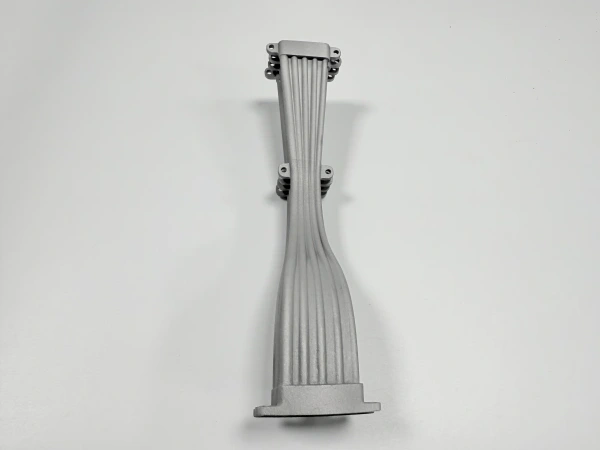
Powder bed fusion is strong for detailed parts, internal channels, compact brackets, and high feature resolution. DED, WAAM, and EBAM are considered for a different reason: adding metal to a large work envelope, repairing worn areas, building near-net blanks, or creating structures where support removal and powder-bed size are not practical constraints.
Large structural parts are usually judged by load path, weld-like deposition behavior, residual stress, machining access, and inspection evidence. If the part is a simple plate, shaft, flange, or block with tight finished dimensions, CNC from stock may remain the cleaner route. If the part has large added ribs, bosses, curved build-up, or repair zones that would waste a lot of billet material, a DED metal 3D printing service deserves review.
The phrase "metal 3D printing without support no sintering process DED WAAM" often appears in buyer searches because these routes do not work like binder jetting or polymer support removal. That does not mean the part is free from fixturing, distortion, or machining. It means the buyer should evaluate deposition, heat input, and finishing as the controlling issues.
Another early screen is whether the part truly benefits from deposited metal. If the buyer needs a rectangular block with precision features on every face, the deposition route may add work rather than reduce it. If the buyer needs a large curved blank, local build-up, repair stock, or a structure that would remove most of a billet during machining, DED or WAAM can become a realistic route to compare.
DED, WAAM and EBAM Serve Different Large-Part Problems
Laser metal deposition is often discussed when controlled metal build-up, repair, or near-net features must be added to a substrate. Wire arc additive manufacturing is typically reviewed for larger structures and wire-fed deposition economics. EBAM structural components may be discussed when an electron beam route is relevant to the material, build environment, and part size.
The following table is a sourcing guide, not a universal capability statement. Final route selection depends on material availability, component size, feature detail, acceptance requirements, and engineering review.
Large-part route | Best-fit buyer problem | Manufacturing risk to price | Finished-part boundary |
|---|---|---|---|
DED / LMD | Repair, build-up, added bosses, near-net features, or localized metal deposition. | Heat-affected zone, dilution with substrate, layer stability, and access for the deposition head. | Usually needs CNC finishing on mating surfaces, seal areas, bores, and datum pads. |
WAAM | Large structural blanks, ribs, frames, and low-volume metal forms where wire feedstock is practical. | Thermal distortion, bead geometry, fixture restraint, and broad machining allowance. | Often quoted as a deposited blank plus machining to the released drawing. |
EBAM route review | Large metal structures or near-net components where electron beam processing may be suitable. | Material compatibility, vacuum-related constraints, thermal history, and finishing access. | Requires clear definition of post-deposition machining, heat treatment, and inspection evidence. |
Near-Net Shape Does Not Mean Near-Finished Shape
DED and WAAM parts are often quoted as near-net shapes. That term should be handled carefully. Near-net means the deposition route aims to reduce waste or create a blank closer to the final geometry. It does not mean the part will meet finished tolerances, surface finish, or datum requirements directly after deposition.
Machining allowance is one of the most important quote controls. Large deposited parts may move during cooling, heat treatment, stress relief, or clamping. A buyer should identify which faces are functional, which faces are only stock surfaces, and which zones can remain as-deposited. Without that information, the quote may either underprice finishing or add unnecessary machining to non-critical areas.
Repair RFQs need a different boundary. The supplier must understand the base component material, damaged zone, acceptable removal before deposition, build-up location, final machining area, and inspection method. A repair build without enough information about the substrate and acceptance standard can become difficult to quote responsibly.
Large new-build RFQs should identify whether the deposited blank will be machined by the additive supplier, by the buyer, or by a third party. If machining responsibility is split, the interface data must be clear: stock surfaces, datum preparation, handling points, and any surfaces that must not be touched after deposition. This prevents a deposited blank from arriving with insufficient material for the next operation.
Machining Allowance Should Be Planned Before Deposition
CNC machining is not an afterthought for large DED or WAAM parts. The machining plan influences deposition geometry, fixture strategy, stock allowance, and inspection sequence. Datum pads, temporary tabs, extra stock on bores, and sacrificial surfaces may be needed so the part can be held after deposition and thermal processing.
Feature or zone | Allowance decision before build | Why it affects the quote | Buyer input needed |
|---|---|---|---|
Mounting faces | Add stock for final milling and flatness control. | Controls fixture setup, machining time, and CMM plan. | Datum scheme, flatness note, and mating-part function. |
Bores and bearing seats | Deposit undersized or leave machining stock near the feature. | As-deposited geometry is not normally the acceptance surface. | Diameter tolerance, roundness or position requirement, and inspection method. |
Repair build-up area | Define removal depth, build height, and final blending area. | Controls deposition volume, heat input, and post-machining access. | Base material, damaged condition, repair limits, and final contour requirement. |
Long ribs or frames | Plan restraint and machining reference surfaces. | Thermal movement and clamping can change finished shape. | Critical load path, non-critical surfaces, and allowable design adjustment. |
Heat Input and Material Compatibility Drive Risk
Large-format metal 3D printing puts significant thermal energy into the workpiece. That can be useful for deposition, but it can also create distortion, residual stress, metallurgical changes, or substrate interaction in repair work. Buyers should avoid treating DED or WAAM as a simple replacement for machining unless heat input is acceptable for the part function.
Material choice affects every downstream step. Steel, stainless steel, titanium, nickel alloy, and aluminum routes may require different feedstock, shielding, preheat or interpass control, stress relief, heat treatment, and machining strategy. If the drawing allows material alternatives, each route should be quoted separately. If the material is fixed, provide the exact grade and any buyer-provided standard before the RFQ is priced.
Inspection can include dimensional checks, visual review, material documentation, NDT, hardness, or application-specific evidence when required by the drawing. For safety-sensitive structures, qualification and acceptance responsibility should be defined by the buyer's specification and engineering review.
Heat input also affects design advice. Long unsupported spans, thin flanges, abrupt section changes, and heavy local build-up may need geometry review before the route is released. The buyer may decide to add temporary restraint features, split the build into a different blank strategy, or change the finishing plan so the most sensitive dimensions are created after thermal movement has occurred.
RFQ Scope for Large Structural Metal AM
For a reliable quote, send CAD or STEP data, 2D drawing, material grade, target quantity, whether the request is new build or repair, component size, deposit zones, required finished surfaces, datum strategy, machining allowance expectations, heat treatment or stress relief requirements, surface finish, inspection records, and the intended application environment. If the request is a repair, include base component condition, material record if available, damage limits, and final acceptance requirement.
Neway can review DED, WAAM, EBAM, and CNC alternatives when the buyer clearly separates deposited blank requirements from finished-part requirements. That distinction is what keeps a large structural RFQ quotable, manufacturable, and inspectable before the purchase order is released.
Related FAQs
.webp)