
What types of turbine or hot-section parts are best suited to Inconel 713C?
What types of turbine or hot-section parts are best suited to Inconel 713C?
Inconel 713C is a precipitation-hardened nickel-based superalloy originally developed for investment casting, offering outstanding creep resistance, high-temperature strength, and oxidation resistance up to approximately 950–1000°C (1742–1832°F). While traditionally manufactured by casting, the same material properties make it highly attractive for superalloy 3D printing, especially for complex, geometrically optimized turbine and hot-section components that are difficult or impossible to produce with conventional methods.
Based on the typical application history of Inconel 713C and the capabilities of additive manufacturing, the following hot-section parts benefit the most from this alloy when produced with advanced 3D printing technologies such as DMLS, SLM, or EBM.
1. Turbine Blades (Rotor Blades)
Turbine blades operate at the highest gas path temperatures and experience severe centrifugal loads, thermal cycling, and creep. Inconel 713C’s combination of high stress-rupture strength and resistance to thermal fatigue makes it an excellent candidate for small-to-medium sized turbine blades, particularly in auxiliary power units (APUs), industrial gas turbines, and rocket engine turbopumps. With powder bed fusion, internal cooling channels and aerodynamic profiles can be optimized beyond cast limits, improving blade cooling efficiency and service life.
For critical rotating applications, post-processing such as Hot Isostatic Pressing (HIP) is highly recommended to eliminate micro-porosity and maximize fatigue life. Additionally, heat treatment (solution and aging) is essential to achieve the full precipitation-hardened structure.
2. Turbine Vanes and Nozzle Guide Vanes
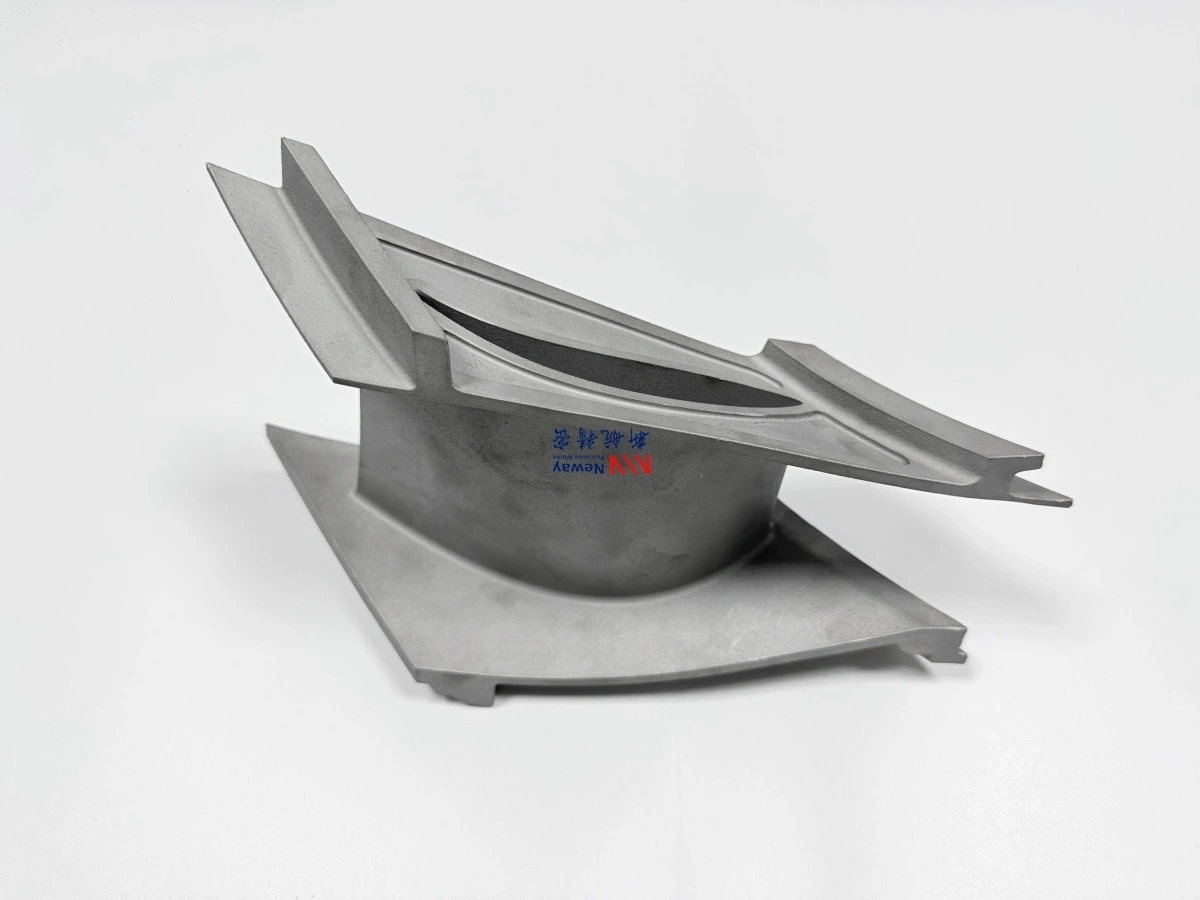
Stator vanes (nozzle guide vanes) are subjected to extreme heat and oxidation but lower mechanical loads compared to blades. Inconel 713C provides excellent resistance to hot corrosion and thermal shock, making it ideal for these components. Additive manufacturing enables complex, curved cooling passages and film cooling holes that are difficult to cast. This results in higher turbine inlet temperatures with reduced cooling air requirements.
In many cases, Thermal Barrier Coatings (TBC) are applied to the airfoil surfaces of 3D printed Inconel 713C vanes to further reduce base metal temperature and extend coating life, thanks to the good bond coat compatibility of the alloy.
3. Turbine Shrouds and Segments
Shroud rings and tip seal segments must maintain tight clearances under extreme thermal gradients while resisting gas path erosion and oxidation. Inconel 713C’s dimensional stability after heat treatment and its resistance to thermal fatigue cracking make it suitable for these stationary hot-section components. With aerospace-grade additive manufacturing, shrouds can be produced with integral cooling holes and lightweight lattice backfaces that are impossible with casting.
4. Combustor Liner Panels and Domes
Although Inconel 713C is more commonly associated with turbine sections, it can also be used for high-temperature liner panels and dome sections of combustors where temperatures exceed the capability of cheaper stainless steels. Its superior oxidation resistance at intermediate to high temperatures and good weldability (for attachment features) make it a valid choice. However, for very thin walls or severe thermal gradients, alternative alloys like Hastelloy X may be more formable, while Inconel 713C remains preferred for strength-critical liner features.
5. Afterburner Components (Augmentors)
In military jet engines, afterburner spray bars, flame holders, and liners see extremely high temperatures and thermal shock. Inconel 713C’s combination of creep strength and oxidation resistance under cyclic conditions makes it suitable for these demanding parts. Directed energy deposition (DED) techniques such as LMD can be used to repair or add features on existing afterburner components made of Inconel 713C, extending service life.
6. Turbocharger Wheels (for High-Performance Engines)
For heavy-duty diesel or high-performance gasoline engines, turbocharger turbine wheels operate at temperatures above 850°C. Inconel 713C offers better creep resistance than Inconel 718 at the highest temperature range, making it a viable option for 3D printed turbo wheels with optimized blade geometry for faster response and efficiency. Additive manufacturing also allows for hybrid designs combining a nickel alloy wheel with a steel shaft.
7. Guide Summary: Inconel 713C vs. Other Superalloys for Hot-Section Parts
Part Type | Suitability for Inconel 713C | Preferred AM Technology |
|---|---|---|
Turbine blades (small/medium) | Excellent – high creep & fatigue strength | DMLS / SLM + HIP + heat treat |
Nozzle guide vanes | Excellent – complex cooling geometry | DMLS / EBM + TBC coating |
Shroud segments | Very good – thermal stability & erosion resistance | EBM (larger size) or DMLS |
Combustor liners | Fair – good but may be replaced by more formable alloys for thin walls | DMLS |
Afterburner components | Good – high thermal shock resistance | DMLS or LMD for repair |
Turbocharger wheels | Good for very high temperature diesels | DMLS |
8. Practical Considerations for 3D Printing Inconel 713C
While Inconel 713C is printable using laser powder bed fusion (DMLS/SLM), it has a higher cracking tendency compared to Inconel 718 due to its higher aluminum and titanium content (forming gamma prime phase). Therefore, it is critical to use preheated build platforms (or EBM) and carefully optimized scan strategies. HIP is almost mandatory for fatigue-limited rotating parts to close internal micro-cracks.
For large static components (vanes, shrouds), EBM is often preferred because the high preheat temperature significantly reduces residual stress and cracking. After printing, a standard solution treatment and two-step aging heat treatment (typically 1120°C + 845°C + 760°C) is required to develop the full mechanical properties.
Finally, surface finish for Inconel 713C parts can be improved via sandblasting or electropolishing, and critical airfoils may require CNC machining of mating surfaces.
9. Conclusion
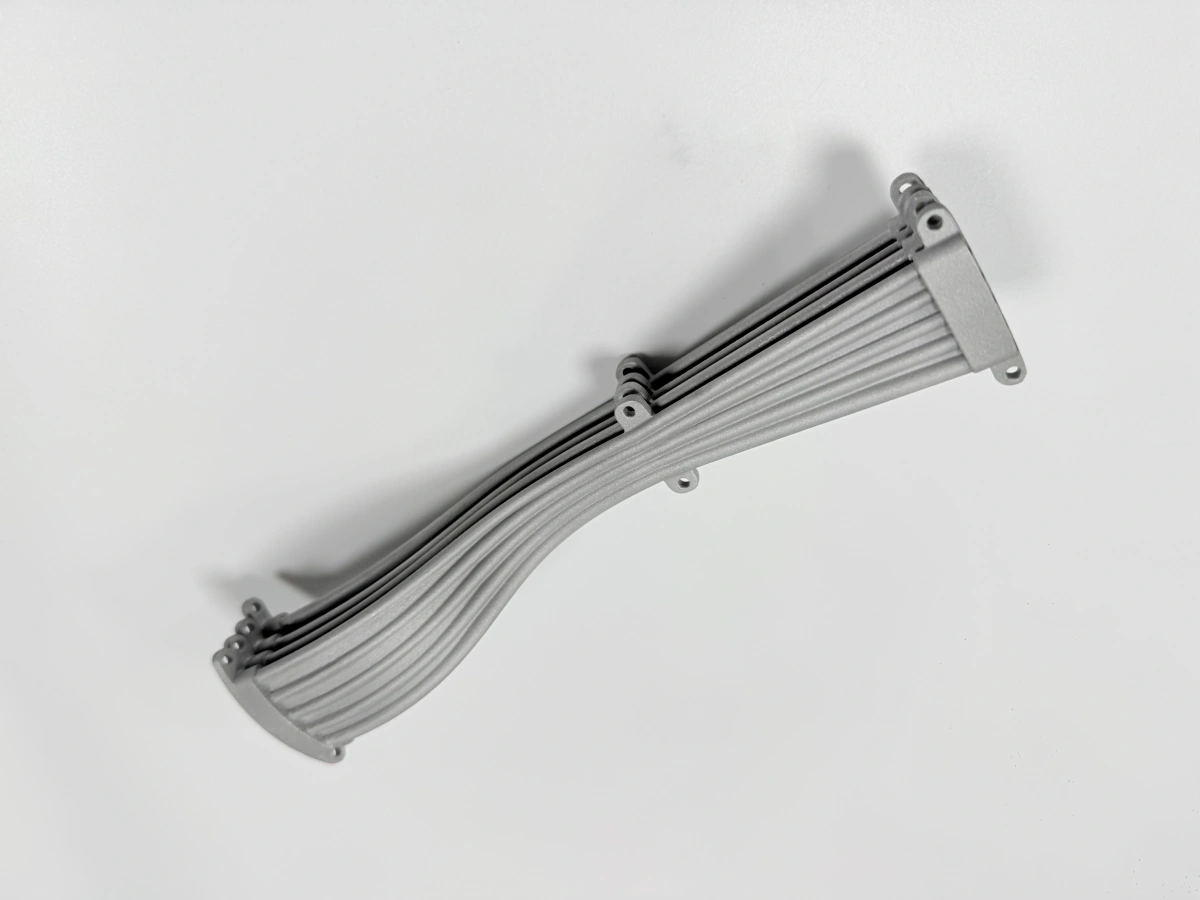
Inconel 713C is best suited for small-to-medium turbine blades, nozzle guide vanes, shrouds, afterburner parts, and high-temperature turbocharger wheels – essentially any hot-section component that demands high creep strength, oxidation resistance, and thermal stability up to ~950°C. Additive manufacturing (especially DMLS and EBM) unlocks design freedoms that are impossible with casting, such as internal cooling channels and lightweight lattice structures. However, proper post-processing (HIP, heat treatment, and optional coatings) is essential to achieve reliable performance in turbine environments.
For more information on compatible superalloys and case studies, see superalloy materials overview, superalloy 3D printing case studies, and aerospace & aviation solutions.
.webp)