PBF Metal Parts: SLM, DMLS or EBM Route Selection
When a buyer asks for PBF metal parts, the route is not fully defined until the process vocabulary is tied to the part function. SLM, DMLS, and EBM are often discussed together, but they do not create the same assumptions for material availability, feature detail, support strategy, thermal history, surface condition, and downstream finishing.
This matters before quoting because the process choice can change what is practical to print, what must be machined, and what evidence is needed for acceptance. A compact stainless manifold, a titanium lattice structure, and a nickel alloy hot-section bracket may all belong under powder bed fusion, yet the correct route review is different for each RFQ.
Neway reviews PBF route selection from the finished part requirement first: alloy, application temperature, corrosion or fatigue risk, internal features, tolerance scheme, surface access, and post-processing expectations. The goal is to quote a route that can be manufactured and inspected, not just a process name that sounds familiar.
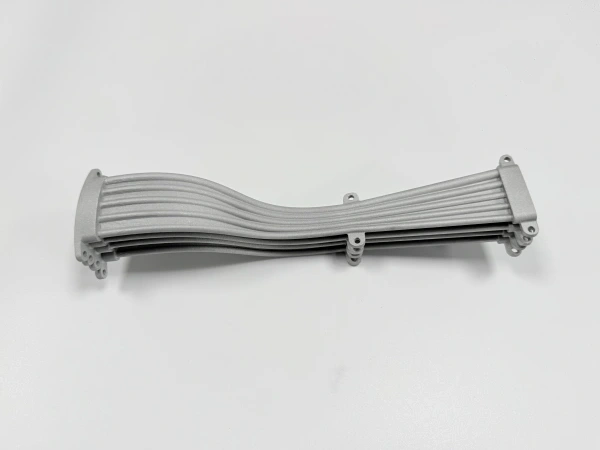
Why PBF Process Names Need Manufacturing Context
Powder bed fusion describes a family of layer-by-layer processes using a powder bed and thermal energy source. For purchasing, that family label is useful but incomplete. It does not tell the supplier whether the buyer expects laser powder bed fusion, electron beam melting, a specific alloy route, or a finished part with CNC and inspection included.
Selective laser melting is usually discussed when fine metal features, dense near-net parts, and detailed prototypes are needed. Direct metal laser sintering is often used in buyer vocabulary for laser-based metal AM as well, although supplier terminology may vary by machine platform and material route. Electron beam melting belongs in the discussion when vacuum processing, elevated build temperature, titanium routes, or larger thermal input are relevant.
The RFQ should avoid treating the names as interchangeable labels. If the drawing requires small holes, thin ribs, tight external interfaces, internal channels, or fatigue-sensitive surfaces, those features should be described directly. The supplier can then judge whether the route name supports the finished part rather than quoting from a word alone.
SLM, DMLS and EBM Change the Risk Profile
For many buyers, the practical difference is not a dictionary definition. It is how the process affects support removal, residual stress, surface condition, feature detail, heat treatment, and inspection. Laser-based PBF routes are often chosen for precision metal additive manufacturing where small features and compact geometry matter. EBM may be discussed when the material and build environment make that route worth reviewing, especially for certain titanium or high-temperature applications.
The table below is not a universal capability claim. It is a route-selection guide for RFQ discussions. Final choice still depends on material availability, geometry, drawing requirements, and supplier engineering review.
PBF route | Buyer should review | Typical quote impact | When another route may be better |
|---|---|---|---|
SLM 3D printing | Fine features, dense metal parts, internal channels, lightweight structures, and selective CNC finishing. | Support planning, stress relief, surface finishing, and CNC stock on functional interfaces. | Simple blocks, shafts, plates, or parts needing only conventional machining accuracy. |
DMLS terminology | Whether the supplier uses the term for laser metal PBF and which material route is actually being quoted. | Clarifies material, machine route, heat treatment, and records instead of relying on a process label. | When the buyer needs a specific standard, machine route, or qualification package not defined by the term. |
EBM route review | Material suitability, thermal input, vacuum environment, feature scale, support strategy, and surface expectations. | May change surface finishing, machining allowance, powder removal review, and inspection planning. | Very fine cosmetic detail, small precision holes, or materials not available for the route. |
Material Choice Often Decides the Route Before Geometry
Material is usually the first real filter. Titanium, stainless steel, nickel superalloys, aluminum alloys, and copper alloys do not share the same powder availability, oxidation behavior, thermal processing, or finishing needs. A buyer can request DMLS vs SLM 3D printing, but if the target alloy is not suitable or available for the requested route, the process label has to change.
For titanium 3D printing, process review often includes oxygen-sensitive handling, residual stress, heat treatment, HIP, support scars, and CNC finishing for holes and interfaces. For superalloy 3D printing, route choice may be controlled by hot-section service, cracking risk, heat treatment, HIP, and surface requirements after support removal. Aluminum PBF often adds distortion review on broad faces and ribs, while copper route review may depend on thermal or electrical function and finishing access.
Material family | Route question before quote | Feature that deserves early review | Evidence buyers may request |
|---|---|---|---|
Titanium alloys | Laser PBF or EBM review depending on grade, geometry, and acceptance needs. | Thin walls, lattice zones, support-contact faces, threaded holes, and fit surfaces. | Material records, heat-treatment records, HIP records if required, and dimensional inspection. |
Nickel superalloys | Laser PBF route, hot-section suitability, and post-processing sequence. | Overhangs, heat-affected distortion, sealing faces, bolt patterns, and fatigue-sensitive surfaces. | Heat-treatment records, HIP records, CMM report, and surface condition notes. |
Stainless steels | Grade choice and whether corrosion, strength, or weld-like surface condition controls acceptance. | Fluid passages, mounting pads, sealing grooves, tapped holes, and visible surfaces. | Material record, passivation or surface report if specified, and CMM on machined interfaces. |
Aluminum alloys | Whether PBF offers value over CNC or casting for the part shape and quantity. | Broad flat faces, thin ribs, lightweight brackets, ducts, and heat-exchanger-like channels. | Heat-treatment or aging record when specified, machining inspection, and surface finish confirmation. |
Feature Resolution Is Not the Same as Finished Tolerance
A PBF route can be selected for fine features, but finished tolerance still depends on how the part is restrained, thermally processed, supported, and machined. Buyers should not assume that a printed bore, thread, sealing groove, datum pad, or bearing seat can be accepted directly from the build. Those surfaces usually need CNC machining, EDM, reaming, tapping, grinding, or another finishing operation depending on the drawing.
Build orientation should be discussed when the part has internal channels, thin walls, trapped powder risk, or surfaces that will become datums. A convenient orientation for printing may create a difficult support scar on a functional face. A convenient orientation for surface finish may increase build height or support volume. That tradeoff belongs in the quote stage because it can change cost and inspection.
Internal geometry adds another boundary. A channel that cannot be reached after printing needs powder removal planning before the build. If the buyer needs evidence that the channel is open, CT, flow checks, or section-specific inspection should be discussed before purchase order release.
HIP, Heat Treatment and CNC Depend on Acceptance Risk
Post-processing should follow the risk of the part, not the habit of adding every possible operation. Stress relief may be needed before support removal or machining when residual stress could move the part. HIP may be discussed for fatigue-sensitive, density-critical, or high-risk metal parts, but it should be stated as required or optional. Heat treatment may be material-specific and should not be merged with HIP in the quote language.
CNC planning should begin before printing when the finished part has datums, bores, threads, sealing faces, flat mounting pads, or precision slots. The printed blank needs enough stock for those features, and the support strategy should not block tool access. If the buyer wants a production-intent route, rough machining, thermal processing, and final machining may need to be sequenced carefully. If the buyer only needs a visual or assembly prototype, a simplified route may be enough.
What to Confirm Before Releasing a PBF Metal Parts PO
Before Neway quotes PBF metal parts, send the STEP file, 2D drawing, material grade, quantity, required process if fixed, application environment, critical dimensions, datum scheme, internal features, machined surfaces, heat treatment or HIP expectations, surface finish, and inspection records. If SLM, DMLS, or EBM is requested by name, state whether that name is mandatory or whether Neway may recommend another PBF route after engineering review.
A useful purchase order defines the finished part, not only the print route. Confirm which surfaces may remain as printed, which surfaces must be CNC finished, which records are required, and which operations are optional for cost comparison. That prevents a process-name quote from turning into a finished-part disagreement after the build is complete.
Related FAQs